Russia Calls for Restraint as Tensions Escalate Between India and Pakistan - Bio Points News
Russia expresses deep concern over the growing conflict between India and Pakistan, urging both nations to exercise restraint and resolve their differences through diplomatic means. Tensions rose following Indian missile strikes on Pakistani territory.
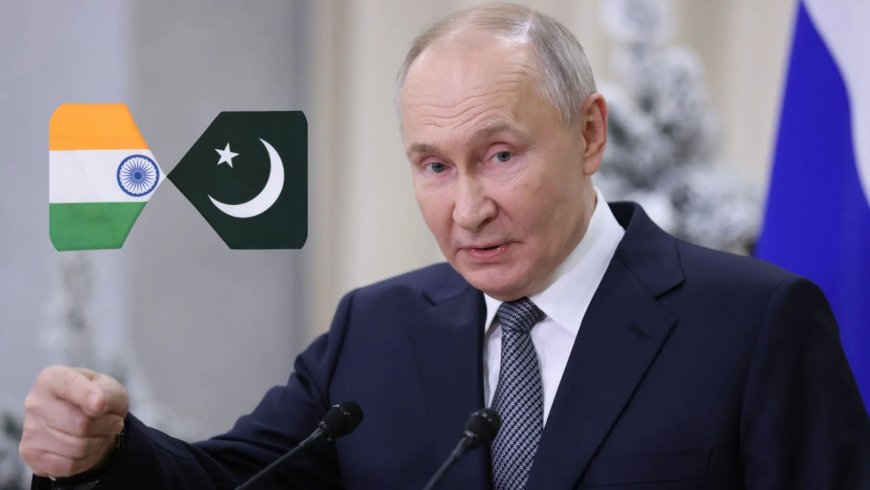
Russia Calls for Restraint as Tensions Rise Between India and Pakistan
Moscow / Islamabad / New Delhi:
The ongoing military conflict between India and Pakistan reached alarming new heights this week, following Indian missile strikes on Pakistani territory. The escalation has drawn international concern, with Russia expressing deep worry over the growing tensions in the region. Moscow's statement came amid a swift and forceful military response from Pakistan, which shot down multiple Indian aircraft and reported significant civilian casualties.
Russia's Call for Restraint
On Wednesday, the Russian Ministry of Foreign Affairs issued a statement expressing deep concern over the military escalation between India and Pakistan, particularly following a terrorist attack near Pahalgam in India’s Jammu and Kashmir region. The ministry strongly condemned terrorism in all its forms and stressed the urgent need for global cooperation to tackle the issue effectively.
“We are deeply concerned over the escalation of military confrontation between India and Pakistan following the terrorist attack near Pahalgam,” the Russian Foreign Ministry said in its statement.
Russia emphasized the importance of restraint from both parties to prevent further escalation, underscoring the need for diplomatic efforts to resolve differences peacefully. Moscow's position echoed a commitment to the Simla Agreement of 1972 and the Lahore Declaration of 1999, both of which advocate for dialogue between India and Pakistan to resolve their long-standing disputes, primarily over the Kashmir region.
“We call on the involved parties to exercise restraint in order to prevent further deterioration of the situation in the region. We hope that existing differences between New Delhi and Islamabad will be resolved through peaceful political-diplomatic means on a bilateral basis,” the statement concluded.
Indian Airstrikes on Pakistan
Tensions between the nuclear-armed nations escalated after India launched missile strikes on multiple locations in Pakistan-administered Kashmir, including Kotli, Muzaffarabad, Ahmedpur Sharqia Bagh, and Muridke. These strikes followed an April 22 attack in Pahalgam that left 26 people dead, with India blaming Pakistan-based militants. Islamabad has strongly denied these accusations, calling them baseless.
In retaliation, Pakistan’s armed forces responded swiftly and decisively. Lieutenant General Ahmed Sharif Chaudhry, Director General of Inter-Services Public Relations (ISPR), confirmed that Pakistani fighter jets shot down five Indian aircraft and destroyed an Indian brigade headquarters.
“The cowardly act will not go unpunished,” General Chaudhry stated, referring to the Indian airstrikes.
He also confirmed that Pakistan’s Air Force activated its defense systems in a rapid response, preventing Indian aircraft from penetrating Pakistani airspace.
Casualties and Damage from Indian Strikes
According to Pakistan's DG ISPR, twenty-six Pakistanis were martyred, and 46 others were injured due to the Indian missile strikes. A late-night press conference by Lieutenant General Ahmed Sharif confirmed the martyrdom of eight civilians and injuries to 35 others across six different locations in Pakistan. These casualties, combined with the damage to civilian infrastructure, have further fueled outrage within Pakistan and among international observers.
"Pakistan's armed forces are giving a befitting response to India’s misadventure," Lieutenant General Chaudhry affirmed.
The Indian Defense Ministry has acknowledged the airstrikes but claims that its operations targeted what it describes as terrorist infrastructure. However, no detailed evidence has been presented, and the Pakistani government vehemently denies any involvement in terrorist activities.
International Reactions to the Crisis
As the conflict intensifies, global reactions have been swift. The United Nations has called for an immediate ceasefire and urged both countries to return to the negotiating table. The United States has expressed concern over the escalating violence, with President Donald Trump calling the missile strikes “a shame” and urging both sides to work towards de-escalation.
In addition to Russia, several countries have offered mediation and called for restraint. China, Turkey, and other regional powers have all issued statements expressing concern over the military escalation and the humanitarian consequences of the ongoing conflict.
Pakistan’s Retaliatory Actions
Pakistan’s military, which has been on high alert since the attacks began, continues to monitor the situation closely. In a show of force, the Pakistani armed forces have ramped up security along the Line of Control (LoC) and in sensitive regions across the country.
Pakistani officials have warned that any further aggression from India will be met with force, and Islamabad has stated it will not hesitate to escalate the conflict if necessary. Diplomatic channels remain open, with Pakistan urging India to reconsider its military actions and return to the peace process.
Background to the Escalation
The current violence stems from long-standing tensions between the two countries, particularly over the region of Kashmir, which has been a point of contention since the 1947 partition of India and Pakistan. Over the decades, both countries have fought three wars, primarily over the disputed region.
In recent years, the situation has grown more volatile. The revocation of Article 370 in August 2019 by India, which stripped Jammu and Kashmir of its special autonomy, further exacerbated tensions. Pakistan condemned the move and has since called for international intervention to address the human rights situation in Kashmir.
The April 22 Pahalgam attack marked a particularly dangerous turning point, with both countries accusing each other of supporting cross-border terrorism. The recent airstrikes have further fueled the conflict and raised fears of a broader military confrontation.
The Way Forward
While both sides maintain a firm stance, there is hope among international observers that diplomacy will prevail. Russia, along with other world powers, continues to push for a peaceful resolution, urging both India and Pakistan to exercise restraint and engage in dialogue.
As the situation continues to unfold, the international community watches closely, concerned that further escalation could result in catastrophic consequences for the region and the world.
What's Your Reaction?
 Like
0
 Dislike
0
 Love
0
 Funny
0
 Angry
0
 Sad
0
 Wow
0