Unsolved Death of 'God’s Banker': Vatican, Mafia & Freemason Ties in the Mysterious Case of Roberto Calvi
Explore the chilling mystery of Roberto Calvi’s death under Blackfriars Bridge—a tangled web connecting the Vatican, the Mafia, and Freemasonry in one of history’s most controversial financial scandals.
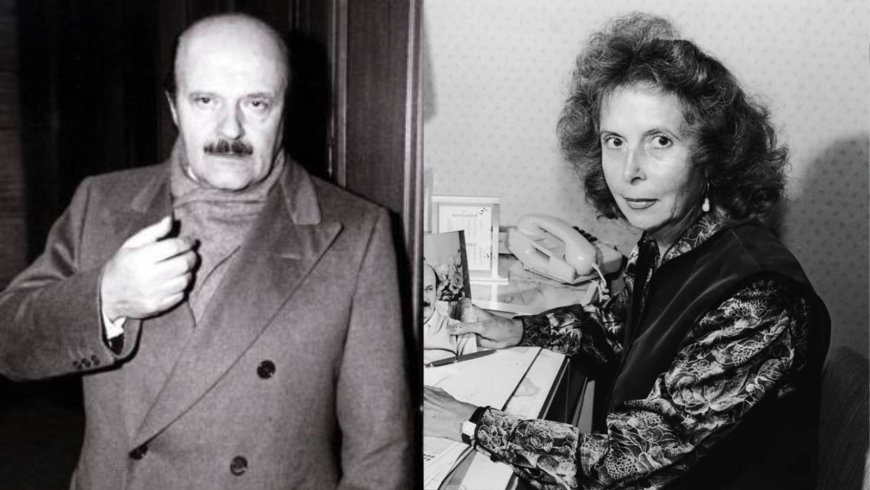
The Unsolved Mystery of ‘God’s Banker’: Roberto Calvi’s Death Still Haunts Europe
More than four decades have passed, yet the death of Italian banker Roberto Calvi remains a chilling and unresolved riddle in the financial and political history of Europe. Known widely as “God’s Banker” for his close ties to the Vatican, Calvi’s demise in June 1982 beneath London’s Blackfriars Bridge is wrapped in suspicion, powerful allegiances, and conspiracy theories that refuse to fade.
A Banker with Divine Connections
Roberto Calvi wasn’t just another high-profile banker. As chairman of Banco Ambrosiano—Italy’s largest private bank at the time—his influence ran deep into religious, financial, and political sectors. His bank maintained substantial relationships with the Vatican, specifically through the Institute for Religious Works (IOR), commonly known as the Vatican Bank.
But these divine connections may have also been his undoing.
A Gruesome Discovery in London
On the morning of June 18, 1982, Calvi’s body was found hanging from scaffolding under Blackfriars Bridge in central London. The scene was bizarre: his pockets were stuffed with bricks, and multiple currencies—worth around £10,000—were found on his person. Even more suspicious was the fake passport he carried, under the name “Gian Roberto Calvini.”
Initially ruled a suicide by British authorities, the circumstances raised immediate questions. Why would a man carefully planning an escape—complete with fake IDs, travel tickets, and secret flights—end his life in such a symbolic and dramatic fashion?
A Web of Criminal Ties
The more investigators dug into Calvi’s background, the darker the story became. Calvi had strong ties with influential figures, including Archbishop Paul Marcinkus, head of the Vatican Bank, and Michele Sindona—a mafia-linked banker already serving time in the U.S.
Both Calvi and Sindona were members of Propaganda Due (P2), a shadowy Freemason lodge accused of manipulating Italian politics and infiltrating top institutions. P2 was not your typical masonic group—it was known for its extreme right-wing ideologies and included military leaders, media moguls, and even Silvio Berlusconi, who would later become Italy’s Prime Minister.
The P2 Conspiracy
In March 1981, Italian police raided the home of Licio Gelli, P2’s grandmaster. What they found shocked the nation: a list of over 900 alleged members and sensitive documents exposing deep-rooted corruption. Among the names were powerful figures in government, intelligence, media, and finance—including Calvi.
The scandal forced the resignation of Prime Minister Arnaldo Forlani and his cabinet, and sent shockwaves through Italy's democratic foundations. It also revealed that Calvi had been operating illicit financial schemes, using offshore companies and funneling massive sums through the Vatican Bank.
Missing Billions and Ghost Companies
Before Calvi vanished, authorities uncovered a staggering $1.5 billion missing from Banco Ambrosiano. Investigators believed the money was smuggled abroad using shell companies—some linked to South America and Luxembourg—with the Vatican Bank’s complicity.
Some funds allegedly supported political operations, while others laundered mafia money. Documents indicated these operations were deeply intertwined with religious investments and Calvi’s personal empire. His escape plan was a last-ditch attempt to evade accountability—and perhaps to blackmail others involved.
More Than One Death
Oddly, Calvi wasn’t the only one who met a tragic end during the Ambrosiano collapse. His secretary, Teresa Corrocher, died just a day earlier by jumping from a window of the bank’s Milan office. Her suicide note blamed Calvi for the damage caused to employees and the institution. Whether her death was also part of a larger conspiracy remains unclear.
Symbolism in the Shadows
Many believe Calvi's death was symbolic. Found beneath “Blackfriars” Bridge, some theorists pointed out the eerie connection to the P2’s nickname: “Frati Neri” or “Black Friars.” Was this location chosen to send a message?
Experts and family members alike rejected the suicide theory. Later investigations, including a 1998 exhumation and forensic analysis, confirmed that the hanging injuries were inconsistent with self-infliction. Calvi’s hands showed no contact with the bricks, and ligature marks didn’t match typical suicides.
Legal Battles and Acquittals
In 2002, Italian courts formally recognized Calvi’s death as a homicide. Three years later, five individuals—ranging from businessmen to mafia operatives—stood trial in Rome for his murder. Prosecutors argued that Calvi was killed for mishandling and possibly stealing mafia funds, and for threatening to expose high-profile figures.
Despite these accusations, all suspects were acquitted in 2007 after a lengthy trial. The evidence was circumstantial, and the motive, though compelling, failed to lead to any convictions.
The Vatican’s Role and Silence
One of the most controversial aspects of this story is the Vatican’s involvement—or rather, its lack of accountability. Though the Vatican denied any legal responsibility, it acknowledged a “moral obligation” in 1984 and offered $406 million to compensate the bank’s creditors.
Archbishop Marcinkus, Calvi’s closest ally in the Vatican, was never prosecuted. As a Vatican citizen, he enjoyed diplomatic immunity and was shielded from Italian law. He denied wrongdoing until his death.
Why It Still Matters Today
The Roberto Calvi case isn’t just a decades-old mystery; it’s a cautionary tale of unchecked power, cross-institutional corruption, and the dangers of financial secrecy. His story reveals how religious institutions, political bodies, and criminal networks can intersect in ways that destabilize entire nations.
Despite the official rulings, no one has ever been punished for Calvi’s murder. The threads of this case stretch across borders and into domains that still influence global finance and politics.
As time passes, questions linger:
-
Who really ordered Roberto Calvi’s death?
-
What damning information did he carry?
-
How deep was the Vatican’s involvement?
Conclusion: A Death Wrapped in Shadows
The death of Roberto Calvi remains one of modern Europe’s greatest unsolved mysteries. More than just a financial scandal, it embodies the dangers of blurred lines between sacred institutions, organized crime, and state power.
Forty-three years later, the echoes of “God’s Banker” still haunt the world of finance and faith. Whether his killers will ever face justice is uncertain—but the legacy of corruption, betrayal, and secrecy remains a powerful reminder of what happens when accountability is lost in a maze of influence.
What's Your Reaction?
 Like
0
 Dislike
0
 Love
0
 Funny
0
 Angry
0
 Sad
0
 Wow
0