Fire Response Under Scrutiny as New Incidents Raise Concerns
Fire response is under scrutiny after new incidents expose delays, training gaps and safety concerns affecting firefighters, crews and communities today.
Fire is drawing renewed attention across the United States as searches for fire departments, fire stations, fire maps and fire alarms rise while several recent incidents put emergency response systems under scrutiny. One of the clearest examples is a newly released Navy investigation into the USS New Orleans, which found that confusion, training gaps and poor storage conditions helped allow a shipboard blaze to burn for about 11 hours.
Why fire response is receiving attention
The current search pattern does not point to one nationwide blaze. Instead, it reflects interest in several parts of emergency response, including how firefighters are dispatched, where fire stations are located, how fire alarms work and how people can identify an active incident on a fire map. That distinction matters because the trend is being driven by a collection of developments rather than a single confirmed national emergency.
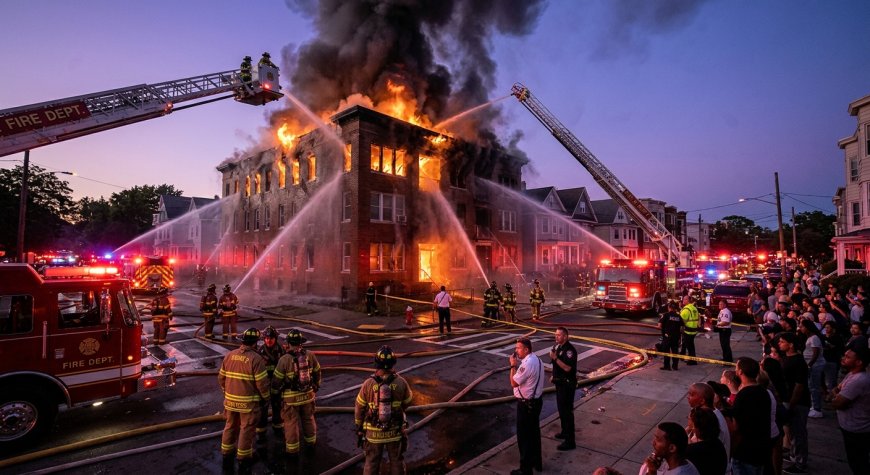
Recent incidents also show why the public is paying attention to response procedures. In Boston, firefighters responded to heavy flames at a multi-family home in Brighton, where a second alarm was quickly requested. Crews later reported that the main fire had been knocked down but that they remained at the scene to check for hotspots and possible extension. The cause and whether anyone was inside were still under investigation at the time of the report.
In Tennessee, a separate incident involved a tanker apparatus from the Samburg Fire Department that rolled over while responding to a fire in Obion County. At least one firefighter was injured and taken by air ambulance for treatment, according to local reporting.
What the USS New Orleans fire investigation found
The most detailed new development involves the USS New Orleans, an amphibious transport dock ship that suffered a major fire in August 2025. A Navy investigation released publicly in 2026 found that the response was affected by several avoidable problems, including confusion over alarm information and uncertainty about how parts of the ship's sprinkler system operated.
Investigators said alarms were heard within minutes of the fire starting, but key personnel initially struggled to interpret the information that indicated where the fire was located. That delayed efforts to find the source and establish containment zones. Investigators concluded that the fire might have been located within the first 10 minutes if the alarm information had been properly understood.
The investigation also identified problems with the affected area's boundaries and compartment closures. Those issues made firefighting more difficult and increased the possibility that the fire could spread or reignite. Confusion about the sprinkler system created another delay because senior personnel believed it needed to be manually activated even though the system was designed to operate automatically under certain conditions.
Perhaps the most striking finding involved the storeroom where the fire began. The room contained large quantities of supplies, including roughly 100 boxes of toilet paper stacked close to the overhead. Investigators said the storage conditions obstructed sprinkler coverage and contributed to the intensity and duration of the blaze.
The investigation estimated the damage at about $12 million. Despite the severity of the incident, no moderate or severe injuries were reported, and the ship eventually returned to service. The Navy said lessons from the incident have been incorporated into damage-control training and inspection requirements.
Could training gaps make a fire worse?
The USS New Orleans investigation offers a broader lesson that applies beyond military ships: having fire equipment is not enough if responders do not understand how that equipment and warning systems work under pressure. An alarm can provide critical information, but that information has to be interpreted quickly. Sprinklers and suppression equipment also have to be properly maintained, accessible and understood by the people responsible for emergency response.
Storage practices can matter just as much. When combustible materials are packed tightly into a room, they can increase the amount of material available to burn and interfere with suppression systems. That can turn a manageable incident into a longer and more damaging emergency.
For homeowners and businesses, the lesson is similar. Fire extinguishers should be accessible and appropriate for the type of fire they may need to address. Smoke and fire alarms should be tested regularly, exits should remain usable, and emergency plans should be familiar to everyone who may need them.
Why fire alarms and stations matter during an emergency
Fire alarms are often the first warning that something is wrong. The value of an alarm depends not only on whether it sounds, but also on how quickly people recognize it and begin an evacuation or emergency response. In larger buildings, alarm systems can also help firefighters determine where they need to concentrate their initial search.
Fire stations play a different but equally important role. Their location, staffing and equipment can influence how quickly crews reach an emergency. When an incident requires additional personnel or specialized equipment, departments may request mutual aid from neighboring stations. That type of cooperation has been visible in several recent incidents, including responses where multiple fire districts worked together to control a blaze.
For people searching for a fire map, the important point is that incident maps are highly location-specific and can change rapidly. A map may show an active fire, evacuation area, road closure or other emergency information, but users should rely on official emergency-management agencies and local authorities for evacuation instructions rather than assuming that a map alone is complete.
What recent incidents show about firefighter risk
Firefighters face risks not only from flames and smoke but also from the vehicles and equipment used to reach emergencies. The Tennessee tanker rollover is a reminder that emergency responders can be injured before they even reach the scene of a fire.
Vehicle crashes involving fire apparatus can create a second emergency while crews are already responding to the first one. Departments therefore have to balance speed with safe driving, particularly when heavy tankers and other large emergency vehicles travel under urgent conditions.
The USS New Orleans investigation presents a different type of risk: responders can be placed in greater danger when communication, training or basic preparation breaks down. The investigation nevertheless praised the sailors who repeatedly entered the fire area and helped contain the emergency, including personnel who assisted a disoriented crewmate in smoke-filled conditions.
What the PIMS hospital fire adds to the safety debate
A recent hospital fire in Islamabad provides another serious example of how fire safety can become a life-or-death issue when vulnerable people cannot evacuate themselves. Fourteen newborns died in the fire at the Pakistan Institute of Medical Sciences, while one baby was rescued. Investigations and official findings have raised questions about fire alarms, sprinklers, emergency procedures and access to the affected nursery.
The incident is especially significant because newborn patients cannot independently respond to alarms or evacuate. Hospitals therefore require stronger layers of protection than ordinary buildings, including reliable detection systems, suppression equipment, trained staff and evacuation procedures designed for patients who may depend on medical equipment.
The tragedy has also led to wider scrutiny of hospital fire-safety standards in Pakistan. That broader response demonstrates why investigations after a major fire can be important: the objective is not only to establish what happened but also to identify failures that could cause another tragedy.
What people should do when a fire alarm sounds
When a fire alarm sounds, people should treat it as a real emergency unless authorities clearly determine otherwise. Leave using the safest available exit, avoid elevators during a building fire, and follow instructions from firefighters or emergency officials. If smoke is present, staying low while moving toward an exit can reduce exposure to smoke.
People should not return inside for phones, documents, pets or other belongings once they have safely evacuated unless firefighters specifically direct them to do so. If someone is trapped, emergency services should be told where that person may be located rather than attempting a dangerous rescue without the necessary equipment or training.
Fire extinguishers can be useful for small, contained fires when a person has a clear escape route and knows how to use the extinguisher. They should never be treated as a substitute for evacuation when a fire is spreading rapidly or producing heavy smoke.
What happens next
The current fire search trend is likely to remain tied to individual incidents, weather conditions, local emergencies and new investigation findings rather than one national story. The latest reporting nevertheless points to a consistent theme: emergency response depends on preparation long before flames appear.
From fire alarms and accessible exits to properly stored materials, trained personnel and reliable communication, small failures can have large consequences during a fast-moving emergency. The USS New Orleans investigation is particularly notable because it shows how multiple seemingly manageable problems can combine to prolong a fire and increase damage.
As officials continue investigating individual incidents and departments respond to new emergencies, people should use official local alerts and emergency agencies for real-time information. Search results, social media posts and fire maps can provide useful context, but they should not replace instructions from authorities during an active emergency.
Fire FAQ
Why is fire trending right now?
Fire is trending because several recent incidents and investigations are generating public interest in firefighters, emergency response, fire alarms, fire stations and safety systems. The trend does not appear to represent one single nationwide fire.
What did the USS New Orleans fire investigation find?
The Navy investigation found that confusion over alarms, incorrect containment boundaries, misunderstanding of the sprinkler system and an overfilled storeroom contributed to an approximately 11-hour firefighting effort. The fire caused an estimated $12 million in damage.
How do I find a fire near me?
For an active emergency, check official local fire departments, emergency-management agencies and government alerts. Fire maps can provide useful information, but conditions can change quickly and official evacuation instructions should take priority.
When should you use a fire extinguisher?
A fire extinguisher may be appropriate for a small, contained fire when you have a clear escape route and the extinguisher is suitable for the type of fire. If the fire is spreading or producing heavy smoke, evacuate and call emergency services.
Why are fire alarms important?
Fire alarms provide early warning that can give people more time to evacuate and can help emergency responders identify where an incident may be occurring. Regular testing and maintenance are essential.
What's Your Reaction?
 Like
0
 Dislike
0
 Love
0
 Funny
0
 Angry
0
 Sad
0
 Wow
0