Endangered Axolotl Release Sparks Hope for Amphibian’s Wild Comeback - Bio Points News
Scientists successfully reintroduce endangered axolotls into artificial wetlands near Mexico City, raising hopes for the species' survival and habitat restoration.
Endangered Axolotl Release Raises Hopes for Rare Amphibian’s Return
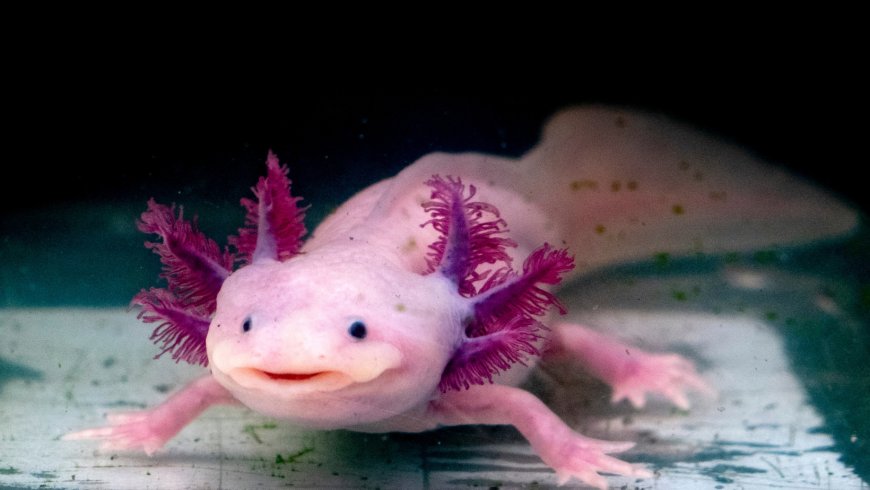
In a promising breakthrough for conservation, scientists have successfully released one of the world’s most endangered amphibians — the Mexican axolotl — into restored wetlands near Mexico City. The study marks a hopeful chapter in the struggle to save this extraordinary species from extinction.
A New Chapter for the Iconic "Smiling Salamander"
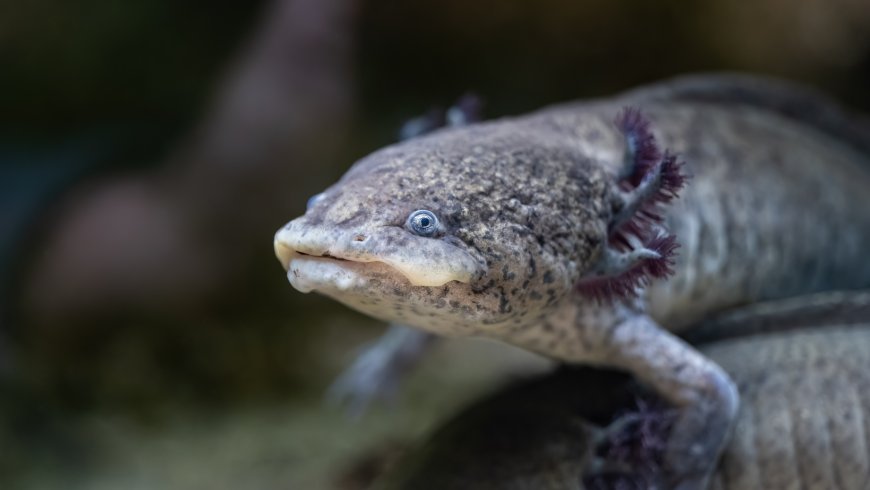
Researchers released 18 captive-bred axolotls at two carefully prepared sites: the wetlands of Xochimilco and a disused quarry transformed into an artificial wetland. Every animal was fitted with a radio tracker, allowing researchers to monitor survival, movement, and feeding behavior.
“The amazing news is that they all survived,” said Dr Alejandra Ramos, lead researcher from the Autonomous University of Baja California. “And not only that, the ones we recaptured had gained weight — meaning they’re successfully hunting in the wild.”
A Cultural and Environmental Symbol
The axolotl, famous for its perpetual smile and remarkable ability to regrow lost body parts, holds deep cultural significance in Mexico. Aztec legend describes the creature as the god Xolotl, who disguised himself as a salamander to evade death.
But in the face of urban sprawl, pollution, and habitat destruction, axolotls have nearly vanished from their native environment. Current estimates suggest as few as 50 remain in the wild.
Dr Luis Zambrano, co-lead researcher from the National University of Mexico, warned:
“If we lose this species, we lose part of our Mexican identity. But if we can restore its population in a city of more than 20 million people, there’s hope for humanity.”
Community-Driven Conservation
The project was a collaborative effort involving local farmers, conservationists, and volunteers. Together, they built wetland refuges equipped with natural water filtering systems to counteract pollution and make the environment habitable for the amphibians.
Intriguingly, researchers observed that some axolotls formed social bonds, often staying close to a specific companion — hinting at previously unknown social behaviors in the species.
Global Scientific Interest
While critically endangered in the wild, axolotls are abundant in research laboratories and pet aquariums worldwide, prized for their unique biology. Scientists continue to study their ability to regenerate limbs, organs, and even parts of the brain, exploring potential medical applications for humans.
A Long Road Ahead
Despite this success, experts caution that significant work remains to clean up Mexico City’s wetlands and give wild axolotls a sustainable future.
“Many animals are losing their habitats worldwide,” said Dr Ramos. “Restoration projects aren’t easy, but they’re possible — and they need everyone. You don’t need to be a scientist to help.”
The team’s findings have been published in the journal PLoS One, offering a blueprint for amphibian conservation efforts globally.
What's Your Reaction?
 Like
1
 Dislike
0
 Love
0
 Funny
0
 Angry
0
 Sad
0
 Wow
0