Brain’s Own Immune Cells Found Capable of Fighting Alzheimer’s: New Study Reveals Protective Microglia - Bio Points News
Scientists discover a special subtype of microglia with low PU.1 and high CD28 that can protect the brain from Alzheimer’s damage — a promising lead for new therapies.
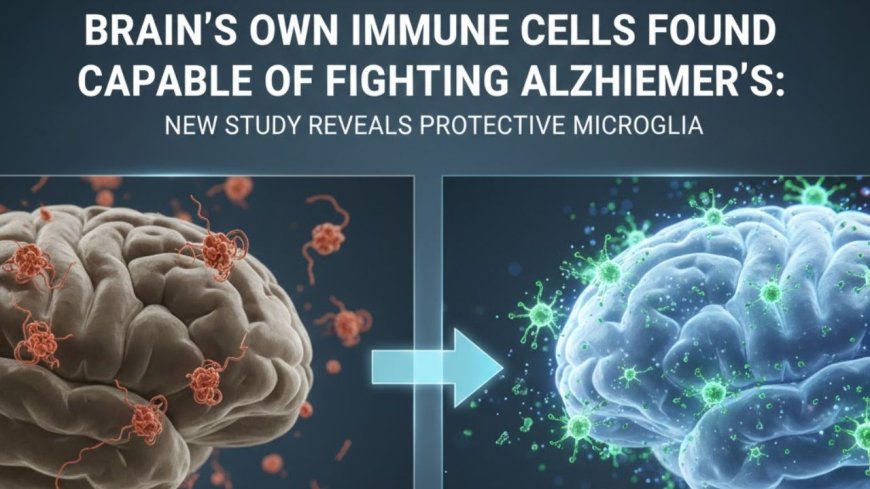
New Study Finds Brain Immune Cells Can Switch On a Defense Against Alzheimer’s
Researchers have uncovered a major discovery: certain immune cells in the brain — called microglia — can shift into a protective state that helps defend against Alzheimer’s disease. By altering the behavior of these cells, scientists believe they may one day slow or even prevent the progression of Alzheimer’s.
Microglia: From Double-Edged to Brain Guardians
Microglia are the brain’s resident immune cells. In Alzheimer’s, they often play a complex role — sometimes clearing harmful proteins, other times contributing to damaging inflammation. A new study shows that a small subset of these cells can instead act as protectors.
When these microglia display low levels of the transcription factor PU.1 but high levels of the receptor CD28, they become what researchers call “neuroprotective microglia.” This state helps suppress harmful inflammation, reduce buildup of toxic proteins (like amyloid and tau), and preserve memory and brain health — at least in experimental models.
Experiments in mice, human brain tissue, and cell cultures demonstrated that when the PU.1–CD28 pathway is active, microglia adopt a calming, protective role across the brain. But when CD28 is removed or suppressed, this protection vanishes — inflammation surges and Alzheimer-like damage progresses.
What the Discovery Means for Alzheimer’s Treatment
This breakthrough suggests a fundamental shift: instead of only targeting amyloid plaques or tau tangles, therapies could aim to reprogram microglia — the brain’s own immune cells — to fight the disease from within. Researchers describe the PU.1–CD28 axis as a natural “immune circuit” that, if properly harnessed, may protect neurons, reduce inflammation, and slow cognitive decline.
Prior genetic studies had linked lower PU.1 expression with reduced Alzheimer’s risk. The new findings explain how that link works — lower PU.1 leads to activation of CD28-bearing protective microglia.
Combined with related research — such as using engineered microglia to clear toxic proteins — this offers a promising, multifaceted strategy: boost the brain’s innate immunity, reduce plaque and tau buildup, and preserve cognitive function.
Why This Is a Big Leap Forward
For decades, Alzheimer’s treatments focused largely on removing or blocking the toxic proteins believed to cause the disease. But success has been limited, partly because Alzheimer’s involves both toxic build-up and harmful inflammatory responses in the brain.
Microglia have long been studied as contributors to disease — but this new research flips that perspective. It shows that microglia are not inherently harmful; under certain molecular conditions, they can switch to a protective mode. This reveals a deeper layer of complexity and control inside the brain’s immune system.
Because the protective microglia are rare but powerful, this discovery also explains why some people remain cognitively healthy despite early signs of Alzheimer’s pathology. Their microglia may naturally adopt this protective state, slowing disease progression.
Toward Microglia-Based Therapies
Scientists are now exploring ways to safely trigger or expand these protective microglia in humans. Potential strategies include drugs that lower PU.1 expression or boost CD28 activity — molecular switches that might reprogram microglia across the brain.
Another avenue is cell-based therapy: engineering human microglia — or similar cells — so they enter the protective mode and deliver therapeutic proteins directly in affected brain regions. Early experiments using engineered microglia in mice have already shown promise in reducing toxic protein loads and preserving neurons.
While many scientific, safety, and regulatory hurdles remain, the discovery marks a hopeful new chapter in Alzheimer’s research. The identification of neuroprotective microglia — cells that can suppress inflammation and slow Alzheimer’s progression — opens one of the most promising paths in recent years to fight the disease. By shifting focus from external drugs to enhancing the brain’s own immune defenses, researchers may soon unlock strategies that protect memory and cognitive health long before symptoms arise. For patients, families, and the scientific community, this discovery offers a powerful reason to hope.
What's Your Reaction?
 Like
0
 Dislike
0
 Love
0
 Funny
0
 Angry
0
 Sad
0
 Wow
0