Caitlin Clark, Angel Reese and USA Basketball’s New Test
Caitlin Clark Angel Reese USA Basketball face bigger roles after A’ja Wilson and Kelsey Plum withdraw, reshaping Team USA before the FIBA World Cup. this week.
Caitlin Clark, Angel Reese and USA Basketball’s New Test
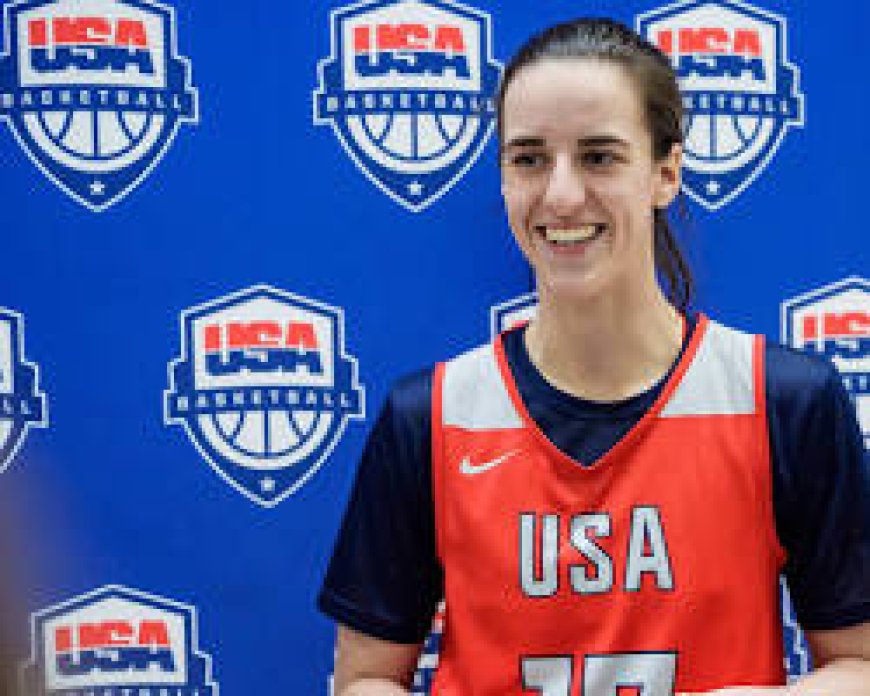
Caitlin Clark and Angel Reese remain on Team USA’s roster for the 2026 FIBA Women’s Basketball World Cup, but the team now enters the tournament with a significantly different balance after A’ja Wilson and Kelsey Plum withdrew. USA Basketball replaced the two established stars with Washington Mystics players Sonia Citron and Kiki Iriafen, leaving a younger and less experienced roster heading into the September tournament in Berlin.
The timing makes the change particularly significant. The FIBA Women’s Basketball World Cup begins September 4, meaning Team USA has limited time to adjust its rotations and offensive hierarchy. The Americans are attempting to win their fifth consecutive World Cup title, continuing a run of international dominance that has made the United States the tournament’s leading favorite.
Why Clark and Reese suddenly matter even more
Clark and Reese were already among the most closely watched members of the roster, but the departures of Wilson and Plum potentially increase the importance of their contributions. Clark gives Kara Lawson another high-level perimeter creator and playmaker, while Reese provides an interior presence, rebounding and physicality. Their value is not simply measured by points; both can affect how the team creates possessions and maintains pressure on opponents.
Clark also arrives with recent international success. During the 2026 FIBA World Cup qualifying tournament in San Juan, she was named the tournament MVP and led the United States in several major statistical categories, including scoring, efficiency and assists. FIBA lists her at 14.6 efficiency points and 6.4 assists per game during that qualifying campaign.
Reese brings a different skill set. FIBA’s qualifying statistics show her as the USA’s leading rebounder during that tournament, averaging 8.0 rebounds per game. That contrast could become important in Berlin, where Team USA will need both perimeter creation and second-chance opportunities to compensate for the absence of Wilson.
What changed after A’ja Wilson and Kelsey Plum withdrew?
Wilson’s absence removes one of the most accomplished players in the world from the American frontcourt. She was the MVP of both the 2022 FIBA Women’s Basketball World Cup and the 2024 Olympic tournament, making her one of the central figures in the recent Team USA era. Plum’s withdrawal is also substantial because she provides perimeter scoring, ball handling and international experience.
Plum’s situation is tied to a lower-left-leg injury and will also keep her out for the remainder of the WNBA season. Wilson withdrew for health and body-management reasons. USA Basketball responded by selecting Citron and Iriafen, two young Mystics players who now receive an unexpected opportunity on the international stage.
The changes also alter the experience level of the roster. The updated team still includes proven veterans such as Breanna Stewart and Chelsea Gray, but the overall group now relies more heavily on players who are entering their first senior World Cup. That makes preparation, communication and lineup chemistry especially important.
Can Clark and Reese play major roles together?
There is no indication that Clark and Reese are being positioned as a formal two-player partnership, but their complementary styles give Team USA another useful combination. Clark can stretch defenses with her shooting and create opportunities with the ball, while Reese can attack the glass and operate around the basket.
The bigger question is how Lawson distributes responsibility across a roster that still contains several elite players. Paige Bueckers adds another dynamic perimeter option, while Stewart brings championship experience and a proven ability to operate at both ends of the floor. Chelsea Gray provides another experienced organizer in the backcourt. FIBA previously highlighted Clark and Bueckers as two players expected to help usher Team USA into its next generation.
That makes this tournament different from a simple star-power story. The United States still has enough talent to control games, but the late roster changes force the coaching staff to establish new combinations quickly.
What is Team USA’s current World Cup roster?
After the changes, the current 12-player group includes Aliyah Boston, Paige Bueckers, Caitlin Clark, Napheesa Collier, Kahleah Copper, Chelsea Gray, Rhyne Howard, Sonia Citron, Kiki Iriafen, Angel Reese, Breanna Stewart and Jackie Young. Wilson and Plum are no longer part of the tournament roster.
The roster is a blend of established international winners and younger players making their senior World Cup debuts. That mixture gives Team USA enormous talent but also creates a different challenge from previous tournaments, when more of the roster was built around returning veterans.
The tournament itself is scheduled for September 4 through September 13 in Berlin. Team USA enters as the defending champion and is pursuing a fifth consecutive World Cup gold medal.
What does this mean for Team USA’s title chances?
The withdrawals make the United States less predictable, but they do not remove the team from the top tier of the tournament. The Americans still have Stewart, Gray, Bueckers, Clark, Reese, Boston, Young and other high-level players across the roster. FIBA’s latest preview described the team as having significant talent and experience while pursuing another World Cup title.
The real concern is not whether Team USA has enough individual talent. It is whether the new group can develop enough cohesion before the knockout rounds. Losing Wilson changes the interior matchup equation, while Plum’s absence reduces another experienced scoring option. The coaching staff must now find the right balance between veterans and younger players.
For Clark and Reese, that creates an opportunity as much as pressure. Their WNBA rivalry has generated enormous public attention, but international basketball gives both players a different objective: contributing to the same team and adapting to a system where individual roles can change from one game to another.
When does Team USA begin the FIBA World Cup?
Team USA begins its 2026 FIBA Women’s Basketball World Cup campaign on September 4 in Berlin. The Americans are in Group D with China, Italy and Czechia. The tournament runs through September 13, with the United States aiming to extend its World Cup winning streak and claim another gold medal.
The first games will provide the clearest indication of how Lawson plans to use Clark, Reese, Bueckers and the rest of the reshaped roster. Until then, the biggest storyline is not simply who is missing. It is how Team USA redistributes the responsibilities those players left behind.
For Clark and Reese, the World Cup offers a chance to become important pieces of the next Team USA generation. For the coaching staff, it is a test of whether a talented but reshaped roster can quickly become a cohesive championship team.
What's Your Reaction?
 Like
0
 Dislike
0
 Love
0
 Funny
0
 Angry
0
 Sad
0
 Wow
0