Student Loan Forgiveness Setback: PSLF Payment Counts Drop for Thousands
Thousands of PSLF borrowers lost qualifying payment credit overnight in 2026. What caused the student loan setback and what you should do right now.
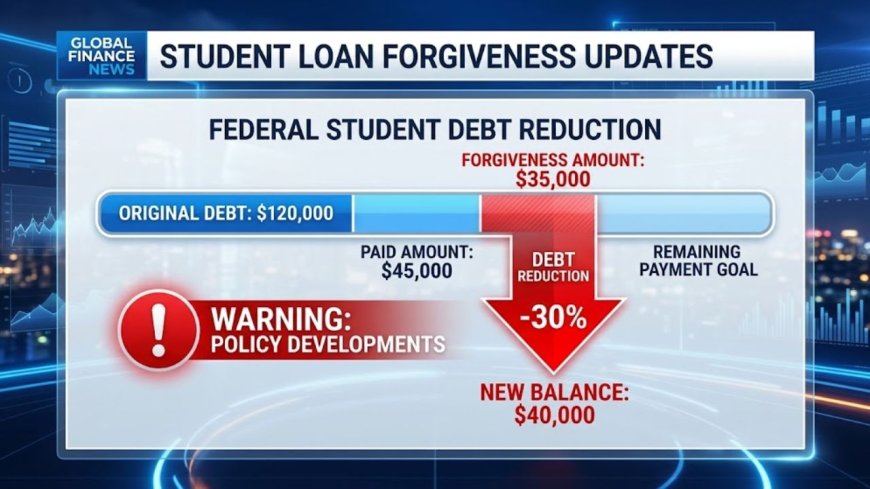
Thousands of Americans pursuing Public Service Loan Forgiveness woke up in August 2026 to find years of carefully accumulated qualifying payments had vanished from their StudentAid.gov accounts overnight — and the U.S. Department of Education has confirmed that at least some of those reversals were deliberate, not accidental. The PSLF payment count drops first surfaced publicly on August 7, when borrowers began posting on Reddit and social media about sudden, unexplained reductions in their qualifying payment totals. One borrower reported their count falling from nearly 120 — the threshold for full loan forgiveness — down to 94. Another saw their tracker drop from 103 to 88. On August 18, after initially calling the changes a data error, the Education Department acknowledged that some of the credit removals were intentional corrections, blaming what it described as "multiple PSLF counter code errors" tied to changes implemented by the Biden administration in May 2024. The full scope of borrowers affected has not been publicly disclosed.
The Public Service Loan Forgiveness program was created by Congress in 2007 to cancel the remaining federal student loan balances of government and nonprofit workers — teachers, nurses, firefighters, social workers, and first responders among them — after they make 120 qualifying monthly payments over ten years of full-time public service employment. Since the program became operational, roughly 1.2 million borrowers have had their debt erased, with the average cleared balance standing at nearly $75,000 according to the Brookings Institution. For borrowers spending a decade or more making payments in lower-wage public service jobs specifically because forgiveness was promised at the end, the sudden deletion of qualifying months represents far more than a technical inconvenience — it can mean years of additional payments and tens of thousands of dollars in costs they had already counted as resolved. A spokesperson for the Education Department told Newsweek that the agency is "committed to ensuring that every qualifying payment is properly credited," but the department has not released the total number of accounts affected or the total amount of credit removed.
The payment count drops are the most damaging of at least three simultaneous data problems hitting PSLF borrowers in the same period. Separately, July and August 2026 payments from thousands of borrowers failed to post to their PSLF trackers at all — leaving legitimate on-time payments in a processing limbo with no confirmed timeline for resolution. A third error involved false forbearance alert notifications sent to borrowers — messages incorrectly telling them they were in a non-qualifying status when they were not. The Student Debt Crisis Center, a national advocacy organization, issued a formal statement on August 7 calling the failures "a catastrophic system failure" and "an unconscionable betrayal of the people our nation depends on most," demanding that the Education Department publicly disclose the full scope of all three errors and pause payment obligations while the problems are resolved.
Why PSLF Payment Counts Are Dropping: The Coding Error Explanation Under Scrutiny
The Education Department's official explanation is that the payment count drops stem from coding errors introduced when the Biden administration moved the PSLF program in-house at Federal Student Aid in May 2024. According to the department, those errors caused some borrowers to receive qualifying payment credit they were not technically entitled to under existing program rules — including credit for payments made under repayment plans that were never eligible for PSLF. Scott Buchanan, Executive Director of the Student Loan Servicing Alliance, confirmed to CNBC that the changes were "technical accounting corrections rather than the result of any new PSLF policy." The department's position is that it is restoring accuracy to borrower accounts, not taking away forgiveness that was legitimately earned.
Critics — including student loan attorneys, advocacy groups, and Democratic lawmakers — reject that framing entirely. The core problem, as student loan expert Mark Kantrowitz told CNBC, is that borrowers watching their counts drop are being asked to trust a recalculation without seeing the underlying math. The Education Department has not published the specific criteria it used to determine which payments were credited in error, which plans were retroactively deemed ineligible, or what appeals process a borrower can use if they believe legitimate qualifying payments were incorrectly removed. Forbes reported that at least some confirmed qualifying payments — made on valid plans by borrowers with certified employment — were swept up in the rollback alongside the genuinely erroneous credits. That distinction matters enormously for borrowers: a correction of Biden-era errors is a different thing from a unilateral reduction of payments that were legitimately earned under the rules in effect at the time they were made.
The Bigger PSLF Picture: Four Major Changes Hitting Borrowers in 2026
The payment count rollback is landing on top of three other significant PSLF changes that took effect in 2026, creating a compounding set of challenges for borrowers that is unlike anything the program has seen in its 19-year history. First, the Saving on a Valuable Education plan — which covered roughly 7 million borrowers — was struck down in federal court on March 10, 2026, forcing every SAVE enrollee to transition to a new repayment plan. Months spent in SAVE forbearance during the legal proceedings did not automatically count toward PSLF, though the PSLF Buyback option may allow some borrowers to recover those months at additional cost. The Buyback formula itself was changed on March 31, 2026 — moving from the SAVE payment calculation to an income-based calculation that produces higher costs for many of the approximately 90,000 borrowers with pending Buyback requests.
Second, the One Big Beautiful Bill Act, which took effect July 1, 2026, introduced a new default repayment plan called the Tiered Standard Plan — and that plan does not qualify for PSLF. According to Rich Williams, a former deputy assistant secretary at the Education Department, new borrowers who do not actively choose their repayment plan are automatically placed into the Tiered Standard Plan, earning zero PSLF credit from day one without realizing it. Third, Parent PLUS loans disbursed on or after July 1, 2026 are now permanently locked out of income-driven repayment and PSLF entirely — a change that eliminates a forgiveness pathway that many families had planned around. Taken together, the payment count drops, the SAVE fallout, the new plan pitfalls, and the Parent PLUS exclusion represent the most disruptive period for PSLF borrowers since the program launched.
What Affected PSLF Borrowers Should Do Right Now
Student loan experts across the board are advising PSLF borrowers to take immediate protective action regardless of whether they have personally seen a payment count drop. The first step is to log into StudentAid.gov and take a screenshot of the current qualifying payment count with a date stamp — this creates a documented baseline that can be referenced if counts change again. Borrowers should also download their full payment history and save copies of all previously submitted employment certification forms. If a payment count has already dropped, borrowers should not assume the error will be corrected automatically — they should submit a formal written inquiry to their loan servicer requesting a written explanation of which payments were removed and why, and keep a copy of that request for their records.
For borrowers who believe legitimate qualifying payments were incorrectly removed, the Education Department has a PSLF Reconsideration process available through StudentAid.gov. Filing a reconsideration request does not resolve the issue immediately — the department is working through a significant backlog — but it creates an official record of the dispute and establishes the borrower's position for any future administrative or legal review. The Student Debt Crisis Center is currently compiling borrower impact reports and has called on Congress to conduct oversight hearings on the payment count rollback. PSLF remains a statutory entitlement — it was created by Congress in 2007 and can only be eliminated by Congress — meaning the program itself is not going away regardless of administrative changes. What is at stake for affected borrowers is not whether the program exists, but whether every qualifying payment they have already made will ultimately be counted toward the 120 they were promised would cancel their debt.
Frequently Asked Questions
Why did my PSLF qualifying payment count drop in 2026?
The Education Department says the drops are caused by coding errors from changes the Biden administration made to the PSLF program in May 2024, which resulted in some borrowers receiving qualifying payment credit they were not entitled to under program rules. However, the department has confirmed that the full scope of affected accounts has not been disclosed, and advocacy groups and student loan attorneys have reported that legitimate qualifying payments were also removed in the rollback. If your count dropped, take a screenshot immediately and submit a formal inquiry to your loan servicer.
Is PSLF being eliminated in 2026?
No. PSLF was created by Congress in 2007 and remains in effect. The One Big Beautiful Bill Act, which took effect July 1, 2026, made significant changes to which repayment plans qualify and removed Parent PLUS loans from PSLF eligibility for new borrowers, but the core program — 120 qualifying payments over 10 years in public service, then forgiveness of the remaining balance — has not been repealed. New borrowers should be aware that the default Tiered Standard Plan does not qualify for PSLF and must actively choose a qualifying plan.
What should I do if my PSLF payment count dropped?
Log into StudentAid.gov and screenshot your current qualifying payment count with a date stamp. Download your full payment history and save copies of your employment certification forms. Submit a formal written inquiry to your loan servicer requesting a written explanation of which payments were removed and why. If you believe legitimate qualifying payments were removed, file a PSLF Reconsideration request through StudentAid.gov to create an official record of your dispute while the department works through its backlog.
What's Your Reaction?
 Like
0
 Dislike
0
 Love
0
 Funny
0
 Angry
0
 Sad
0
 Wow
0