Ozempic and Nail Loss: New Study Finds 4x Higher Risk for GLP-1 Users
A new study finds GLP-1 drug users like Ozempic face 4x higher risk of nail detachment and 50% more hair loss. What the research shows and what doctors say.
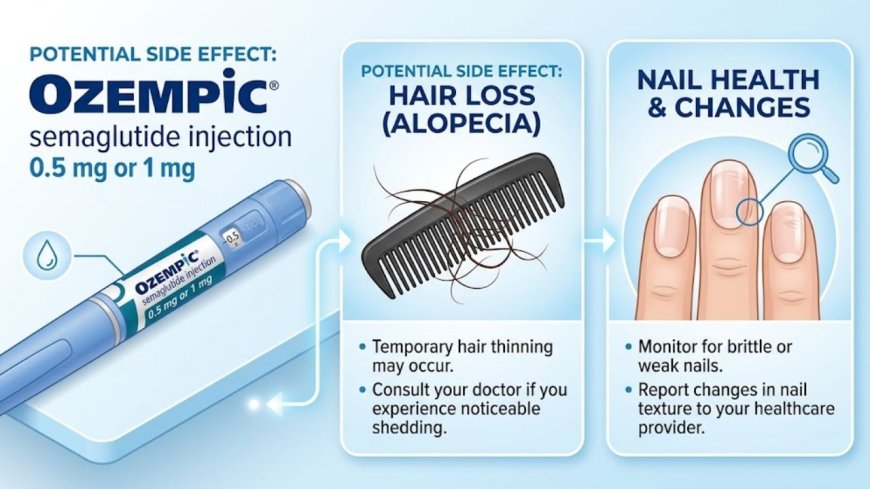
People taking GLP-1 weight loss drugs like Ozempic, Wegovy, and Zepbound may be significantly more likely to experience nail detachment and hair loss than people not on these medications, according to two new studies presented at one of Europe's largest dermatology conferences this week. The research, unveiled at the European Academy of Dermatology and Venereology Congress in Vienna on October 1, 2026, found that GLP-1 drug users were more than four times as likely to report nail detachment compared to a control group — and that the increased risk persisted even after accounting for weight loss, the factor most commonly blamed for these side effects. The findings come as tens of millions of Americans use GLP-1 receptor agonists for type 2 diabetes and obesity, and as the FDA continues to evaluate hair loss as an ongoing safety signal for this drug class. What makes the new data particularly notable is that it goes beyond anecdote — this is the first controlled study to examine GLP-1 drugs and nail health directly.
The two companion studies examined 1,904 participants — 575 who were actively taking a GLP-1 receptor agonist and 1,329 controls with obesity and/or type 2 diabetes who had never used the drugs. The nail study, led by Dr. Charles Taïeb, found that nail detachment occurred in 39% of GLP-1 users compared to just 9% of controls. Nail discoloration was reported by 46% of users versus 17% of controls. Overall, 66% of GLP-1 users reported at least one nail problem, compared with 53% of the control group. The hair study, led by Dr. Bruno Halioua, found that unusual hair loss was reported by 50% of GLP-1 users versus 34% of controls, while loss of hair volume or density affected 42% of users compared to just 19% of non-users. The research was funded by Pierre Fabre, a French dermo-cosmetics company, and has not yet been peer-reviewed.
Both researchers were careful to stress that the studies establish an association — not proof of direct causation. The studies were cross-sectional and relied on patient-reported symptoms rather than laboratory measurements or long-term prospective tracking. Roughly half of GLP-1 users in the nail study reported having nail problems before they even started taking the medication, which the researchers acknowledged as a significant limitation. The key finding that sets this research apart from prior work, however, is that the differences between users and non-users remained statistically significant even when the analysis was limited to participants who had lost weight — suggesting that weight loss alone cannot fully explain what is happening to the hair and nails of people on these drugs.
What GLP-1 Drugs Like Ozempic Are Actually Doing to Hair and Nails
Doctors have long known that rapid weight loss can trigger a type of temporary hair shedding called telogen effluvium — a condition where hair follicles prematurely enter a resting phase and shed more than usual. When the body undergoes significant caloric restriction, as it does on GLP-1 medications, it can become deficient in nutrients critical for hair and nail health, including iron, zinc, and biotin. This mechanism has been the standard explanation for GLP-1-related hair changes. But the new EADV data suggests something else may also be occurring. The persistence of higher nail detachment and hair loss rates among GLP-1 users even after adjusting for weight loss points toward a possible direct drug effect — or an indirect inflammatory mechanism — that researchers say requires further study.
Dr. Halioua noted in his presentation that the scalp changes seen among GLP-1 users included inflammatory patterns that go beyond classical post-weight-loss shedding. A separate BMJ study published in July 2026 found that GLP-1 users had a 37% higher risk of alopecia compared to patients on SGLT-2 inhibitors — another class of diabetes drugs — and a 68% higher risk compared to those on DPP-4 inhibitors, after adjusting for age, weight, and other variables. That study, which examined data from the University of Pennsylvania Health System, also found the increased risk was primarily non-scarring alopecia, meaning the hair follicles remain intact and regrowth is possible. Researchers from both studies agree that a rigorous prospective clinical trial — tracking patients from the day they start GLP-1 therapy — is now needed to establish whether the drug itself is directly responsible.
The Ozempic Label Problem: Why Millions of Patients May Not Be Warned
One of the most significant — and underreported — dimensions of the GLP-1 hair loss story is a labeling inconsistency that affects millions of American patients. Ozempic (semaglutide) and Mounjaro (tirzepatide), the versions of these drugs approved for type 2 diabetes, list alopecia only in their postmarketing sections — where frequency and causation cannot be reliably estimated — because hair loss was not a prominently reported event in their original clinical trials. Wegovy, Zepbound, and Foundayo — the weight-management-approved versions of semaglutide and tirzepatide — explicitly list hair loss as a documented adverse reaction in their approved labels, with Wegovy's trials showing approximately 3% of users reporting alopecia compared to 1% on placebo. This means a patient taking Ozempic for diabetes is looking at a label that does not clearly warn them about a side effect that is listed on a label for the same active molecule at a higher dose.
The FDA flagged alopecia as a potential safety signal from its Adverse Event Reporting System as early as 2023 and has continued evaluating it. As of 2026, the agency has not issued a label change mandate for the diabetes versions of these drugs, though it requires companies to monitor and report on postmarketing adverse events. The UK's Medicines and Healthcare Products Regulatory Agency received nearly 400 reports of hair loss linked to tirzepatide in 2026 alone, following 541 the year before. For patients currently on GLP-1 therapy who are experiencing hair or nail changes, dermatologists recommend consulting a prescriber, ensuring adequate protein and nutrient intake, and being aware that telogen effluvium-related hair loss typically resolves within six to nine months once weight stabilizes. Fingernail regrowth after onycholysis takes approximately six months, with toenails taking considerably longer.
Should You Stop Taking Ozempic or Wegovy If You Notice Hair or Nail Changes?
Medical experts uniformly advise against stopping GLP-1 medications without consulting a doctor based on these findings alone. The benefits of GLP-1 therapies for type 2 diabetes management and obesity — including reductions in cardiovascular risk, blood sugar control, and significant weight loss — are well-established and substantial. The hair and nail changes observed in studies are described as generally reversible, and most patients do not experience severe versions of these side effects. What the new research calls for is informed awareness — patients and prescribers should discuss the possibility of dermatological changes before and during treatment, monitor for them, and address nutritional deficiencies proactively.
For the broader GLP-1 field, the EADV 2026 studies mark a turning point. Hair loss had been discussed informally for years among patients and in online forums, but clinical evidence lagged behind the patient experience. Now, with two controlled studies, a BMJ analysis, and FDA monitoring all pointing in the same direction, the question is no longer whether GLP-1 drugs are associated with hair and nail changes — it is how direct that association is and what can be done to prevent it. Researchers say a prospective trial tracking patients from treatment initiation is already being planned to finally determine whether the effect is caused by the drug, the weight loss, nutritional changes, or some combination of all three.
Frequently Asked Questions
Does Ozempic cause hair loss?
Research increasingly links GLP-1 drugs like Ozempic and Wegovy to higher rates of hair loss. A 2026 EADV study found 50% of GLP-1 users reported unusual hair loss versus 34% of non-users. However, no study has yet proven direct causation — weight loss, caloric restriction, and nutritional deficiencies are all possible contributing factors. Hair loss from these drugs is typically temporary and reversible once weight stabilizes, usually within six to nine months.
Can Ozempic make your nails fall off?
A new controlled study presented at EADV Congress 2026 found nail detachment in 39% of GLP-1 users versus just 9% of controls — more than four times the rate. The condition, called onycholysis, involves the nail plate separating from the nail bed. The study does not prove Ozempic directly causes this, but the association remained even after adjusting for weight loss. Fingernails typically take about six months to regrow after detachment.
Is Ozempic hair loss permanent?
In most cases, no. The primary type of hair loss linked to GLP-1 drugs is telogen effluvium — a temporary shedding triggered by rapid weight loss and reduced caloric intake. Hair follicles remain intact, and regrowth typically begins within six to nine months once body weight stabilizes. A smaller subset of users may experience pattern baldness acceleration, which requires evaluation by a dermatologist for appropriate treatment.
What's Your Reaction?
 Like
0
 Dislike
0
 Love
0
 Funny
0
 Angry
0
 Sad
0
 Wow
0