Food Recalls: What Consumers Should Check Now
Food recalls are surging in searches as U.S. alerts span berries, sprouts, lettuce and pet food. See what’s recalled, why, and what consumers should do.
Food Recalls: What Consumers Should Check Now
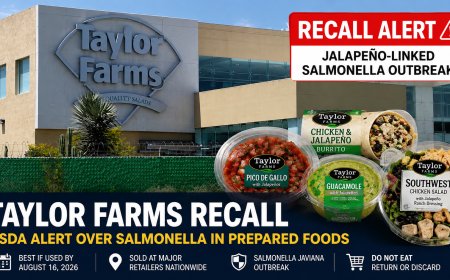
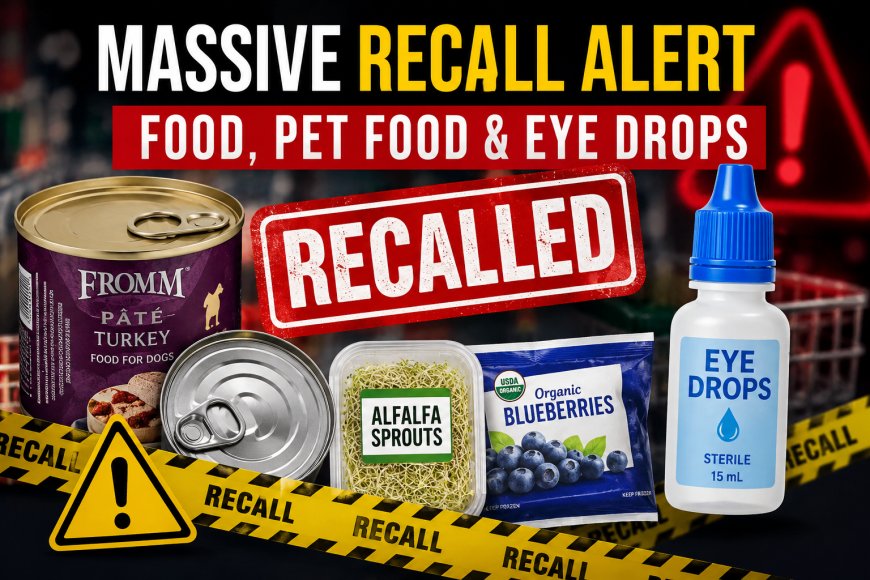
Food recalls are drawing fresh attention across the United States as recent safety alerts involve frozen berries, alfalfa sprouts, lettuce, jalapeño-containing products and pet food. The latest wave is not one single outbreak: different products have been recalled for different hazards, including E. coli, Salmonella, Cyclospora and possible foreign materials. Federal records show that several of these investigations and recalls remain active, making it important for consumers to check their refrigerators, freezers, pantries and pet-food supplies rather than assuming a recalled product has already disappeared from stores.
Why the latest recalls are getting attention
The current recall cycle stands out because several unrelated safety problems are appearing at the same time. A frozen berry recall involves a potentially dangerous strain of E. coli, while an alfalfa sprout recall involves both Shiga toxin-producing E. coli and Salmonella. Separately, federal investigators continue to track a large Cyclospora outbreak associated with iceberg lettuce. These cases involve different organisms and different supply chains, but together they explain why searches for recall information have increased sharply.
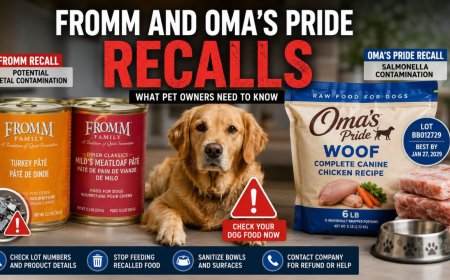
Google Trends currently shows an active U.S. trend cluster connected to recalls involving Fromm and Oma’s Pride, with more than 100,000 searches reported for that trend and activity beginning roughly 13 hours earlier. That makes the broader recall topic particularly timely for consumers looking for product-specific information. :contentReference[oaicite:7]{index=7}
Which recalled products deserve the closest attention?
One of the most significant current alerts involves GreenWise Organic Whole Blueberries and Whole Mixed Berries sold through Publix. The FDA says Publix recalled all lots of the affected products because of possible E. coli O145:H28 contamination. The products were distributed to stores in eight states, including Alabama, Florida, Georgia, Kentucky, North Carolina, South Carolina, Tennessee and Virginia. Consumers who still have the affected products are advised not to eat them.
The alfalfa sprout recall presents a separate concern. Everything Sprouts, LLC recalled certain lots of alfalfa sprouts sold under the Everything Sprouts and Calco names because the products may be contaminated with Salmonella or Shiga toxin-producing E. coli. The FDA published the recall on August 22 and says consumers should not eat, serve or sell affected products.
Another major investigation involves iceberg lettuce. The FDA's latest update reports 10,930 illnesses, 454 hospitalizations and two deaths associated with the multistate Cyclospora outbreak. The agency says the recalled lettuce should no longer be available in stores or restaurants, while investigators continue working with state, federal and international partners.
Pet owners are also affected by recent alerts
The recall activity is not limited to food intended for people. Fromm Family Foods recalled 3,852 cases of its Turkey Pâté Wet Dog Food and 1,973 cases of Diner Classics Milo’s Meatloaf Pâté Wet Dog Food because of potential metal contamination. That is a combined 5,825 cases. FDA records say the affected products were distributed through pet stores and online outlets in the United States and Canada.
The affected Fromm products can be identified by their specific product names, UPC numbers, lot codes and Best By information. The FDA says there have been no reports of illness or injury connected with those products as of its recall notice. However, sharp metal pieces can cause serious injuries if swallowed, so consumers are instructed to stop feeding the recalled products to dogs and return them to the retailer.
FDA records also list an August 17 recall involving Oma’s Pride Woof Complete canine food because of Salmonella contamination. That means pet owners should not assume that a recall affecting one brand is the only current concern. Checking the latest FDA recall information is more reliable than relying on a single social-media post or an old recall article.
What should consumers do if they find a recalled product?
The safest response is to stop using the product and compare the package with the official recall information. Product name alone may not be enough. Consumers should check the lot number, UPC, package size and expiration or Best By information whenever those identifiers are provided by the manufacturer or FDA.
For recalled food, do not taste the product to determine whether it is safe. If an item is confirmed as recalled, follow the manufacturer's instructions for disposal or return. Wash hands after handling potentially contaminated food and clean surfaces that may have come into contact with it.
For recalled pet food, stop feeding the product immediately. Pet owners whose animals develop symptoms after eating a recalled product should contact a veterinarian and provide the product information if available. FDA says symptoms following ingestion of metal-contaminated Fromm food can include choking, vomiting, loss of appetite, lethargy and stomach discomfort.
Why recall lists can keep changing
A recall announcement is not always the final stage of an investigation. Agencies can expand a recall when new distribution information becomes available, laboratory testing identifies additional products, or epidemiological evidence strengthens a connection between an illness and a food item.
The GreenWise berry situation demonstrates how a recall can become broader. The initial action involved a specific lot, but Publix later recalled all lots of the affected frozen blueberry and mixed-berry products following traceback and epidemiological information. The FDA continues to investigate the outbreak.
The same principle applies to lettuce. The FDA has continued adding illnesses to the Cyclospora investigation even after the implicated lettuce was recalled. Its August 20 update says the last reported illness onset was August 11 and that investigations and inspections are continuing.
What consumers should check right now
Consumers do not need to throw away every food item in their kitchen simply because recall searches are trending. Instead, they should identify whether they own a product specifically named in an active recall. Pay particular attention to frozen berries, recalled sprouts, affected lettuce products and recently recalled pet foods, especially if those products were purchased recently.
Consumers should also remember that a recalled product may have been purchased before the announcement. Checking a freezer or pantry is therefore useful even when an item is no longer being sold. When an official recall applies, follow the instructions provided by the FDA, manufacturer or retailer rather than relying on informal claims online.
What the recall trend means for shoppers
The latest alerts do not mean that all food on store shelves is unsafe. They show instead why recall systems, product tracking and consumer awareness matter in a large national food supply chain. The current cases involve different products and hazards, and each recall has its own affected lots, distribution areas and instructions.
For consumers, the most practical response is simple: check official recall information, match the exact product identifiers, stop using confirmed recalled products and follow the recommended disposal or return instructions. That approach is more useful than reacting to headlines alone and can reduce the chance of accidentally consuming or serving a recalled product.
FAQ: What consumers are asking about recalls
What food recalls are active right now?
Recent FDA records include recalls involving GreenWise frozen blueberries and mixed berries, Everything Sprouts and Calco alfalfa sprouts, several other food products, and recalled pet foods. The FDA's recall database should be checked for the latest product-specific information because recall status can change.
Are the recalled frozen blueberries safe to eat?
No. The FDA says consumers should not eat the recalled GreenWise Organic Whole Blueberries or Whole Mixed Berries because of possible E. coli O145:H28 contamination. Consumers with affected products should follow the recall instructions and discard or return them as directed.
Why were alfalfa sprouts recalled?
Everything Sprouts recalled certain alfalfa sprouts because they may be contaminated with Salmonella or Shiga toxin-producing E. coli. The FDA advises consumers not to eat, serve or sell affected products.
Was Fromm dog food recalled?
Yes. Fromm Family Foods recalled specific Turkey Pâté and Diner Classics Milo’s Meatloaf Pâté canned dog foods because of potential metal contamination. The FDA says 5,825 cases were recalled in total and advises consumers to stop feeding the affected products to dogs.
Does a recall mean all products from that brand are unsafe?
No. A recall normally applies to specific products, lots, dates or production runs. Consumers should check the exact identifiers listed in the official recall notice rather than assuming every product made by the same company is affected.
Editorial note: Recall information can change as investigations continue. Consumers should verify product details against the latest FDA or manufacturer notice before consuming, serving or disposing of a product.
What's Your Reaction?
 Like
0
 Dislike
0
 Love
0
 Funny
0
 Angry
0
 Sad
0
 Wow
0