Omar Hayat Mahal: Chiniot’s Historic Palace of Love, Tragedy & Beauty - Bio Points News
Discover the true story of Omar Hayat Mahal in Chiniot — a symbol of love, stunning architecture, and heartbreaking tragedy in the heart of Punjab, Pakistan.

Omar Hayat Mahal: A True Story of Love, Architecture, and Tragedy
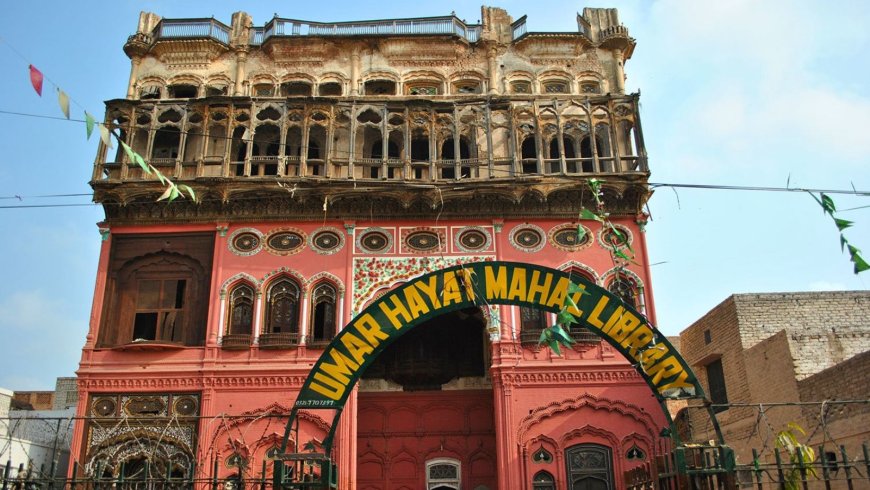
The ancient city of Chiniot, located in the heart of Punjab, Pakistan, holds a treasure trove of history, culture, and craftsmanship. Renowned for its intricately designed wooden furniture, majestic mosques, and exquisite architectural heritage, Chiniot’s most iconic landmark is the Omar Hayat Mahal — a palace that embodies a heart-wrenching story of love, loss, and architectural brilliance.
Also known locally as the Taj Mahal of Chiniot and sometimes referred to as Gulzar Manzil, this magnificent structure is a rare surviving example of early 20th-century craftsmanship in Punjab. Its rich history is not only a tale of love and tragedy but also a reflection of Chiniot’s unmatched artisanship.
The Love Story Behind Omar Hayat Mahal
The origins of Omar Hayat Mahal date back to the early 20th century when Sheikh Omar Hayat, a wealthy merchant from Chiniot, defied his family’s wishes and married a woman of his choice. This decision sparked severe opposition from his family, forcing him and his new wife to migrate to Calcutta (now Kolkata).
It wasn’t until the birth of their son, Sheikh Gulzar, in 1920 that Omar Hayat longed to return to his hometown. Driven by both nostalgia and a desire to manifest his love into something lasting, he commissioned the construction of the grand Omar Hayat Mahal in the heart of Chiniot.
A Marvel of Craftsmanship and Design
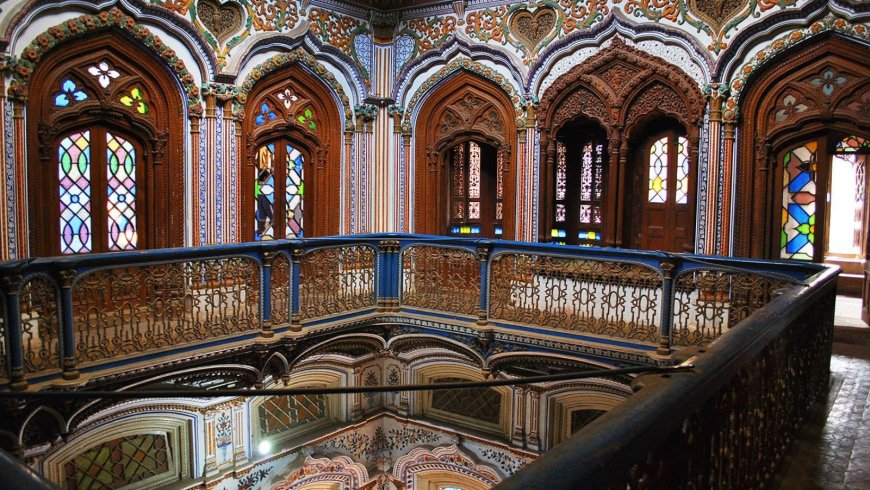
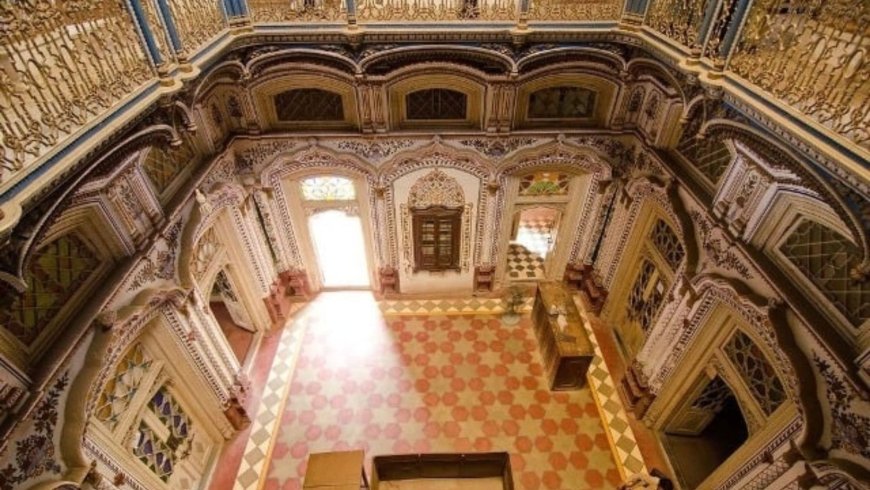
Construction of the palace began shortly after Sheikh Omar's return. It quickly became a masterpiece of Mughal-inspired architecture blended with local Chinioti craftsmanship. The building showcased:
-
Intricately carved wooden doors and window frames
-
Exquisite brickwork
-
Colorful glass decorations
-
Handcrafted floral motifs and calligraphy
-
Detailed frescoes and inlaid ceilings
The structure was a remarkable display of traditional wood carving, stone masonry, and decorative glasswork — a hallmark of Chiniot’s famed artisans. In its time, Omar Hayat Mahal was considered one of the most beautiful residences in Punjab.
A Joyous Wedding and a Mysterious Death
Years later, Sheikh Gulzar, the only son of Sheikh Omar Hayat, was married in this very palace. The event was celebrated with great splendor, and the Mahal resonated with festivity. However, what was supposed to be a lifelong memory of happiness turned into an unimaginable tragedy.
On the morning following his wedding night, Sheikh Gulzar was found dead under mysterious circumstances. His mother, Fatima, alleged foul play and filed a murder case, claiming that a particular kind of coal was poisoned, and when burned, it emitted toxic fumes that led to her son’s untimely death.
The shocking event devastated the family and cast a shadow over the splendid palace. Sheikh Omar Hayat, heartbroken, left the palace, and the property began to fall into neglect.
Neglect, Looting, and Abandonment
Following the tragedy, Omar Hayat Mahal was abandoned. Over the years, the once-pristine residence was subjected to theft and decay. Priceless artifacts, wooden carvings, and decorative pieces were stolen. Without maintenance, the palace slowly crumbled.
For decades, this beautiful building stood as a silent witness to its tragic past. Both Sheikh Gulzar and his mother Fatima were buried within the premises of the palace, adding to its somber history.
Restoration and the Birth of Omar Hayat Library
In 1990, recognizing the historical and cultural value of this forgotten landmark, the District Management Board of Chiniot took the initiative to restore the dilapidated structure. The palace was carefully renovated, preserving its original woodwork, architecture, and historical charm.
To give it a new purpose, authorities converted the palace into a public library. It was renamed the Omar Hayat Library, providing a serene space for readers and historians while keeping alive the memory of Sheikh Omar Hayat and his ill-fated family.
A Cultural Icon and Tourist Attraction
Today, Omar Hayat Mahal stands as a symbol of Chiniot’s artistic heritage and its rich history. The building has been the site for several Pakistani films, TV dramas, and documentaries, drawn by its vintage ambiance and architectural splendor.
The palace attracts tourists, history enthusiasts, and architecture lovers from across Pakistan and beyond. Despite its tragic past, the Mahal remains a shining testament to the city's famed craftsmanship and historical resilience.
📌 Quick Facts About Omar Hayat Mahal
| Feature | Details |
|---|---|
| Location | Chiniot, Punjab, Pakistan |
| Constructed by | Sheikh Omar Hayat |
| Construction Started | Post-1920 |
| Original Purpose | Private residence and a symbol of love |
| Architectural Style | Mughal-inspired, Chinioti woodwork, brick masonry |
| Significant Tragedy | Mysterious death of Sheikh Gulzar the day after his wedding |
| Converted Into | Omar Hayat Library (1990) |
| Known as | Taj Mahal of Chiniot, Gulzar Manzil |
What's Your Reaction?
 Like
0
 Dislike
0
 Love
0
 Funny
0
 Angry
0
 Sad
0
 Wow
0