September Jobs Report: US Adds 29,000 Jobs, Unemployment Hits 4.2%
The September 2026 jobs report shows only 29,000 jobs added and unemployment at 4.2%. Here's what the weak numbers mean for the Fed, markets, and midterms.
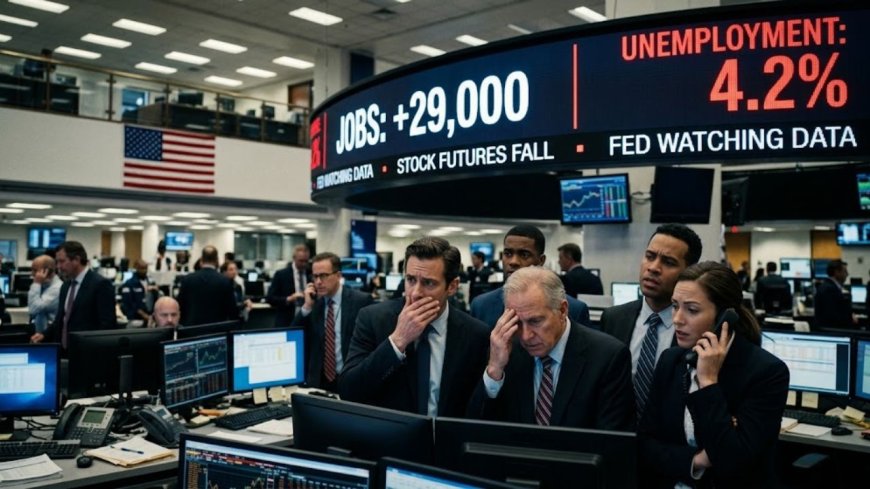
The United States economy added just 29,000 jobs in September, the Bureau of Labor Statistics reported on Friday, October 2 — a figure that fell dramatically short of the 84,000 to 90,000 jobs economists had forecast and marked the third-weakest monthly hiring number of 2026. The unemployment rate ticked up to 4.2 percent from 4.1 percent in August, driven in part by 485,000 additional workers entering the labor force. The September 2026 jobs report delivered an additional blow through downward revisions: July's originally reported small gain was revised to a net loss of 10,000 jobs, and August's count was cut from 162,000 to 133,000, erasing a combined 60,000 positions from the summer totals. The report was released exactly 32 days before the November 3 midterm elections, making it the final official snapshot of the American labor market voters will see before casting their ballots.
Wage growth came in at 3.0 percent on an annual basis, the slowest pace since May 2021 and below the 3.2 percent economists had expected — a number that carries particular political weight because it means wages are still failing to keep pace with inflation, which has remained elevated throughout 2026 largely due to energy price shocks from the ongoing US-Iran war. Healthcare, construction, manufacturing, and restaurants and bars led the modest hiring that did occur, with restaurants and bars alone adding 11,000 jobs — roughly a third of all positions created during the month. Government payrolls fell by 17,000, continuing a pattern of federal workforce reductions that began in 2025. The total number of unemployed Americans stood at 7.1 million in September, while another 4.5 million were employed part-time for economic reasons and 5.8 million people outside the labor force said they currently wanted a job but were not actively searching.
The September 2026 jobs report immediately reshuffled expectations for Federal Reserve policy, and in a pattern that has become familiar in this unusual economic cycle, stock futures rose sharply after the weak numbers were released. The logic is counterintuitive but straightforward: fewer jobs and slower wage growth reduce the likelihood that the Fed will raise interest rates at its upcoming October meeting, and lower rate expectations are positive for equities. According to the CME Group's FedWatch tool, market-implied probability that Fed Chair Kevin Warsh and the Federal Open Market Committee will hold rates steady at 3.75 to 4.00 percent in October jumped to approximately 80 percent following the report. Thomas Simons, chief US economist at Jefferies, put it bluntly: the weak hiring number was "the nail in the coffin for an October hike."
Why the September 2026 Jobs Report Missed So Badly — Three Forces at Once
The September jobs miss was not a random data fluctuation — it reflected three separate economic forces pressing down on hiring simultaneously, each connected to policy decisions made in Washington. The first and most powerful is the Iran war, which began earlier in 2026 and has driven fuel costs sharply higher, pushed headline inflation to elevated levels, and created sustained uncertainty for businesses planning staffing and investment. Energy price shocks work through the economy with a lag, meaning the full employment impact of Iran-related disruptions has likely not yet materialized in the data. Companies operating in energy-intensive sectors — transportation, manufacturing, logistics — have been particularly cautious about adding headcount when their core input costs remain unpredictable month to month.
The second force is the Trump administration's immigration enforcement crackdown, which has effectively shut down southern border crossings and reduced legal immigration flows to near historic lows. Immigration has been a significant driver of US labor supply growth over the past several years, particularly in construction, agriculture, food services, and hospitality. RSM chief economist Joe Brusuelas described September's result as a continuation of the "low hire, low fire" economy — a labor market where workers who have jobs are not seeing mass layoffs, but workers without jobs are finding it increasingly difficult to secure new positions. The combination of reduced labor supply from immigration restrictions and reduced hiring demand from war-driven economic uncertainty has created a labor market that appears stable on the surface but is cooling underneath. The third factor is the Federal Reserve's own rate hike in mid-September, which raised the upper bound of the target range to 4.00 percent and which, according to some analysts at 24/7 Wall Street, may already be biting harder than policymakers anticipated.
What the Report Means for the Federal Reserve's October Decision
Federal Reserve Chair Kevin Warsh took over the central bank earlier in 2026 with a reputation as a hawk — an inflation fighter who was expected to prioritize bringing price growth back to the Fed's 2 percent target even at the cost of economic growth. The September jobs report has handed Warsh an uncomfortable data point: the labor market is weakening at the same moment inflation remains above target, a combination known in economic circles as stagflation risk. Warsh has publicly stated that "persistently high prices are a burden for the American people" and has maintained a commitment to price stability, but hiking rates into a labor market that just added fewer than 30,000 jobs would risk accelerating the cooling into something more serious. The CME FedWatch tool's roughly 80 percent implied probability of a hold at the October meeting reflects the market consensus that Warsh will pause for now — but December remains live if inflation data does not cooperate.
The Fed's benchmark rate currently sits between 3.75 and 4.00 percent following the mid-September hike, the highest level in years. Treasury yields fell and stock futures rallied immediately after the September jobs data was released, as traders repositioned around a lower probability of further near-term tightening. Before the Iran war began in early 2026, Fed members had projected at least one rate cut during the year — a scenario that has since been entirely reversed by energy-driven inflation. The next jobs report, covering October 2026, will be released in early November, after the midterm elections have already been decided, meaning the September data is the last piece of official employment evidence available to voters evaluating the economy before November 3.
The Midterm Election Dimension: Last Jobs Report Before November 3
The political timing of the September 2026 jobs report could not be more consequential. Republicans defending their narrow House majority have spent the year arguing that the economy remains fundamentally strong under Trump's second term, while Democrats have pointed to persistent inflation, wage stagnation, and slowing growth as evidence that the administration's policies — tariffs, Iran military engagement, immigration crackdowns — are harming working Americans. A jobs number of 29,000, roughly one-third of what economists expected, hands Democrats a concrete data point in the final 30 days of the campaign. The Washington Post noted that the report revealed "economic strains from the Iran war and immigration enforcement," a framing that connects policy choices directly to the labor market weakness — a politically charged interpretation that both parties will dispute heading into November.
The unemployment rate remaining in a narrow band between 4.1 and 4.3 percent since March gives Republicans an argument that the labor market has not collapsed, and the fact that 485,000 additional workers entered the labor force in September — lifting the participation rate slightly to 61.8 percent — suggests some underlying confidence among job seekers. But wages growing at only 3.0 percent annually when inflation is running well above that level means the average American worker has continued to lose purchasing power in real terms throughout 2026. That is the economic reality that CBS News polling has found driving voters toward Democrats in the midterm House race — not a collapse in employment, but a grinding erosion of living standards that no jobs report headline can easily paper over. The October jobs report will arrive in early November, after votes are already cast, leaving September's disappointing 29,000 as the number that hangs over Election Day.
Frequently Asked Questions
How many jobs did the US add in September 2026?
The US economy added 29,000 nonfarm payroll jobs in September 2026, according to the Bureau of Labor Statistics report released on October 2. That figure fell far short of the 84,000 to 90,000 jobs economists had forecast. In addition to the September miss, the BLS revised July's figures to show a loss of 10,000 jobs and cut August's count from 162,000 to 133,000, erasing a combined 60,000 positions from the summer months.
What is the US unemployment rate in September 2026?
The US unemployment rate rose to 4.2 percent in September 2026, up from 4.1 percent in August. The total number of unemployed Americans stood at 7.1 million. The rate has remained in a narrow range between 4.1 and 4.3 percent since March 2026. An influx of 485,000 additional workers entering the labor force in September contributed to the uptick in the unemployment rate.
Will the Federal Reserve raise rates in October 2026?
After the September jobs report, market expectations shifted strongly toward the Federal Reserve holding rates steady at its October meeting. The CME FedWatch tool showed approximately 80 percent probability that Fed Chair Kevin Warsh and the FOMC will keep the benchmark rate at 3.75 to 4.00 percent in October. Economists including Thomas Simons of Jefferies called the weak jobs number the effective end of any case for an October rate hike, though December remains a possibility if inflation data remains elevated.
What's Your Reaction?
 Like
0
 Dislike
0
 Love
0
 Funny
0
 Angry
0
 Sad
0
 Wow
0