Six Flags Roller Coaster Brain Injury Cases Raise Questions
Two women needed emergency brain surgery after riding the Six Flags X2 coaster. A CNN investigation found a long history of serious injuries and deaths.
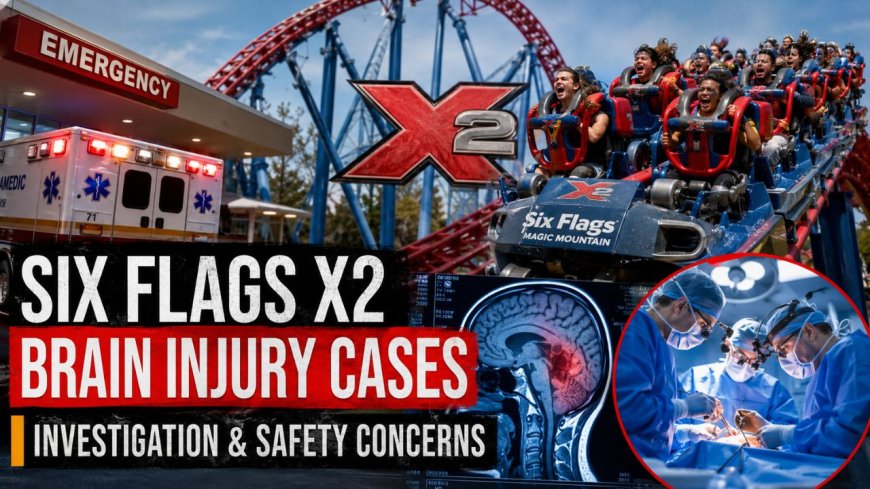
Two women required emergency brain surgery after riding the X2 roller coaster at Six Flags Magic Mountain in California in July 2026, according to a CNN investigation, bringing renewed attention to the attraction's history of serious injuries and deaths. The cases happened only six days apart and are now at the center of questions about how the ride has been inspected, regulated and allowed to operate over the years. X2 has remained closed since July 12 while California workplace-safety officials investigate a separate incident involving a rider who was found unconscious.
What happened to the two women on X2?
The first case involved Pamela Guillen, a 40-year-old woman from Hawaii who rode X2 with her teenage daughter. According to the CNN investigation, Guillen began experiencing serious symptoms shortly after the ride, including vomiting and loss of consciousness. Emergency responders took her to a hospital, where doctors identified a severe subdural hematoma and elevated pressure inside her skull. She required emergency brain surgery and spent about two weeks before regaining full consciousness. Her recovery included relearning basic abilities such as speaking and walking.
Six days later, 25-year-old Naomi Greer-Wilkinson rode the same attraction with her twin brother and younger sister. She also lost consciousness shortly after the ride and was rushed for emergency medical treatment. Her family told CNN that doctors diagnosed a severe traumatic brain injury and warned them about the possibility of a devastating outcome. The investigation reported that she remained in a coma and on mechanical support more than a month after the incident.
The proximity of the two cases is a central reason the story has drawn renewed attention. Both incidents involved riders who were apparently healthy before entering the attraction, and both developed severe neurological emergencies soon after experiencing the ride's intense movements. Three neurosurgeons who treated the women described the mechanism as rapid acceleration and deceleration associated with the X2 ride.
Important distinction: The two 2026 brain-surgery cases and the 2022 death of Christopher Hawley are separate incidents. The Hawley lawsuit is part of the wider safety history surrounding X2, but it is not the event that caused the current Cal/OSHA investigation.
Why is the X2 roller coaster under scrutiny?
X2 is different from a conventional roller coaster because its seats rotate independently around the track. The attraction reaches speeds of about 76 mph and uses rotating seats that can change riders' orientation during the ride. That unusual design is part of what made the attraction famous among thrill-seekers, but it is also central to the questions now being raised about the physical forces experienced by passengers.
The CNN investigation reviewed medical records, legal documents and other material and found more than a dozen reports of serious injuries and hospitalizations associated with X2 over nearly two decades. Those cases reportedly included traumatic brain injuries, subdural bleeding, comas and life-changing disabilities, as well as two deaths.
One earlier case involved a teenager who experienced headaches, difficulty walking and vision problems after riding X2 before being diagnosed with a subdural hemorrhage. Other riders later reported brain injuries, persistent dizziness, cognitive problems and chronic headaches. The pattern is significant because it shifts the question from one isolated medical emergency to whether repeated warning signs were adequately evaluated over time.
What happened to Christopher Hawley after riding X2?
Christopher Hawley's death is a separate but important part of the current story. Hawley, a 22-year-old San Diego State University graduate, visited Six Flags Magic Mountain with his younger brother and cousin on June 23, 2022. According to his family's lawsuit, he appeared unwell after leaving the ride, complained of head pain and then collapsed. He died the following day.
The Los Angeles County Medical Examiner ruled his death an accident caused by blunt head trauma sustained in a park-ride accident. His family subsequently sued Six Flags, alleging that X2 was defectively designed and that riders were not adequately warned about its dangers. Six Flags has denied the family's claims, and the company has declined to comment directly on the pending litigation.
The case is now moving toward trial. A jury trial is scheduled for September 8, 2026, in Chatsworth. The lawsuit also names the manufacturer of the coaster and several park employees. Meanwhile, court filings show that S&S Worldwide, the coaster-train supplier, has asked a judge to approve a proposed settlement with Hawley's parents. The settlement terms were not disclosed.
Why did Six Flags close X2?
The current closure followed a different incident. On July 5, 2026, emergency services responded to Six Flags Magic Mountain after receiving a report involving a rider who was found unconscious. California's Division of Occupational Safety and Health, known as Cal/OSHA, opened an inspection into the incident. Officials have said that the investigation remains ongoing and have not released detailed findings.
Six Flags closed X2 on the evening of July 12, and the attraction has not been given a public reopening date. The park's statement has been limited, saying the ride remains closed. That means the regulatory investigation is unfolding while the separate Hawley wrongful-death case approaches trial and the newly reported brain-surgery cases generate additional scrutiny.
The timing matters because the July closure was not announced as a reopening decision based on the newly reported CNN investigation. It followed the July medical emergency and the state inspection. The two matters should therefore be kept separate while investigators determine what happened during the July 5 incident.
What is the safety concern surrounding roller-coaster forces?
Roller coasters subject the body to acceleration, deceleration and changes in direction. In the X2 cases, treating neurosurgeons described the relevant event as rapid acceleration-deceleration trauma. That description does not by itself establish that the ride caused every reported injury, but it explains why head and neck forces are receiving attention from medical experts and attorneys.
A severe subdural hematoma occurs when blood collects between the protective layers surrounding the brain, often following trauma. Depending on the size and pressure created by the bleeding, emergency surgery can be necessary to prevent further brain damage. Guillen's case involved this type of emergency, according to the CNN investigation.
The broader question is therefore not simply whether an individual rider was injured. It is whether the combination of ride design, operating conditions, rider warnings, inspection practices and medical history creates a risk that regulators or operators should address. Those questions cannot be settled by the current reports alone and remain subject to investigations and litigation.
What did regulators know about X2?
The regulatory history is one of the least discussed but most important parts of the story. CNN's investigation reported that California regulators had continued to approve the attraction despite previous incidents and complaints. Documents reviewed in the investigation raised questions about how earlier inspections were conducted after serious injuries and whether regulators received all potentially relevant information.
Reporting on the Hawley case also shows that after his death, California authorities ordered X2 closed for inspection before it was later allowed to reopen. The CNN investigation raised additional questions about the information available to inspectors and the extent to which inspections relied on safety data supplied by the operator. These are important allegations and questions, not final findings of regulatory wrongdoing.
Cal/OSHA's current investigation could provide more clarity, but officials have not released detailed conclusions. Until that process is complete, it would be premature to say that the ride's design has been legally or scientifically determined to be unsafe.
Is X2 still closed?
Yes. As of August 27, 2026, X2 remains closed at Six Flags Magic Mountain. Six Flags said the attraction has been closed since the evening of July 12, while Cal/OSHA continues investigating the separate July incident. There is no publicly announced reopening date.
The closure is occurring at a significant moment for the park. The current state investigation, two newly reported 2026 brain-injury cases and the pending wrongful-death lawsuit involving Hawley have placed X2 under unusually intense public scrutiny. The ultimate conclusions will depend on medical evidence, regulatory findings and the courts rather than on the reports currently circulating online.
For readers searching for Six Flags roller coaster brain injury information, the most important point is that the reported injuries span separate incidents and should not be treated as one event. The 2026 brain-surgery cases are newly reported; the Hawley death occurred in 2022; and the current Cal/OSHA investigation concerns a July 2026 incident involving an unconscious rider. Together, however, they have prompted renewed questions about the attraction's long-term safety record.
More from BiographyPoints: If you want background on the people involved in major news stories, read complete biographies at BiographyPoints.com.
What's Your Reaction?
 Like
0
 Dislike
0
 Love
0
 Funny
0
 Angry
0
 Sad
0
 Wow
0