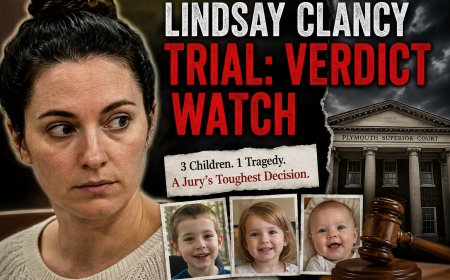
Why Did Lindsay Clancy’s Trial End in a Mistrial?
Lindsay Clancy mistrial explained: a deadlocked jury, a disputed holdout juror and a failed emergency appeal ended the trial. Here’s what happened next.
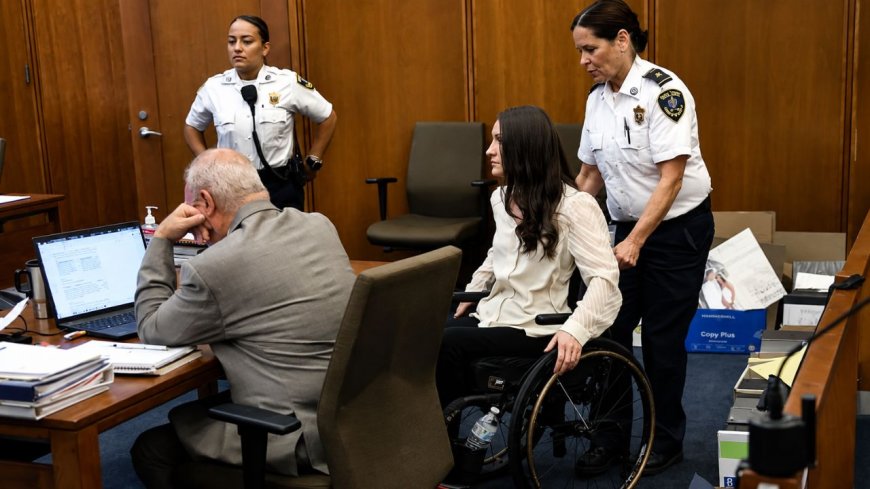
Lindsay Clancy’s trial ended in a mistrial on September 4 after a 12-member jury failed to reach a unanimous verdict following more than 38 hours of deliberations over seven days. The deadlock came after an unusually tense dispute involving one juror whom the defense accused of failing to properly apply the legal standard of reasonable doubt. Judge William Sullivan declined to remove the juror, and an emergency appeal to Massachusetts’ highest court was also rejected before the judge formally ended the trial.
The mistrial does not mean Clancy was found guilty or acquitted. Instead, the first jury was unable to reach the unanimous decision required to resolve whether she should be held criminally responsible for the deaths of her three children. The case now moves into a new legal phase, with prosecutors expected to consider whether to seek another trial while the defense can pursue its own arguments about the charges and Clancy’s mental state.
The final hours of the trial were particularly significant because the defense made an extraordinary attempt to prevent the mistrial. Attorney Kevin Reddington argued that a single holdout juror was preventing the panel from applying the law correctly. Judge Sullivan disagreed that the circumstances justified removing the juror, while the Massachusetts Supreme Judicial Court later declined to intervene.
Why did the Lindsay Clancy trial end in a mistrial?
The immediate reason was a deadlocked jury. After days of deliberations, jurors repeatedly informed Judge Sullivan that they could not reach a unanimous decision. On September 4, the jury again reported that it remained unable to agree, leading Sullivan to conclude that continuing deliberations was unlikely to produce a verdict.
The reported division became particularly important during the final days. The defense maintained that 11 jurors were aligned on the outcome while one juror remained opposed, although the exact individual votes should not be treated as an official verdict. A note from the jury foreperson raised concerns that the juror had acknowledged doubt but was not applying that doubt according to the court’s instructions.
That disagreement moved the case beyond an ordinary difference of opinion about evidence. Reddington argued that the juror’s conduct raised a question about whether the juror could follow the law. Sullivan, however, determined that the juror had indicated an ability to follow his instructions and that the circumstances did not provide a sufficient legal basis for removing the juror from the panel.
Why did Lindsay Clancy’s defense challenge one juror?
The defense believed the holdout juror was not applying the legal concept of reasonable doubt correctly. Reddington asked Sullivan to investigate the juror further and ultimately sought the juror’s removal so the remaining panel could continue deliberating. The prosecution opposed the defense request, while Sullivan took the position that the court could not simply remove a juror because of disagreement over how evidence was being evaluated.
The issue is legally sensitive because judges generally have to protect the independence of jury deliberations. Jurors are expected to debate the evidence among themselves, and a judge cannot replace a juror merely because that juror reaches an unpopular conclusion. The defense therefore faced a difficult legal threshold: it had to show more than disagreement with the juror’s position.
What happened in the emergency appeal?
After Sullivan indicated that he was prepared to declare a mistrial, the defense was given about an hour to seek emergency relief from the Massachusetts Supreme Judicial Court. Defense attorney Dana Goldblatt argued that the higher court should require further questioning of the disputed juror or otherwise prevent the mistrial from taking effect.
Associate Justice Dalila Argaez Wendlandt heard the emergency arguments by video conference and took the matter under advisement. She ultimately declined to intervene. Once that request failed, Sullivan called the jury back and formally declared the mistrial at about 2:22 p.m. on September 4, ending the first trial without a verdict.
What was the jury deciding in the case?
Clancy faced three first-degree murder charges related to the January 2023 deaths of her children, Cora, Dawson and Callan. The defense did not simply dispute that Clancy caused the deaths. Instead, it argued that she was suffering from severe mental illness, including postpartum psychosis, and therefore should not be held criminally responsible for her actions.
Prosecutors presented a different account. They argued that Clancy understood what she was doing and deliberately killed her children. The trial therefore required jurors to evaluate not only the physical circumstances of the deaths but also extensive medical and psychiatric evidence concerning Clancy’s mental state before and during the incident.
The case included testimony from numerous witnesses and extensive evidence about Clancy’s medical treatment, behavior and mental health. The disagreement among jurors ultimately prevented them from reaching the unanimous resolution required by the court, leaving the central question of criminal responsibility unanswered.
Does a mistrial mean Lindsay Clancy was found not guilty?
No. A mistrial caused by a deadlocked jury is not the same as an acquittal. The first jury did not reach a verdict, so Clancy remains charged and the prosecution can consider whether to bring the case before another jury.
The September 4 ruling also does not establish that the defense position had won the case. Although reports described an apparent 11-1 division, there was no unanimous verdict declaring Clancy not criminally responsible. The legal case therefore remains unresolved, and prosecutors must now determine how they want to proceed.
What happens after the mistrial?
The next major court date is a September 29 status conference in Plymouth. Prosecutors have not publicly confirmed that they will seek a retrial, so the hearing should not be described as the beginning of a second trial. A new trial would require a new jury and additional proceedings before testimony could begin again.
Other possibilities can also be considered after a mistrial, including discussions over a negotiated resolution or decisions about whether another prosecution is appropriate. The prosecution must weigh the strength of its case, the cost and complexity of another trial and the possibility that a second jury could also fail to reach a verdict.
For Clancy’s defense, the mistrial creates an opportunity to continue challenging the case and argue against another prosecution. The September 29 hearing should therefore provide a clearer picture of whether the case is heading toward a second trial or another legal resolution.
Frequently Asked Questions
Why was Lindsay Clancy’s trial declared a mistrial?
The jury could not reach a unanimous verdict after more than 38 hours of deliberations over seven days. The dispute became especially intense after the defense challenged one juror’s handling of the reasonable-doubt standard.
Was Lindsay Clancy acquitted?
No. A mistrial caused by a deadlocked jury is not an acquittal. The case ended without a verdict, leaving prosecutors to decide whether to pursue another trial or another legal resolution.
When is the next Lindsay Clancy court hearing?
A status conference is scheduled for September 29 in Plymouth. The hearing is expected to address the next steps following the mistrial, but it is not itself a confirmed retrial date.
What's Your Reaction?
 Like
0
 Dislike
0
 Love
0
 Funny
0
 Angry
0
 Sad
0
 Wow
0