Flock Safety's "1 Million Crimes" Claim Doesn't Hold Up, CBS News Finds
CBS News found Flock Safety's claim of solving 1 million crimes is unsupported. The company then quietly deleted its own public records. Here's what happened.
Flock Safety, the Atlanta-based surveillance company whose automated license plate reader cameras now scan vehicles in more than 6,000 communities across 49 states, built a marketing campaign around a striking number: one million crimes solved in a single year. The claim appeared on the company's fact sheet, its FAQ page, in CEO Garrett Langley's media interviews, and in a major blog post announcing the results of its 2025 Impact Census. But a CBS News investigation published this week found the number is not supported by Flock Safety's own data — and in the days after CBS began asking questions, Flock quietly removed the statistic, unpublished its fact sheet from a publicly accessible Google Drive folder, and changed the language on its website. A company that makes its business tracking millions of Americans erased its own public records when a journalist started looking.
The "one million crimes solved" figure originated in a March 2026 podcast interview in which Langley stated, "Last year we helped clear just over a million crimes in America." He repeated versions of the claim in multiple settings throughout the year, at one point saying in a blog post: "Today, Flock technology assists your officers in more than one million crimes solved annually." When CBS News pressed the company on the methodology behind that figure, Flock shifted the language significantly. The company's revised and more accurate description, offered after the investigation began, was that Flock "supported approximately one million investigations and incidents" — a phrase that includes leads, database searches, and other uses of the system that did not necessarily result in an arrest or a crime being solved. That is a meaningful distinction. Generating a database hit when a police officer runs a search is not the same as solving a crime.
Flock's 2025 Impact Census, the original source of the statistic, was based on responses from approximately 700 law enforcement agencies that voluntarily participated in the company's self-reported survey. The total number of agencies using Flock's system is substantially larger, meaning the one million figure was extrapolated from a self-selected subset of customers with no independent verification. CBS News reported that Flock did not provide the underlying data supporting the claim when asked, and did not answer whether Langley had been imprecise in his public statements. For a company valued at $7.5 billion that has raised $950 million in venture funding and generates approximately $300 million in annual revenue, the credibility of its core public safety argument is not a minor marketing matter — it is the justification that has driven adoption in thousands of communities and generated contracts with police departments nationwide.
What Flock Safety Cameras Actually Do — and Why the Numbers Matter
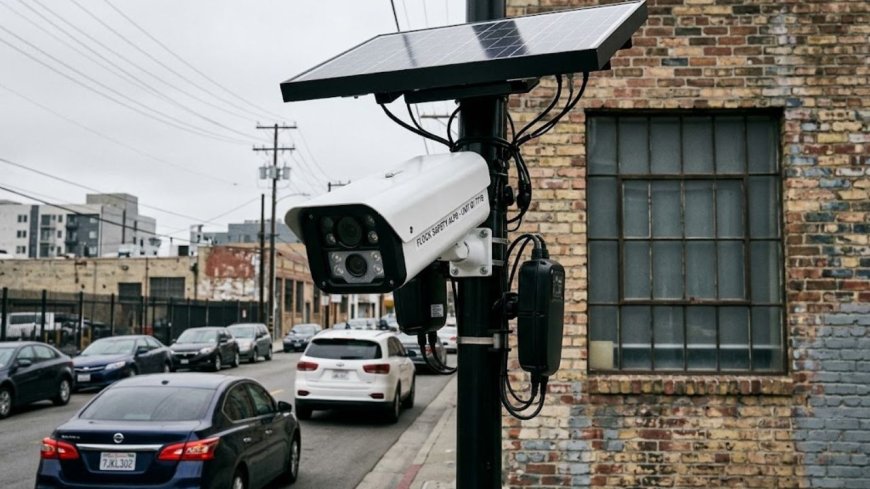
Flock Safety cameras are automated license plate readers, commonly called ALPRs, that photograph the license plate, make, model, and distinguishing features of every vehicle that passes them on public roads. Those images are uploaded in near real-time to a searchable database that law enforcement agencies can query at any time. As of July 2026, Flock's system performs more than 20 billion vehicle scans across the United States every single month. That scale — combined with the company's partnerships with approximately 700 law enforcement agencies in its Impact Census alone — makes Flock the dominant player in a market that also includes competitors such as Axon and Motorola Solutions. The company was founded in 2017 after CEO Garrett Langley learned that a prototype camera had helped a DeKalb County, Georgia detective solve a home break-in, and it has grown from that single use case into what critics call a national mass surveillance network.
The distinction between "solving a crime" and "supporting an investigation" matters enormously for how the public evaluates the trade-off between Flock's claimed crime-fighting benefits and its documented privacy costs. Police departments and city councils across the country have approved Flock contracts partly on the strength of the one million crimes figure, which appeared in sales materials, press releases, and the CEO's public statements without a methodology explanation attached. If the actual number of crimes directly solved by Flock technology is significantly lower than one million — and CBS News's review suggests the available evidence does not support that figure — then communities may have been sold a surveillance infrastructure on the basis of inflated performance claims. That is a question with direct consequences for taxpayers, residents whose vehicles are scanned daily without their knowledge, and elected officials who voted to install the cameras.
Flock Safety Cameras and the Growing Legal Battle Over Fourth Amendment Rights
The CBS News investigation lands in the middle of a rapidly expanding legal and political battle over whether Flock Safety cameras violate Americans' constitutional right to privacy. The company has been sued 23 times in federal court, with the majority of those cases filed in 2026 alone, including five in March. The most closely watched case involved two Norfolk, Virginia residents — Lee Schmidt and Crystal Arrington — who sued the city after the police chief deployed 176 Flock cameras across its streets. Federal Judge Mark Davis dismissed their Fourth Amendment challenge in January 2026, ruling the network was not extensive enough to constitute unconstitutional tracking, but attached a significant warning: the cameras could cross the line into an impermissible warrantless search if their numbers grow further. The Institute for Justice, which brought the case, announced it would appeal.
The legal landscape shifted further in June 2026, when the Supreme Court ruled in Chatrie v. United States that geofence warrants — which compel tech companies to hand over location data from all devices within a geographic boundary — constitute a Fourth Amendment search requiring a warrant. Civil rights attorneys immediately argued the ruling created new legal exposure for Flock, since its system captures and stores the location data of every vehicle passing its cameras, including those belonging to people who have committed no crime. In September 2026, a Wisconsin lawsuit was filed targeting more than 120 Flock cameras in Waukesha County alone and explicitly cited the Chatrie decision as its legal foundation. Cities including Austin, Texas, Cambridge, Massachusetts, and Flagstaff, Arizona have already ended their contracts with Flock, citing privacy concerns and documented cases of the cameras being used for immigration enforcement and to track a woman who had obtained an abortion.
A Surveillance Company That Tracks You — Then Deletes Its Own Records
The most striking element of the CBS News investigation is not that a company overstated its performance metrics — that happens across industries. It is that Flock Safety responded to journalistic scrutiny by removing publicly accessible documents from its own media kit. After CBS News began asking questions about the one million crimes claim, Flock's 2026 Company Fact Sheet and several related documents stored in a publicly viewable Google Drive folder linked from the company's website became unavailable. The FAQ page was also edited to remove the claim of "1,000+ crimes solved per day." The Electronic Frontier Foundation, which has long called Flock's technology "invasive mass surveillance," pointed out the irony: a company that stores the location history of millions of Americans without their consent deleted its own records when faced with public accountability. Opponents of the cameras have taken more direct action — across the country, Flock cameras have been spray-painted, covered, cut down with power tools, rammed by vehicles, and shot.
The CBS News investigation places Flock Safety at a critical juncture. The company is growing rapidly, its technology is deeply embedded in law enforcement infrastructure across 49 states, and it is simultaneously facing 23 federal lawsuits, mounting city contract cancellations, a Supreme Court legal environment that is increasingly skeptical of warrantless surveillance, and now a direct challenge to the accuracy of its signature public safety claim. Whether Flock can sustain its expansion amid this convergence of legal, political, and journalistic pressure will depend in part on whether law enforcement agencies and city governments demand verified, independently audited data before renewing contracts. For the millions of Americans whose vehicle movements are scanned and stored every month by a private company they never chose to do business with, the CBS News finding raises a question that deserves a direct answer: if the one million crimes figure was not accurate, what is the real number?
Frequently Asked Questions
What did CBS News find about Flock Safety's crime statistics?
CBS News conducted an investigation and found that Flock Safety CEO Garrett Langley's repeated public claim that the company helped solve one million crimes in 2025 is not supported by available evidence. The "one million" figure came from a self-reported survey of approximately 700 law enforcement agencies and referred to "investigations and incidents supported" rather than crimes directly solved. After CBS News began asking questions, Flock removed the statistic from its fact sheet, deleted public documents from its media kit Google Drive folder, and changed language on its FAQ page.
What are Flock Safety cameras and where are they used?
Flock Safety cameras are automated license plate readers (ALPRs) that photograph every vehicle passing them on public roads, capturing the license plate, make, model, and other distinguishing features. The images are stored in a searchable database accessible to law enforcement. As of July 2026, Flock cameras operate in more than 6,000 communities across 49 US states and conduct more than 20 billion vehicle scans per month. The company was founded in 2017 and is valued at approximately $7.5 billion.
Do Flock cameras violate the Fourth Amendment?
Federal courts have so far generally ruled that Flock cameras do not violate the Fourth Amendment, but the legal picture is evolving rapidly. A Virginia federal judge dismissed a Fourth Amendment challenge in January 2026 but warned the cameras could become unconstitutional if their numbers increase. The Supreme Court's June 2026 ruling in Chatrie v. United States on geofence warrants has given legal advocates new arguments against mass surveillance networks, and multiple new lawsuits have been filed in 2026 citing that decision. Legal experts say Supreme Court review of Flock cameras specifically is a genuine possibility.
What's Your Reaction?
 Like
0
 Dislike
0
 Love
0
 Funny
0
 Angry
0
 Sad
0
 Wow
0