Artificial Intelligence News: AI Readiness Starts With IT Basics
Artificial intelligence news shows enterprises must strengthen cybersecurity, endpoint visibility and workforce skills before scaling AI safely.
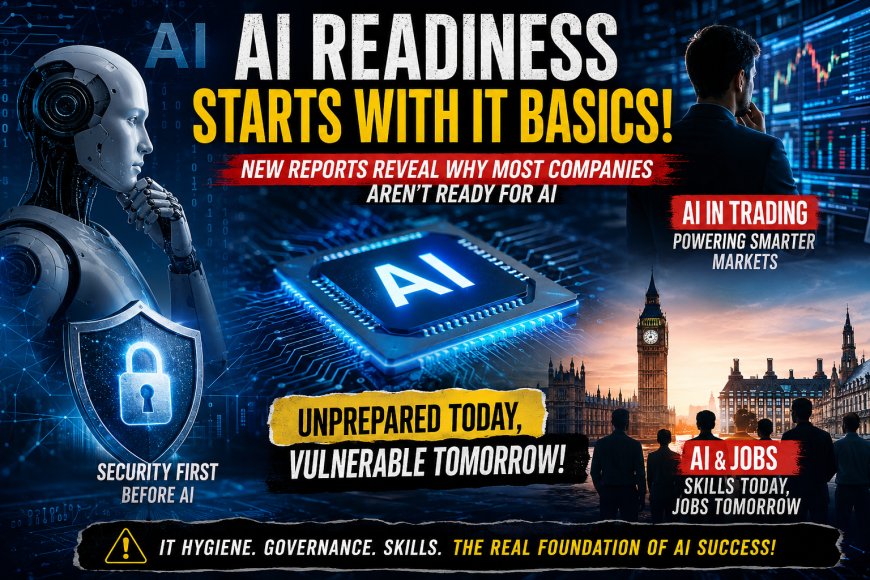
Artificial intelligence news this week highlights a growing shift in enterprise strategy. Rather than focusing only on powerful AI models, organizations are investing in cybersecurity, endpoint visibility, governance, and workforce skills to ensure AI systems can operate safely, transparently, and at scale.
Artificial intelligence news points to stronger IT foundations
Enterprise technology leaders increasingly believe successful AI deployment depends on operational discipline instead of simply purchasing the newest AI platform. Security specialists warn that autonomous AI agents can rapidly expose outdated software, unmanaged devices, weak identity controls, and hidden infrastructure. As AI accelerates business processes, these weaknesses become business risks. Companies are therefore shifting from periodic maintenance to continuous monitoring, real-time endpoint management, and automated patching. The goal is to build an environment where AI applications can safely access trusted data without increasing cyber exposure.
Financial firms demand transparent AI instead of black-box decisions
Another major development comes from capital markets, where institutional trading desks are adopting AI reasoning platforms that emphasize explainability. Instead of replacing traders, these systems provide scenario analysis, natural-language interaction, and visible calculations that allow analysts to review every assumption. This approach helps organizations meet regulatory expectations while maintaining human oversight. Transparency has become a competitive advantage because financial institutions must justify AI-supported decisions to regulators, clients, and internal risk teams.
Governments focus on workers as AI adoption accelerates
Public policy discussions are also evolving alongside enterprise adoption. UK leaders have called for expanded digital training and workforce reskilling to prepare employees for changing job requirements. Rather than viewing AI only as an automation tool, policymakers increasingly describe it as an economic transition requiring education, investment, and support for affected workers. Experts argue that proactive training can reduce disruption while helping businesses adopt AI responsibly across multiple industries.
Experts warn against confusing digital tools with AI
Technology researchers are also raising concerns about "AI washing," where ordinary software is marketed as artificial intelligence. Simple automation features, messaging templates, or digital record-keeping systems may improve productivity, but they do not necessarily use advanced AI models. Mislabeling these technologies can mislead investors, donors, customers, and policymakers. Researchers increasingly recommend clearer technical definitions and stronger documentation before organizations describe products as AI-powered.
What enterprises should watch next
The next phase of enterprise AI will likely focus less on model size and more on governance, cybersecurity, transparency, and measurable business value. Organizations that maintain accurate IT inventories, strengthen security controls, improve employee skills, and adopt explainable AI are expected to gain the greatest long-term benefits. As regulations continue evolving, responsible deployment may become just as important as technological innovation itself.
Want to know more about the people involved? Read complete biographies at BiographyPoints.com
Frequently Asked Questions
Why is artificial intelligence news focusing on cybersecurity?
Enterprise AI systems access large amounts of organizational data. Without strong cybersecurity, endpoint visibility, and identity management, AI can amplify existing vulnerabilities. Experts therefore recommend strengthening IT operations before expanding AI projects.
Why are businesses investing in explainable AI?
Explainable AI allows organizations to review the assumptions, calculations, and data behind AI-generated recommendations. This improves governance, regulatory compliance, and trust while ensuring humans remain responsible for important decisions.
Will AI replace workers completely?
Most experts expect AI to change job responsibilities rather than eliminate every role. Governments and businesses increasingly support training and reskilling programs so workers can adapt to AI-powered workplaces.
What's Your Reaction?
 Like
0
 Dislike
0
 Love
0
 Funny
0
 Angry
0
 Sad
0
 Wow
0