Sugar Prices Surge in India as Government Moves to Cool Market
Sugar prices are surging in India as tight supplies and festival demand prompt duty-free imports, raising questions about prices and what comes next today.
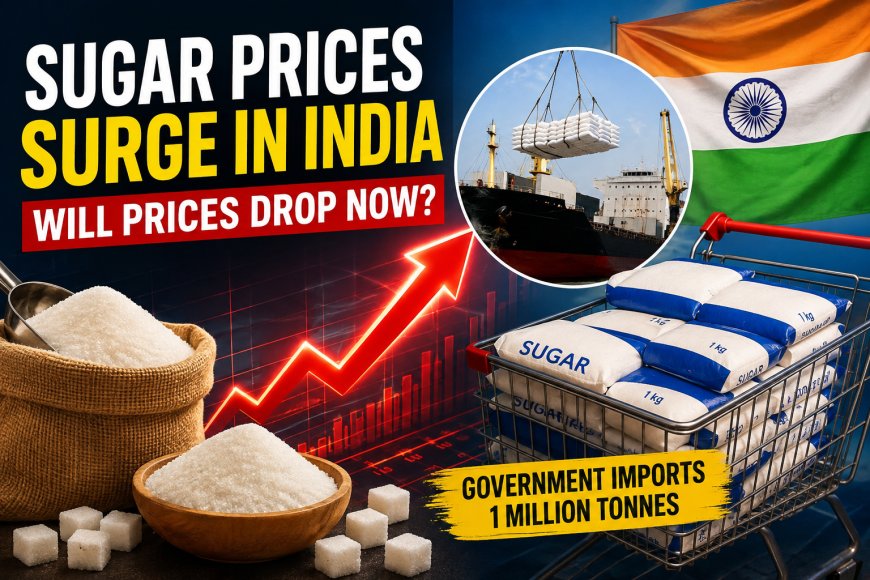
Sugar prices are rising sharply in India as tighter supplies, weather-related crop problems and approaching festival demand put pressure on the market. The government has responded by allowing up to 1 million tonnes of raw sugar to enter the country without import duty until October 31, in one of its most significant interventions in the market in nearly a decade.
The immediate question for consumers is whether this intervention will bring prices down quickly. The answer is less straightforward than the import headline suggests. The government is trying to increase availability before the period when sugar consumption traditionally accelerates, but imported raw sugar still has to reach India, be refined and enter the domestic supply chain. That means the policy could help ease pressure without necessarily producing an immediate fall at every retail outlet.
Why sugar prices have risen so sharply
India's sugar market has been under pressure because expected production has fallen below earlier estimates. The government says current-season sugar production is expected to be around 306 lakh tonnes, compared with an initial estimate of roughly 343 lakh tonnes. It has linked the reduction to crop problems including Red Rot and Top Borer disease, as well as waterlogging caused by excessive rainfall.
Government data also show how quickly the retail market has moved. The average sugar price cited by the Ministry of Consumer Affairs increased from ₹48.18 per kilogram on July 20 to ₹55.70 per kilogram on August 20. The government has also said that speculation and hoarding by some market participants contributed to the recent increase.
Wholesale prices have shown an even stronger move. Business Standard reported that spot sugar prices in major Indian markets reached a 16-year high around August 19, while all-India ex-mill prices had climbed substantially from the previous year. The combination of lower production and stronger seasonal demand has therefore created a tighter market just as consumers and food businesses prepare for the festival period.
Why the government is importing sugar now
The timing of the decision is central to understanding the story. India normally produces substantially more sugar than it consumes, but stocks have come under pressure after production fell and demand increased. The government has therefore approved duty-free imports of 1 million tonnes of raw sugar through October 31.
This is notable because India normally applies a 100% duty on raw sugar imports. The move effectively lowers the cost barrier for additional supplies and allows the government to bring more sugar into the market ahead of the peak festival-demand period. Reuters reported that India is turning to imports for the first time in nearly a decade as domestic prices surge.
The policy is also part of a wider attempt to prevent further price escalation. Authorities have tightened stockholding rules for large consumers, while monitoring mills and traders for possible hoarding or black-market activity. From September 1 through November 30, bulk users consuming more than 10 tonnes a month will be limited to holding about 15 days of inventory under the new restrictions.
Will the imports bring sugar prices down quickly?
This is the part of the story that matters most to consumers. Allowing 1 million tonnes of raw sugar into the country increases the potential supply, but the full effect depends on how quickly that sugar reaches the market.
Raw sugar is not the same as ready-to-sell white sugar. It must be processed before it can reach many consumers, and imported supplies also have to move through ports, refiners, distributors and retailers. Reuters noted that some Brazilian shipments may arrive closer to October because of transit times. That timing means the government's decision may have a stronger effect on availability later in the festival season than immediately after the announcement.
India Ratings has estimated that the permitted imports could increase market availability by roughly 15% during September-November, based on typical domestic sugar quota allocations for that period. If those supplies arrive as expected, they could reduce some of the immediate tightness that has pushed prices higher.
However, a decline in wholesale prices would not automatically mean an identical decline at retail shops. Retail prices also reflect transportation, refining, distribution margins and local market conditions. Consumers may therefore see prices stabilize before they see a significant drop.
The ethanol debate is adding another layer
The sugar-price increase has also revived a debate over how India's sugarcane crop should be divided between food and fuel. Some industry and political voices have argued that diverting sugarcane-based products toward ethanol has reduced the amount available for sugar production.
The government disputes that explanation for the current price increase. According to the Ministry of Consumer Affairs, the proportion of sugar diverted toward ethanol has actually declined from around 12% in 2022-23 to about 9% in 2025-26. The government also says that nearly three-quarters of India's ethanol production now comes from grains, particularly maize.
That distinction is important because the current price problem appears to have multiple causes rather than a single trigger. Lower-than-expected production, crop disease, excessive rainfall, seasonal demand, tighter global supplies and market behavior are all part of the government's explanation.
Why festival demand could keep pressure on prices
India's festival calendar is an important part of the price outlook. Sugar consumption normally rises from August through November as festivals such as Ganesh Chaturthi, Dussehra and Diwali increase demand for sweets, packaged foods and other products that use sugar.
This creates a difficult window for policymakers. The government needs to add enough supply before demand accelerates, but imported sugar cannot necessarily arrive instantly. If domestic supplies remain tight while festival buying increases, prices could stay elevated even as the new import policy begins to take effect.
The situation is also affecting businesses that depend heavily on sugar. Sweet manufacturers, bakeries and other food producers face higher input costs, creating the possibility that part of the increase could eventually be passed on to consumers through higher prices for sweets and processed foods. Recent reports from Indian markets have already highlighted concerns among sweetmakers over rising sugar costs.
What happens next in the sugar market
The next major test will be how quickly the approved imports move from policy announcement to physical supply. Eligible mills and refiners have been given a window to apply for the duty-free quota, with the government prioritizing imports that can arrive before the festival season becomes more intense.
At the same time, authorities are watching domestic stocks, retail prices and inventory levels. If imports arrive on schedule and domestic availability improves, the recent rally could lose momentum. If shipments are delayed or festival demand absorbs the additional supply quickly, prices could remain under pressure for longer.
There is also a global dimension. The Indian government has said international sugar supplies are tightening and estimated a global sugar deficit for the 2026-27 season. International sugar prices have also risen significantly since June. Because India is one of the world's largest sugar markets, its return to imports can influence global prices as well as the domestic market.
For consumers, the clearest takeaway is that the government's import decision is designed primarily to prevent the supply situation from becoming tighter during the festival season. It is a supply intervention rather than a guarantee that retail sugar prices will immediately return to earlier levels.
With prices already at elevated levels and demand expected to strengthen, the coming weeks will show whether additional imports are enough to restore balance. For now, the market is being pulled in two directions: tighter domestic supplies are pushing prices higher, while government action is attempting to bring more sugar into the system before seasonal demand peaks.
FAQ: Sugar prices and the India import decision
Why are sugar prices rising in India?
Prices have risen because expected sugar production is lower than earlier estimates, while festival-related demand is approaching. The government has also cited crop disease, waterlogging, tighter global supplies, speculation and hoarding among the factors affecting prices.
How much sugar is India allowing to be imported?
India has approved duty-free imports of up to 1 million tonnes of raw sugar through October 31, 2026. The measure is intended to increase domestic availability and contain price pressure.
Will sugar prices fall immediately?
Not necessarily. Imported raw sugar must be transported, refined and distributed before it can significantly affect retail supplies. The speed of shipments and the strength of festival demand will determine how quickly consumers feel the impact.
Is ethanol production responsible for the current sugar price rise?
The Indian government says ethanol diversion is not the main cause of the current increase. It says the share of sugar diverted to ethanol has declined in recent years and points instead to lower production, weather-related crop damage, demand and market factors.
Why is the festival season important for sugar prices?
Sugar demand typically increases from August through November as major festivals increase purchases of sweets and other sugar-containing foods. That makes supply availability particularly important during this period.
What's Your Reaction?
 Like
0
 Dislike
0
 Love
0
 Funny
0
 Angry
0
 Sad
0
 Wow
0