US Economic Woes Keep Affordability at the Center of Voter Concerns - Bio Points News
Rising prices and ongoing inflation continue to worry US voters, shaping political debate as leaders face pressure to address everyday affordability issues.
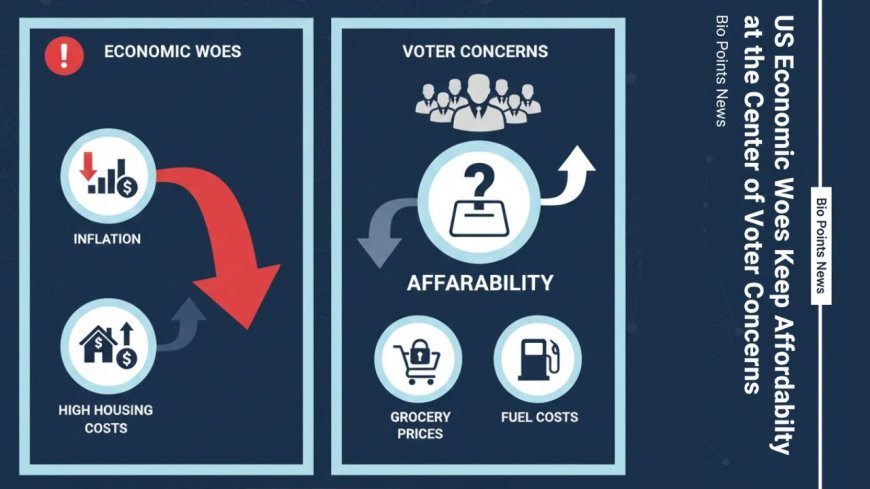
Economic anxiety remains a major issue for Americans as rising prices and living costs continue to squeeze household budgets. Despite signs of economic activity, many voters say everyday expenses feel harder to manage, keeping affordability at the top of public and political debate.
Inflation and Cost of Living Pressures
Inflation has eased from earlier peaks but continues to affect daily life across the United States. Prices for groceries, rent, healthcare, and utilities remain significantly higher than they were a few years ago. For many families, wages have not fully kept pace with these increases, leading to frustration and financial stress.
Consumer surveys consistently show that Americans are more concerned about the cost of living than broader economic indicators. Even when employment rates remain relatively strong, voters tend to judge the economy by what they pay at the checkout counter or for monthly housing costs.
Political Response and Economic Messaging
President Donald Trump has made economic performance a central theme of his political messaging. He promotes policies aimed at boosting growth and easing costs, while blaming previous administrations for inflation and higher prices. At times, he has downplayed voter concerns over affordability, calling them exaggerated, a stance that has drawn criticism from both political opponents and some within his own party.
Republican leaders, particularly those facing competitive elections, have increasingly shifted their focus toward affordability. They are emphasizing proposals related to taxes, energy prices, and regulation, signaling awareness that cost-of-living issues resonate strongly with voters.
How the US Reached This Point
The current economic mood is shaped by several years of disruption. The COVID-19 pandemic, global supply chain problems, and rising energy costs all contributed to higher inflation. Government stimulus measures helped prevent a deeper downturn but also added pressure to prices.
Although inflation has moderated, prices rarely fall back to previous levels. This means consumers still feel the impact of earlier increases, even when official data shows improvement.
Recent Developments and Public Sentiment
Recent polls indicate that a large share of voters continue to rate the US economy negatively. Affordability has become a decisive factor ahead of upcoming elections, influencing how Americans evaluate leadership and economic policy.
Both major parties acknowledge that voter frustration is real. While economic data may suggest gradual stabilization, public confidence remains fragile as long as everyday expenses stay high.
The US economy continues to face a gap between official indicators and public perception. Inflation and rising costs have left many Americans feeling financially strained, making affordability a defining political and social issue. As elections approach, how leaders respond to these concerns may play a crucial role in shaping voter trust and economic confidence.
What's Your Reaction?
 Like
0
 Dislike
0
 Love
0
 Funny
0
 Angry
0
 Sad
0
 Wow
0