Taylor Farms Recall: What Shoppers Need to Know
Taylor Farms recall: USDA warns of jalapeño-linked Salmonella in ready-to-eat foods at major retailers. See affected products, dates and safety advice.
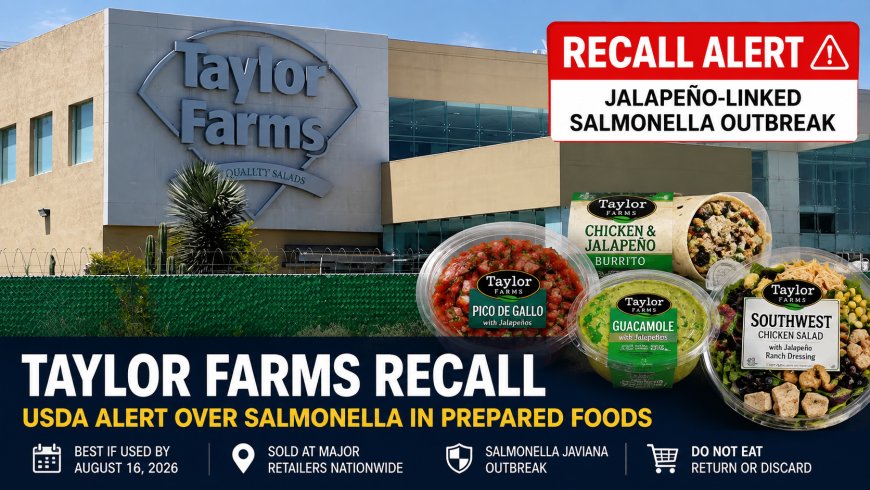
Taylor Farms is voluntarily pulling jalapeño-containing foods after federal officials linked the peppers used in prepared foods to a multistate Salmonella outbreak. The latest warning reaches beyond restaurant ingredients and includes ready-to-eat meat and poultry products sold through major grocery retailers. Federal officials say the broader outbreak has sickened 345 people in 27 states, with 36 hospitalizations and no reported deaths as of August 4, 2026.
Taylor Farms recall expands the jalapeño Salmonella warning
The latest development is significant because the investigation has moved into the grocery-store prepared-food supply chain. Taylor Farms has withdrawn a range of products containing jalapeños, including salsa, guacamole, pico de gallo, diced jalapeños, burritos, wraps and other ready-to-eat foods. Separately, the U.S. Department of Agriculture's Food Safety and Inspection Service issued a public health alert covering 18 ready-to-eat meat and poultry products that contain the implicated jalapeños, according to the supplied USDA alert reporting.
Fourteen of those 18 grocery products were produced at Taylor Farms facilities in Dallas, Texas; North Kingstown, Rhode Island; Covington, Kentucky; and Orlando, Florida. The affected foods were sold under several retailer and private-label brands, meaning shoppers may not always see the Taylor Farms name prominently on the front of the package.
That supply-chain detail is one of the most important parts of the current warning. A shopper could have purchased a sandwich, wrap, burrito, salad or meal bowl under a supermarket's own brand without immediately realizing that the product was prepared by Taylor Farms.
What caused the Salmonella outbreak?
CDC investigators say epidemiologic and traceback evidence identified jalapeño peppers grown in Sinaloa, Mexico, and distributed by Coast Citrus Distributors as the source of the multistate outbreak. The outbreak strain is Salmonella Javiana. The peppers were primarily distributed to restaurants and wholesalers, and federal investigators traced the supply chain back to a common grower in Sinaloa.
The investigation initially centered heavily on restaurant exposure. CDC reported that 177 of 191 interviewed sick people, or 93%, said they had eaten at a Mexican-style restaurant before becoming ill. Investigators also identified 27 illness clusters at Chipotle and QDOBA locations in seven states. Those findings helped investigators identify jalapeños as a likely common ingredient connecting illnesses.
CDC says Chipotle and QDOBA stopped serving the affected jalapeños after being notified. The agency said it did not consider there to be a current ongoing risk from those establishments after the peppers were removed.
Which Taylor Farms foods are affected?
The current withdrawal covers multiple types of prepared foods that contain jalapeños. The affected category includes salsa, guacamole, pico de gallo, fresh diced jalapeños, burritos, wraps, sandwiches, salads and other ready-to-eat meals. The products identified in the USDA public health alert have best-if-used-by dates extending through August 16, 2026.
The grocery products were distributed under retailer and private-label names, including Marketside products sold at Walmart, H-E-B Shake Rattle Bowl products, Ready Meals products associated with Albertsons, Randalls and Tom Thumb, Deli Kitchen products sold through Kroger, and Wawa products. Other recalled Taylor Farms items were distributed through national retailers including Target, Trader Joe's and Whole Foods, according to the supplied recall reports.
Because the list covers different brands and product types, consumers should not assume that a product is safe simply because the package does not prominently display the Taylor Farms name. The date and specific product identification should be checked against the official recall information before eating an affected item.
Which dates should shoppers check?
The affected prepared foods include products with “Best If Used By” dates through August 16, 2026. That date is especially important for consumers checking refrigerated ready-to-eat foods that may still be in their homes.
Consumers should check the product name, brand, package size where applicable, establishment information and date rather than relying only on the manufacturer name. Retailers have also taken steps to remove affected products and place sales blocks on recalled items, but a product purchased before those measures were implemented could still be sitting in a refrigerator.
How serious is the Salmonella outbreak?
CDC reported 345 confirmed illnesses across 27 states as of August 4, along with 36 hospitalizations among 291 patients for whom hospitalization information was available. No deaths had been reported. The agency also warned that the true number of infections may be higher because many people recover without seeking medical care or are never tested for Salmonella.
Illnesses in the investigation began between June 19 and July 20, 2026. CDC says recent illnesses can take several weeks to be connected to an outbreak because testing and reporting take time. That means the case count can change as investigators receive additional information.
Salmonella commonly causes diarrhea, fever and stomach cramps. CDC says symptoms generally begin six hours to six days after swallowing the bacteria, and most people recover without treatment within four to seven days. Young children, adults 65 and older, and people with weakened immune systems can face a higher risk of severe illness.
Why this alert is different from the original jalapeño warning
The timeline matters. CDC's August 5 outbreak information said the implicated jalapeños were primarily distributed to restaurants and wholesalers and that FDA was still working to determine whether affected peppers had reached grocery stores.
The newer USDA alert changes the consumer picture because it identifies prepared meat and poultry products that incorporated the affected jalapeños. In other words, consumers do not necessarily need to have purchased loose jalapeño peppers to encounter a product connected to the outbreak. A ready-to-eat grocery meal can also become part of the recall chain when a contaminated ingredient is incorporated during preparation.
This distinction is important for shoppers because the food they need to check may be a private-label product rather than a package labeled simply as jalapeños. It also shows why federal agencies can issue separate warnings as investigators learn more about where an implicated ingredient traveled.
What should consumers do now?
Consumers who have recalled products should not eat them. They should check the product against the official recall or public health alert information, then discard or return the item according to the retailer or manufacturer instructions. Food-contact surfaces should also be cleaned and sanitized if they may have been exposed to a recalled product. CDC specifically advises businesses not to sell or serve recalled jalapeños and to clean and sanitize surfaces that may have contacted them.
Anyone who develops severe symptoms should seek medical care. CDC advises contacting a healthcare provider for diarrhea with a fever above 102°F, diarrhea lasting more than three days without improvement, bloody diarrhea, repeated vomiting that prevents keeping liquids down, or signs of dehydration such as very little urination, a dry mouth or throat, or dizziness when standing.
What happens next in the investigation?
Federal and state health officials are continuing to investigate the outbreak and trace the affected jalapeños through the food supply. CDC's investigation identified a common grower in Sinaloa as the likely source and used epidemiologic, traceback and laboratory evidence to connect illnesses. Whole-genome sequencing showed that bacteria from sick people's samples were closely related, supporting the conclusion that the infections were connected to a common food source.
The key issue for consumers now is whether additional products will be identified as the investigation continues. The current Taylor Farms and USDA warnings demonstrate how a contaminated ingredient can affect multiple finished foods and brands after moving through a large commercial supply chain.
For more company and public-figure background coverage, read complete biographies at BiographyPoints.com.
Frequently asked questions
Is Taylor Farms involved in the Salmonella recall?
Yes. Taylor Farms has voluntarily withdrawn multiple jalapeño-containing prepared foods, while the USDA has separately issued a public health alert for ready-to-eat meat and poultry products containing the implicated jalapeños. The outbreak itself was traced by federal investigators to jalapeños grown in Sinaloa, Mexico, and distributed by Coast Citrus Distributors. Taylor Farms is part of the downstream prepared-food supply chain affected by the contaminated ingredient; it has not been identified as the original source of the jalapeño outbreak.
Is there a Salmonella alert for Taylor Farms meat and poultry products?
Yes. The USDA's Food Safety and Inspection Service issued a public health alert for 18 ready-to-eat meat and poultry products containing the recalled jalapeños. Fourteen of the products were produced at four Taylor Farms facilities. The affected foods include items such as wraps, burritos, salads and meal bowls, with best-if-used-by dates extending through August 16, 2026.
How many people are sick from the jalapeño Salmonella outbreak?
CDC reported 345 illnesses in 27 states as of August 4, 2026. There had been 36 hospitalizations among the 291 patients for whom hospitalization information was available, and no deaths had been reported. CDC cautions that the actual number of illnesses could be higher because not everyone with Salmonella seeks medical care or receives testing.
Where did the contaminated jalapeños come from?
Federal investigators traced the outbreak to jalapeño peppers grown in Sinaloa, Mexico, and distributed by Coast Citrus Distributors. CDC says traceback investigators identified a common grower in Sinaloa that supplied the distributor. The outbreak strain is Salmonella Javiana.
What's Your Reaction?
 Like
0
 Dislike
0
 Love
0
 Funny
0
 Angry
0
 Sad
0
 Wow
0