Washington Fires Update: Spokane Wildfires Force Mass Evacuations
Washington fires continue threatening Spokane as thousands remain evacuated, firefighters battle major wildfires, and recovery efforts begin statewide.
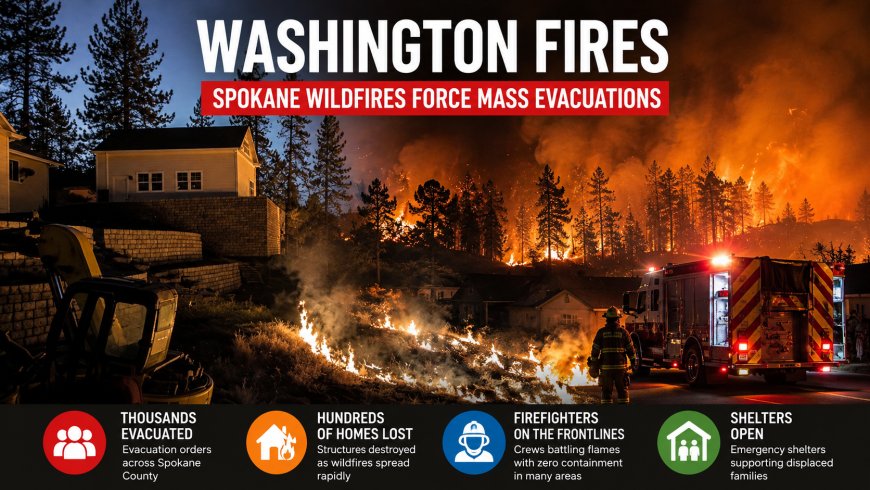
Washington fires continue to threaten Spokane and nearby communities as firefighters battle multiple fast-moving wildfires fueled by extreme heat, dry vegetation, and strong winds. Thousands of residents remain under evacuation orders while emergency crews work to protect homes, critical infrastructure, and public facilities as containment efforts continue.
Washington Fires Continue to Challenge Firefighters Across Spokane Region
The wildfire emergency affecting Spokane County has become one of the state's most significant natural disasters this summer. Fire crews from local departments, neighboring states, and federal agencies continue working around the clock after several fires rapidly expanded under dangerous weather conditions.
Officials say hot temperatures, extremely dry fuels, low humidity, and gusty winds created ideal conditions for fast-moving fire behavior. These factors allowed flames to spread quickly across grasslands, wooded areas, and residential neighborhoods, forcing emergency officials to issue widespread evacuation orders within hours.
Authorities continue monitoring changing weather patterns because shifting winds can quickly alter fire direction and create new threats for nearby communities.
Thousands of Residents Remain Under Evacuation Orders
Emergency managers have urged residents in affected zones to follow evacuation instructions immediately. Level 3 evacuation notices require residents to leave without delay, while lower-level notices encourage people to prepare for possible evacuation if conditions worsen.
The Spokane Convention Center has been operating as a primary emergency shelter for displaced families. Local organizations, volunteers, and relief agencies continue providing temporary housing, meals, medical assistance, and support for pets evacuated alongside their owners.
One of the most significant emergency operations involved the safe relocation of patients from the Mann-Grandstaff VA Medical Center, highlighting the scale of the wildfire response across the region.
Why These Washington Fires Spread So Quickly
Wildfire experts point to several factors that combined to produce extreme fire behavior. Months of dry weather left vegetation highly combustible, while strong winds carried burning embers ahead of the main fire front. Those embers were capable of igniting new spot fires far from the original flames.
This combination made containment extremely difficult during the first stages of the incident, requiring firefighters to prioritize life safety and structure protection before aggressive suppression efforts could begin.
Infrastructure Damage Extends Beyond Burned Areas
Although destroyed homes have received significant attention, the broader impact includes damaged power infrastructure, road closures, communication disruptions, reduced visibility from wildfire smoke, and interruptions to local businesses.
Public Safety Power Shutoffs left thousands of electricity customers without service as utility companies attempted to reduce additional wildfire risks. Emergency officials have also warned residents about hazardous air quality, encouraging vulnerable groups to remain indoors whenever possible.
Transportation routes in and around affected communities have experienced temporary closures, slowing both evacuation efforts and the movement of emergency equipment.
Federal and State Resources Continue Supporting Fire Response
Washington officials requested federal emergency assistance as the wildfire situation escalated. Additional firefighting resources, National Guard personnel, and specialized incident management teams have joined local crews to strengthen suppression efforts.
FEMA assistance has helped support wildfire suppression operations while state agencies coordinate damage assessments, emergency shelter management, and recovery planning for communities expected to face a lengthy rebuilding process.
Officials caution that even after flames are contained, returning residents may face damaged utilities, hazardous trees, unstable structures, and extensive cleanup work before neighborhoods can safely reopen.
Recovery May Last Much Longer Than the Fire Emergency
As firefighters continue protecting threatened communities, attention is gradually shifting toward long-term recovery. Insurance inspections, infrastructure repairs, environmental assessments, and debris removal will likely continue well after active firefighting operations end.
Emergency officials continue urging residents to rely on official evacuation updates rather than social media rumors, as fire conditions can change rapidly depending on weather and firefighting progress.
Want to know more about the people involved? Read complete biographies at BiographyPoints.com
Frequently Asked Questions
What is the latest Washington fires update?
Firefighters continue battling multiple wildfires around Spokane while thousands remain under evacuation orders. Emergency shelters remain open, additional state and federal resources have been deployed, and officials continue monitoring weather conditions that could influence fire behavior.
Why are evacuations still in place around Spokane?
Evacuation orders remain active because strong winds, dry vegetation, and ongoing fire activity continue creating dangerous conditions. Officials keep restrictions in place until fire behavior improves and emergency crews determine neighborhoods can safely reopen.
Where can residents check Spokane fire maps?
Residents should rely on official emergency management agencies, Washington state wildfire information, county emergency alerts, and local broadcasters for updated evacuation maps and fire perimeter information rather than unofficial social media posts.
What's Your Reaction?
 Like
0
 Dislike
0
 Love
0
 Funny
0
 Angry
0
 Sad
0
 Wow
0