Tim Friede’s Blood Helps Develop Universal Snake Antivenom After 200+ Bites - Bio News Points
A groundbreaking antivenom made from Tim Friede’s blood offers protection against the world’s deadliest snakes. Learn how his 20-year venom immunity mission could save thousands of lives globally.
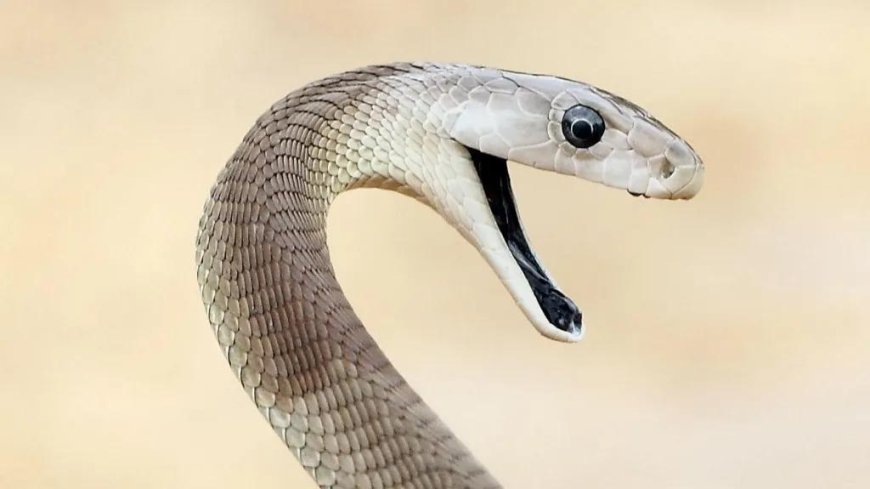
'Unparalleled' Universal Snake Antivenom Developed From Man Bitten Over 200 Times
Tim Friede’s extraordinary self-experimentation has helped scientists make major strides toward a universal snake antivenom.
In a breakthrough hailed as “unparalleled,” scientists have developed a broad-spectrum snake antivenom using the blood of a man who voluntarily injected himself with snake venom for nearly 20 years. Tim Friede, a former truck mechanic from the United States, has endured more than 200 snakebites and over 700 venom injections in a personal quest to build immunity — a mission that may now benefit thousands of snakebite victims worldwide.
A Deadly, Global Problem
Each year, up to 140,000 people die from snakebites, with hundreds of thousands more suffering amputations or permanent disabilities. Traditional antivenoms are typically produced by injecting animals, such as horses, with small amounts of venom, then harvesting their antibodies. However, these antivenoms must closely match the specific snake species responsible for the bite — a challenge in regions where multiple venomous species coexist.
Adding to the complexity, venom composition can vary even within the same species depending on geography, meaning antivenom produced for an Indian cobra might not work effectively on a Sri Lankan cobra.
Tim Friede’s Unlikely Contribution
Friede initially began injecting himself with venom to protect himself while handling snakes. Over the years, his immunity built up, though not without serious consequences — including a near-death experience after two cobra bites left him in a coma.
But Friede’s long-term self-experimentation drew the attention of Dr. Jacob Glanville, CEO of biotech firm Centivax, who was searching for broadly neutralising antibodies — rare immune defenses capable of countering toxins shared across multiple venomous snake species.
“Immediately I was like, if anybody in the world has developed these antibodies, it’s going to be him,” Dr. Glanville told the BBC.
After gaining ethical approval to collect blood samples from Friede, researchers began testing his unique immunity against some of the world’s deadliest snakes.
Breakthrough Discovery Published in Cell
Focusing on the elapids — a family of venomous snakes including cobras, mambas, taipans, and kraits — the research team identified two powerful, broadly neutralising antibodies in Friede’s blood. When combined with a third drug targeting another toxin class, the resulting antivenom cocktail protected lab mice against lethal doses from 13 out of 19 of the world’s deadliest elapids. The remaining six species showed partial protection.
This represents the broadest protection ever demonstrated by a single antivenom treatment.
“It likely covers a whole bunch of elapids for which there is no current antivenom,” said Dr. Glanville.
Hope for a Universal Cure
While current efforts have focused on neurotoxins (which attack the nervous system and are the primary danger in elapids), future research aims to neutralize other venom types, like haemotoxins (which damage blood and organs) produced by vipers.
Professor Peter Kwong of Columbia University predicts that within the next 10-15 years, scientists may have effective treatments against each major toxin class, potentially resulting in a universal snake antivenom or at least one effective shot for elapids and one for vipers.
“Tim’s antibodies are extraordinary — he taught his immune system to develop this very broad recognition,” Prof. Kwong said.
Caution and Optimism
Experts, including Prof Nick Casewell of the Liverpool School of Tropical Medicine, agree the findings mark an exciting step forward.
“There’s no doubt this work moves the field forward in a novel and exciting direction,” Casewell said, though he cautioned that extensive testing is still needed before human use.
For Tim Friede, the recognition is gratifying.
“I’m doing something good for humanity, and that was very important to me,” he said. “I’m proud of it. It’s pretty cool.”
What's Your Reaction?
 Like
0
 Dislike
0
 Love
0
 Funny
0
 Angry
0
 Sad
0
 Wow
0