What Happens With a Hung Jury? What Comes Next
What happens with a hung jury? Learn what a deadlocked jury means, what judges can do next, and when a mistrial or retrial may follow after jury deadlock.
What Happens With a Hung Jury? What Comes Next
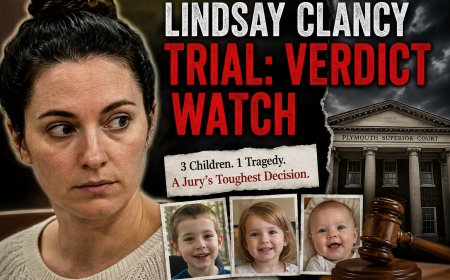
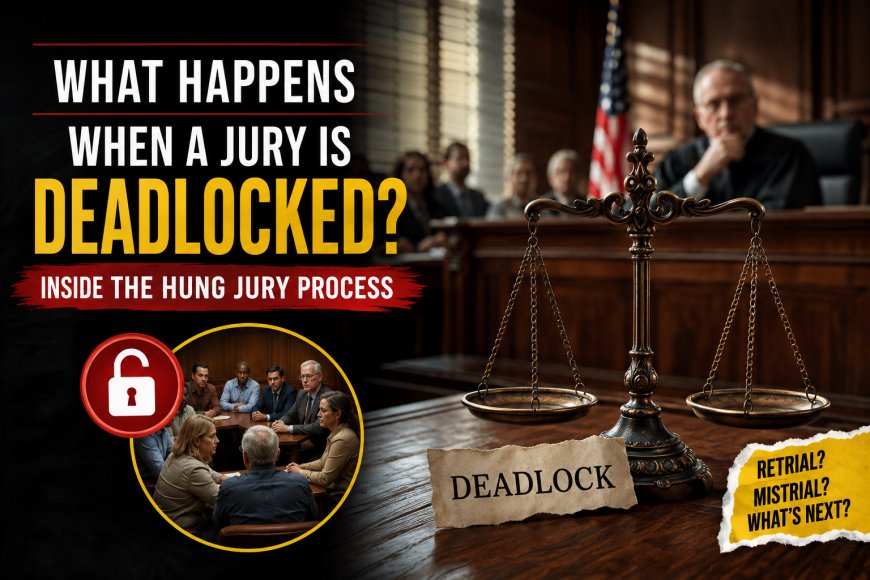
What happens with a hung jury? A hung jury, also called a deadlocked jury, means jurors cannot reach the unanimous verdict required in the case. It does not automatically mean the defendant is found guilty or not guilty, and it does not necessarily end the trial immediately. In the Lindsay Clancy case in Massachusetts, jurors told Judge William Sullivan on September 1 that they could not reach a unanimous decision, but the judge sent them back to continue deliberating.
What does a hung jury mean?
A hung jury is a jury that has reached an impasse and cannot agree on a verdict after deliberating. In a criminal case requiring a unanimous verdict, jurors generally must agree on the outcome before the court can enter a verdict based on their decision. If some jurors favor one outcome and others firmly favor another, the judge may determine that the panel is deadlocked.
The term “deadlocked jury” describes essentially the same situation. A deadlock is not itself a conviction, acquittal or finding of criminal responsibility. Instead, it is a procedural problem that the judge must address before deciding whether the jury should keep deliberating or whether the trial should end in a mistrial.
Why is the Lindsay Clancy jury deadlocked?
The current deadlock in the Lindsay Clancy trial comes after roughly 17 to 18 hours of deliberations over several days. The 12-member panel told the court Tuesday that it was unable to reach a unanimous decision. Judge Sullivan noted the extraordinary scope of the case, including more than 80 witnesses and more than 300 exhibits, and asked jurors to return to the deliberation room.
Clancy, 36, is charged with three counts of first-degree murder in connection with the deaths of her three children, Cora, Dawson and Callan, at the family's Duxbury home in January 2023. The central dispute at trial has not been whether Clancy physically killed the children; her defense has acknowledged the killings. Instead, the defense argues that severe mental illness, including postpartum psychosis, left her legally unable to understand the wrongfulness of her actions. Prosecutors have argued that she remains criminally responsible.
Does a deadlocked jury mean the judge declares a mistrial?
No. A jury announcing that it is deadlocked does not automatically end the case. The judge can consider whether the jurors have deliberated long enough and whether further discussion could realistically produce a unanimous verdict. In the Clancy trial, that is exactly what happened: after receiving the jury's note, Judge Sullivan instructed the panel to continue deliberating rather than immediately declaring a mistrial.
This distinction matters because the court generally tries to resolve the case with the existing jury when there is still a reasonable possibility of agreement. At the same time, judges must avoid pressuring jurors into abandoning sincere views merely to produce a verdict. Massachusetts case law recognizes that trial judges have substantial discretion when determining whether a genuine deadlock requires a mistrial.
What is a Tuey-Rodriguez instruction?
A Tuey-Rodriguez instruction is a special Massachusetts jury instruction that can be used when jurors have reached an impasse. It encourages jurors to reconsider their positions and listen carefully to opposing views while still requiring them to remain faithful to their honest convictions. It is sometimes compared with what other jurisdictions call an “Allen” or “dynamite” charge.
The purpose is not supposed to be forcing jurors to vote a particular way. Instead, the instruction is intended to give a genuinely divided jury another opportunity to examine the evidence and determine whether a unanimous verdict is possible.
Importantly, the instruction is not an automatic countdown that begins every time jurors mention a deadlock. Massachusetts courts have emphasized the judge's discretion and the importance of considering whether deliberations have been sufficiently thorough before using such an instruction.
What happens if the jury remains deadlocked?
If jurors remain unable to agree after the judge determines that further deliberations are unlikely to resolve the impasse, the judge can declare a mistrial. The first trial then ends without a final verdict on the unresolved charges.
A mistrial caused by a genuine hung jury is fundamentally different from an acquittal. An acquittal generally ends the prosecution for the same offense because double-jeopardy protections prevent the government from simply putting the defendant through another trial for the same charge. A mistrial caused by genuine jury deadlock, however, is recognized as a circumstance in which another trial can generally be permitted.
That means the phrase “mistrial” should not be interpreted as “the defendant won.” It means the first trial did not produce a final verdict. What happens afterward depends on the circumstances and the decisions made by prosecutors and the court.
Can Lindsay Clancy be tried again after a hung jury?
Potentially, yes. If the Clancy trial ends in a mistrial because the jury genuinely cannot reach a verdict, Massachusetts law generally permits a retrial without violating the constitutional protection against double jeopardy. Massachusetts appellate decisions have repeatedly recognized jury deadlock as a traditional example of the type of necessity that can justify a mistrial and subsequent retrial.
That does not mean a second trial is guaranteed. Prosecutors would have to decide how to proceed, and the precise legal circumstances surrounding any mistrial would matter. The prosecution could seek a new trial, while the defense could challenge issues arising from the first proceeding where legally appropriate.
For Clancy, a retrial would also mean another lengthy proceeding involving the same central question: whether the evidence establishes that she was criminally responsible for the deaths under Massachusetts law.
Does a hung jury mean Lindsay Clancy is innocent?
No. A hung jury is not a finding of innocence. It means the jurors could not reach the required agreement.
Likewise, a deadlock does not mean prosecutors have proved their case. The jury's inability to agree leaves the legal question unresolved unless and until a verdict is reached or the case otherwise concludes. If a mistrial occurs because of deadlock, the prosecution may be able to bring the case to trial again under the applicable double-jeopardy rules.
Why does a hung jury matter so much in this trial?
The Clancy case presents an unusually difficult question for jurors because the parties largely dispute the legal significance of the defendant's mental state rather than simply disputing whether the physical acts occurred. Prosecutors and defense lawyers presented sharply different interpretations of her behavior, psychiatric history, treatment and state of mind.
The jury also heard testimony from more than 80 witnesses and reviewed hundreds of exhibits. That volume helps explain why the judge emphasized the length and complexity of the trial when asking jurors to continue deliberating.
The deadlock therefore does not reveal how the jury is divided. Courts generally do not disclose individual jurors' votes simply because a panel reports that it cannot reach a unanimous verdict. Until a lawful verdict is announced, speculation about the exact vote count should be treated cautiously.
What are the possible outcomes from here?
There are several possible paths. The most straightforward is that the jurors continue deliberating and eventually reach a unanimous verdict. That could resolve the trial without a mistrial.
A second possibility is that the jury remains deadlocked and the judge eventually determines that the impasse cannot be resolved. In that situation, a mistrial could be declared. A third possibility is that the judge uses an appropriate further instruction, including a Tuey-Rodriguez charge when the legal circumstances support it, and gives the jury another opportunity to reach a verdict.
If a mistrial is declared because of a hung jury, prosecutors can generally seek a retrial. Massachusetts case law makes clear that genuine jury deadlock is ordinarily considered a form of “manifest necessity” that permits another trial without violating double jeopardy.
What does a hung jury mean for the case right now?
For the Lindsay Clancy case, the most important point is that there is not yet a mistrial. The jury has reported an inability to reach a unanimous decision, but Judge Sullivan has directed the jurors to continue deliberating. The case therefore remains active and unresolved as of September 1.
The next major development will be whether the jury returns with a verdict or again tells the judge that it cannot reach one. If another impasse occurs, the court will have to decide what procedural step is appropriate under Massachusetts law.
For readers searching “what happens with a hung jury,” the key takeaway is simple: deadlock does not automatically equal acquittal, and it does not automatically equal a mistrial. The judge may allow more deliberations, may use an appropriate deadlock instruction, and if the impasse cannot be resolved, may declare a mistrial. A retrial may then be legally possible.
Why the Karen Read comparison can be misleading
Searches related to Karen Read have also appeared alongside the Clancy jury story because the Read case involved a highly publicized Massachusetts jury deadlock and mistrial. The comparison can help explain the basic procedure, but the two cases should not be treated as legally identical.
The important general lesson from Massachusetts law is that a jury's failure to agree can lead to a mistrial and, in appropriate circumstances, a retrial. The outcome of one case does not determine what will happen in another. Each proceeding depends on its charges, evidence, jury instructions, procedural history and the judge's rulings.
What should readers watch for next?
The immediate question is whether the Clancy jurors can overcome their disagreement and produce a unanimous verdict. If they cannot, attention will shift toward the judge's handling of the continuing impasse and whether the court determines that further deliberations remain productive.
Until that happens, reports describing the jury as “deadlocked” should not be confused with reports saying the trial has ended. As of September 1, the jurors have been sent back to deliberate, meaning the legal process remains ongoing.
What's Your Reaction?
 Like
0
 Dislike
0
 Love
0
 Funny
0
 Angry
0
 Sad
0
 Wow
0