Prince Harry Return to UK Puts Security Dispute in Focus
Prince Harry returns to the UK with Meghan as a security dispute intensifies, raising fresh questions over protection, family tensions and life in Britain.
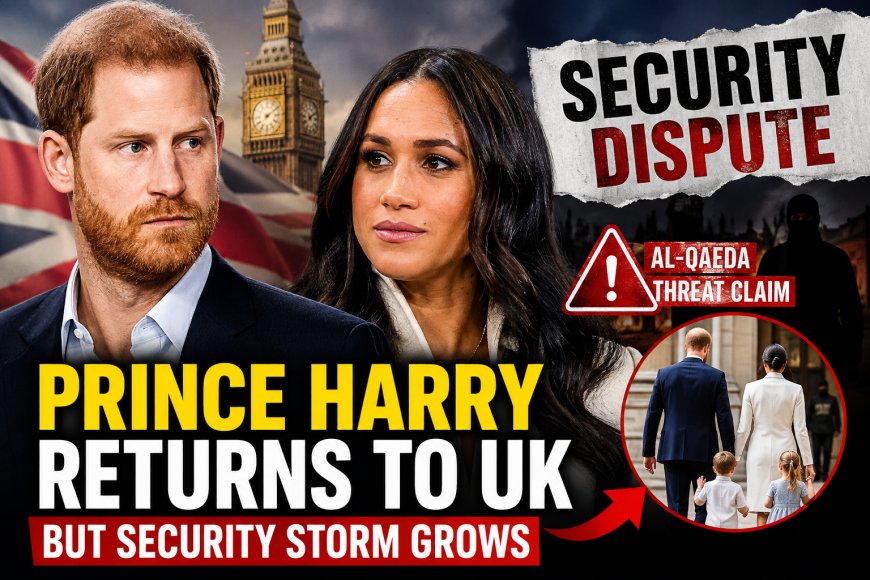
Prince Harry Return to UK Puts Security Dispute in Focus
Prince Harry has returned to the UK with Meghan, Duchess of Sussex, and their two children for an extended stay, but the family's arrival has immediately renewed questions about security, royal relations and what life in Britain will look like for the Sussexes. The couple are not returning as working royals and are expected to live in private accommodation rather than a royal residence. Their children, Prince Archie and Princess Lilibet, are also expected to attend school in the UK. Most importantly, the family's return has brought Harry's long-running dispute over protective security back into the spotlight. Major reports confirm the family's return, while Harry's legal team has separately raised allegations about intelligence relating to a reported al-Qaeda threat. Those claims remain allegations rather than established findings.
Why Prince Harry's UK return matters now
The Sussexes' return represents a significant change from the arrangement they established after stepping back from official royal duties in 2020. Harry and Meghan moved to the United States and built independent commercial and charitable activities while maintaining a complicated relationship with the British royal family. Their latest move does not reverse that decision. Current reporting says they will remain private citizens and will not resume official royal duties.
What has changed is their physical proximity to Britain. The family is now expected to spend substantially more time in the country, while Archie and Lilibet are due to attend school there. That creates practical questions that were less urgent when the family was based primarily in California, particularly around housing, schooling, personal protection and Harry's relationship with senior members of his family.
Reports indicate the family is expected to establish itself in a private residence outside London, with the Cotswolds repeatedly mentioned in coverage. The precise location is being kept private, in part because of security and privacy concerns. The couple are also expected to retain their existing overseas property interests and commercial activities.
What is behind Prince Harry's security dispute?
The central issue is not simply whether Harry has security in Britain. It is who determines the level of protection he receives, what intelligence can be shared with his security arrangements and whether his current circumstances justify a higher level of state protection.
After Harry and Meghan stepped back from royal duties and moved abroad, the UK's Executive Committee for the Protection of Royalty and Public Figures, commonly known as RAVEC, decided that Harry would no longer automatically receive the same taxpayer-funded protection associated with his previous role. The system instead allows protection to be assessed according to the circumstances of particular visits. Harry has challenged that approach through the courts.
Harry's legal position has been that his personal profile and the threats he faces have not disappeared simply because his constitutional role changed. In previous court proceedings, his lawyers argued that he had been treated differently from other people considered for protective security. The Home Office, however, defended the bespoke approach and argued that security decisions could be tailored to Harry's individual circumstances.
What is the new al-Qaeda allegation?
The newest and most sensitive part of the dispute concerns an alleged 2023 intelligence warning. According to reports based on communications from Harry's legal team, his lawyers have claimed that the chair of RAVEC had information concerning an alleged al-Qaeda threat against the Duke but that the information was not passed to his private security team or relevant US authorities at the time.
That allegation should be treated carefully. Public reporting establishes that Harry's lawyers have made the claim; it does not establish independently that RAVEC deliberately withheld intelligence or that an assassination plot was confirmed in the manner alleged. Security-related evidence is often subject to restrictions precisely because disclosure can reveal intelligence sources, methods or assessments.
The allegation nevertheless matters because it goes directly to Harry's broader argument: that his private security arrangements cannot fully replicate the capabilities available to official UK protection services. His legal team has argued that private guards do not have the same access to police intelligence and other state resources that armed police protection would provide.
Why RAVEC is central to Harry's case
RAVEC is important because Harry's dispute is fundamentally about the UK's protective-security decision-making process. His position is not simply that he should automatically receive the same protection he had as a working royal. In earlier court proceedings, his lawyers argued that he should be assessed through an appropriate process and that the decision-making framework used in his case was unfair.
The Home Office has taken a different view. Its lawyers have argued that Harry's changed status and residence justified an individualized approach, with protection considered according to the circumstances of each visit rather than granted automatically. That distinction remains crucial to understanding why the dispute has continued even after several legal proceedings.
The latest controversy therefore does not necessarily mean that Harry has been granted state protection or that RAVEC has accepted his claims. Instead, it puts pressure on the authorities to explain how security risks are being evaluated now that the Sussexes intend to spend much more time in Britain.
Will Harry and Meghan become working royals again?
No current reporting indicates that the couple are returning as working members of the Royal Family. Their move to Britain is a residential and family decision rather than a formal restoration of royal duties. They remain private citizens and continue to operate their own commercial, charitable and media projects.
That distinction is particularly important because the security debate can easily become confused with the question of royal status. Harry's supporters argue that security should be determined by risk rather than rank. Critics, meanwhile, point to his decision to leave official royal duties and question why taxpayers should fund protection normally associated with official responsibilities.
The disagreement is therefore likely to continue even if Harry spends more time in Britain. His physical return does not automatically restore the privileges or institutional position he held before 2020.
What does the return mean for Harry's relationship with the Royal Family?
The family dimension is more complicated. Harry's relationship with his father, King Charles III, has shown signs of improvement in recent months, and the Duke has expressed a desire for his children to have a stronger relationship with their grandfather. Recent reporting also indicates that Harry and Meghan have spent time in Britain with members of the family.
The relationship with Prince William remains much more difficult. Reports continue to describe a significant breakdown in communication between the brothers, with trust identified as one of the biggest obstacles to reconciliation. The Sussexes' return places the brothers geographically closer while leaving their personal relationship largely unresolved.
That creates an unusual situation. Harry can live in Britain without becoming a working royal, but his presence naturally keeps attention on the monarchy. Every family meeting, security decision or public appearance could therefore generate fresh speculation about whether the wider royal dispute is improving or simply entering another phase.
Why the security question could become harder to ignore
The practical reality is that living in Britain for an extended period is different from making occasional visits. A short trip can be planned around a specific schedule and security assessment. A long-term residence creates a broader set of challenges involving school journeys, public appearances, private travel, home security and the family's exposure to the public.
That is why the latest dispute is more significant than a simple disagreement over police protection. The Sussexes' decision to spend more time in Britain creates a continuing security question that cannot easily be separated from their day-to-day lives.
Harry's legal team is seeking greater attention to those circumstances, while the government retains responsibility for deciding what protection is justified. The result is likely to depend on confidential risk assessments rather than public opinion alone.
What happens next for the Duke of Sussex?
The immediate focus will be on how the British authorities handle Harry's security concerns while he and his family establish their new routine. The Home Office and RAVEC face the difficult task of balancing personal risk, intelligence considerations, legal requirements and the principle that state protection is not automatically attached to a former working royal.
At the same time, the family will begin adjusting to life in Britain. Archie and Lilibet's schooling will make the return more permanent in practical terms, while Harry and Meghan are expected to continue their independent professional and charitable work rather than resume royal duties.
The most important unanswered question is therefore not whether Harry has returned. He has. The bigger question is whether his return can produce a workable long-term arrangement in which the Sussexes live privately in Britain while security agencies determine protection according to assessed risk rather than royal status.
For now, the alleged intelligence dispute adds another layer to an already complicated story. Harry's claims remain contested and partly shielded by the secrecy surrounding security assessments, so definitive conclusions should wait for official findings or further court proceedings.
Frequently Asked Questions
Has Prince Harry returned to the UK?
Yes. Prince Harry, Meghan and their children have returned to Britain for an extended stay after spending several years primarily based in the United States. They are expected to live in private accommodation and remain outside the working Royal Family.
Does Prince Harry automatically receive taxpayer-funded security?
No. Harry no longer has the automatic security arrangements associated with his former position as a working royal. His protection is considered under the UK's current protective-security framework, with arrangements assessed according to circumstances.
What is RAVEC?
RAVEC is the Executive Committee for the Protection of Royalty and Public Figures. It is responsible for decisions concerning protective security for members of the Royal Family and other high-profile individuals.
Did RAVEC confirm an al-Qaeda assassination plot against Harry?
There is no public evidence establishing that as a confirmed finding. Reports say Harry's legal team alleges that RAVEC's chair had information relating to an alleged 2023 al-Qaeda threat. Because the underlying intelligence is sensitive, the claim should not be presented as an independently proven assassination plot.
Are Harry and Meghan becoming working royals again?
No. Their return to Britain does not mean they have resumed official royal duties. Current reporting says they remain private citizens and intend to continue their independent activities.
Why are Harry and Meghan moving back to Britain?
The precise motivations are personal and cannot be reduced to one confirmed reason. Reporting points to family connections, the children's education and Harry's continuing ties to Britain, while the couple are also maintaining their international business and charitable interests.
What's Your Reaction?
 Like
0
 Dislike
0
 Love
0
 Funny
0
 Angry
0
 Sad
0
 Wow
0