What is the Israeli Herop Drone? India’s Use of Israeli Kamikaze Drones Against Pakistan Explained - Bio Points News
Discover the features, capabilities, and history of the Israeli-made Herop drone used by India against Pakistan. Learn how these loitering munitions are changing warfare in South Asia.
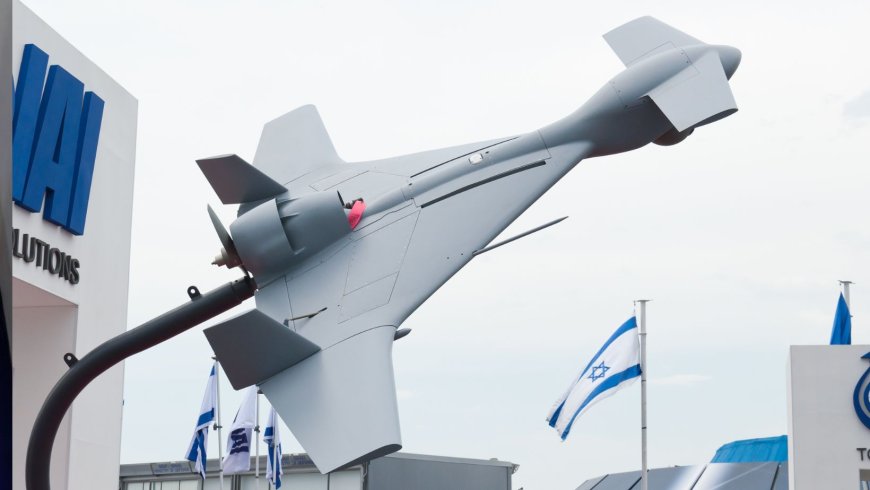
What Is the Israeli Herop Drone Used in the Indian Attack on Pakistan?
In a significant revelation during a recent press conference, Pakistan Army Spokesperson Lieutenant General Ahmed Sharif Chaudhry disclosed that the Pakistani military had downed nearly a dozen Herop drones deployed by India in areas across the country, including Lahore, Gujranwala, Chakwal, Rawalpindi, Attock, Bahawalpur, Mianwali, Chhor, and Karachi.
This marks one of the first high-profile uses of Israel-made military drones in the subcontinent’s ongoing military standoff, and naturally raises questions about the Herop drone’s capabilities, origins, and tactical role.
What Is the Herop Drone?
The Herop drone, sometimes referred to as a loitering munition or kamikaze drone, is a military-grade ammunition system developed by the MBT Missile Division of Israel Aerospace Industries (IAI). Unlike conventional UAVs (unmanned aerial vehicles), the Herop is designed not just for surveillance but also to deliver explosive payloads on target — effectively acting as an airborne precision missile with UAV capabilities.
According to technical data available from Israel Aerospace Industries (IAI):
-
The Herop drone can be controlled in real-time by an operator or operate autonomously.
-
It can be launched from canister systems mounted on trucks, ships, or ground stations.
-
The drone combines the characteristics of a surveillance UAV and a guided missile, making it an ‘air weapon’ capable of both reconnaissance and direct attack.
-
If it doesn’t locate a target, it can return safely to base — a feature rarely seen in expendable munitions.
The Herop is particularly valued for its ability to target enemy air defense systems, radar stations, and high-value strategic targets.
Key Features of the Herop Drone
| Feature | Description |
|---|---|
| Origin | Israel Aerospace Industries (IAI) |
| Type | Loitering Munition (Kamikaze drone) |
| Launch Platform | Canister-based truck or ship launch |
| Control Mode | Autonomous / Human-in-the-loop |
| Primary Uses | Air defense suppression, precision strikes |
| Export Clients | India, Azerbaijan, others |
| Combat Proven | Nagorno-Karabakh conflicts (2016, 2020) |
Why Is It Significant in the India-Pakistan Context?
India has, over the past decade, purchased $2.9 billion worth of military hardware from Israel, including surveillance systems, radars, combat drones, and precision missiles. The deployment of Herop drones near Pakistan's critical military installations and urban centers marks an escalation in technological warfare in South Asia.
The Pakistan Army spokesperson confirmed the recovery of drone wreckage from multiple locations, signaling a widespread attempt at aerial surveillance or attack missions.
Such deployments have serious implications:
-
Strategic Deterrence: Using loitering munitions like the Herop adds a new dimension to cross-border military tactics.
-
Airspace Violations: According to international aviation laws, any drone weighing over 250 grams requires licensing, and military drones are subject to even stricter regulations, especially near international borders and sensitive installations.
-
Technology Race: These events further highlight the growing technological gap in UAV warfare between India and Pakistan, with Israel playing a pivotal role in supplying cutting-edge systems to India.
Expert Insight: Dr. Fahad Irfan Siddiqui’s Analysis
Dr. Fahad Irfan Siddiqui, Associate Professor at Mehran University of Engineering and Technology, Jamshoro, explained to Dawn.com that the Herop drone is an advanced military technology system designed for dual roles — data collection and payload-delivery attacks.
He compared it to civilian drones, noting that while agricultural and survey drones can be jammed using UHF frequency blockers, military-grade drones like Herop are operated via satellite communication links, making them extremely difficult to intercept or jam using conventional counter-UAV systems.
While quadcopter-type drones are smaller, difficult to track, and used for tactical recon, Herop drones are lethal, long-range systems designed for strategic operations — including attacking high-value military targets or infrastructure.
Herop Drone in Global Combat Use
The Herop drone isn’t new to active conflict zones. It has previously been used extensively by Azerbaijan during the 2016 and 2020 Nagorno-Karabakh conflicts against Armenia.
In one infamous instance, a Herop drone targeted a military bus carrying soldiers, killing six and destroying the vehicle. These successes have turned the Herop into a popular export commodity, with India and Azerbaijan being among its largest buyers.
Rising Drone Warfare in South Asia
The reported use of Israeli Herop drones by India against Pakistan represents a dangerous and technologically advanced chapter in the India-Pakistan military standoff. It underscores how modern conflicts are increasingly being shaped by unmanned aerial systems and loitering munitions, blurring the line between reconnaissance tools and lethal attack platforms.
As South Asia becomes a growing hotspot for drone warfare, both nations will likely continue investing in counter-drone technology, electronic warfare systems, and enhanced surveillance to counterbalance emerging threats.
With military experts, international observers, and defense analysts watching closely, the deployment of Herop drones marks a critical moment in the region’s security calculus — one with far-reaching implications for future conflicts and deterrence doctrines.
Reference
What's Your Reaction?
 Like
0
 Dislike
0
 Love
0
 Funny
0
 Angry
0
 Sad
0
 Wow
0