Civilian Grief on India-Pakistan LoC: Families Mourn War’s Toll - Bio Points News
Heartbreaking stories of families in India- and Pakistan-administered Kashmir reveal the human cost of May 2025’s deadly LoC shelling. Read their calls for peace.
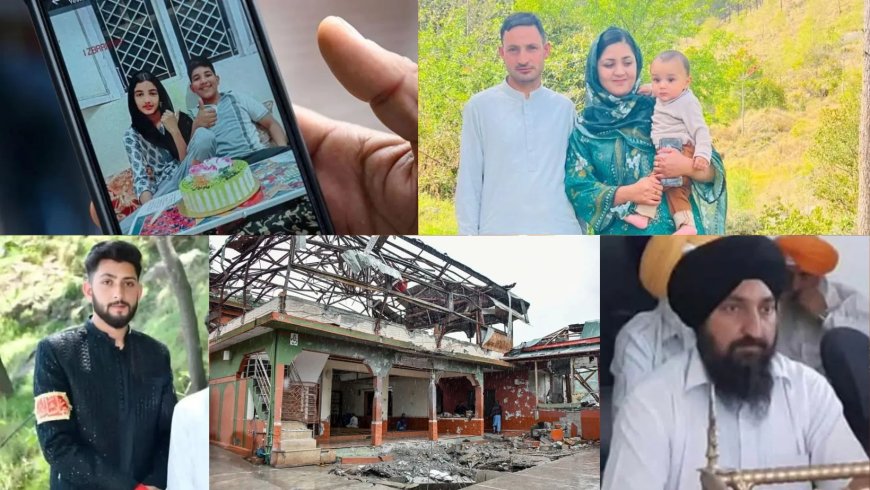
Shared Sorrow Across the Line of Control: Families Mourn Amid India-Pakistan Tensions
The Line of Control (LoC), the volatile de facto border dividing Indian- and Pakistan-administered Kashmir, became a deadly battleground from May 7 to May 11, 2025, leaving dozens of families on both sides shattered by loss. Intense shelling, missile strikes, and drone attacks, sparked by a terrorist attack in Pahalgam, claimed civilian lives, destroyed homes, and deepened the trauma of communities caught in the crossfire. Despite a U.S.-mediated ceasefire on May 10, the grief of those who lost loved ones remains raw, with many questioning whether peace will ever endure.
A Wave of Civilian Tragedies
Devastation in Pakistan-Administered Kashmir
In Pakistan-administered Kashmir, the Inter-Services Public Relations (ISPR) reported 40 civilian deaths, including seven women and 15 children, and 121 injuries during India’s missile strikes on May 6-7. Among the victims:
-
Nabila Razaq, killed in Khoi Ratta, Kotli, on May 10. A rocket exploded in her yard, and a fragment struck her heart as she sat in her living room. Her husband, Sardar Javed Razaq, is in shock, while their four-year-old daughter, injured in the blast, cries inconsolably for her mother. “She screams and shouts, remembering her mother,” said Javed’s brother, Sardar Tahir.
-
Sidra Siraj, also from Khoi Ratta, died while sweeping her yard at 5:30 AM on May 10. Her husband, Qamar Shahzad, found her lifeless after a shell struck. Their eight-month-old baby, too young to speak, searches for his mother with restless eyes. “Fear has settled in our hearts,” Shahzad told the BBC.
-
Osama, a 22-year-old newlywed from Kotetri Najam, Bagh, was killed on May 8 when a shell hit his home, just 10 days after his wedding. His father, Sardar Ishrat, lamented, “Happiness was on the doorstep, but grief has shaken the walls.” His mother, Shakila, added, “The wedding decorations were not finished when death set up camp.”
Pakistan reported 13 soldiers killed and 78 injured, with civilian infrastructure, including mosques and schools, damaged in Muzaffarabad and Muridke.
Heartbreak in Indian-Administered Kashmir
In Indian-administered Kashmir, 18 civilians, including three children and two women, were killed in Poonch, Rajouri, and Uri, alongside five soldiers during India’s Operation Sindoor. The total Indian death toll reached 23, per the Indian Director General of Military Operations (DGMO). Key losses include:
-
Zain Ali and Urwa, 10-year-old twins from Poonch, killed on May 7 when a shell struck as their family fled their home. Their father, Ramiz Khan, seriously injured, was unaware of their deaths for days while hospitalized in Jammu. Their uncle recalled Zain’s fear over the phone: “Taoji, listen to the sound of shelling.” Their graves now lie in the courtyard of their locked ancestral home.
-
Amreek Singh, a shopkeeper in Poonch, died on May 7 while rushing his children to a basement during shelling. A shell hit his chest, killing him instantly. His daughter told the BBC, “He was trying to save us… Little did we know this would happen in two minutes.” She questioned, “We started Mission Sindoor for justice for Pahalgam, now what mission will be done for us?”
Indian media reported damage to a gurudwara, a Catholic school (where two students died), and homes in Poonch, with blackouts imposed in border towns like Amritsar.
The Spark: Pahalgam Attack and Escalation
The conflict erupted after a terrorist attack on April 22, 2025, in Pahalgam, Indian-administered Kashmir, killed 26 tourists, mostly Hindu, prompting India to launch Operation Sindoor. India claimed its missile strikes targeted militant groups Jaish-e-Mohammed and Lashkar-e-Taiba, while Pakistan said civilian areas, including mosques, were hit, killing 31. Pakistan retaliated with Operation Bunyan al-Marsus, targeting Indian military bases, but India reported civilian sites, including a Hindu temple, were struck.
From May 7 to 10, both sides exchanged drone and missile attacks, with Pakistan claiming to down 25 Indian drones and India intercepting Pakistani missiles. The fighting, the worst in decades, killed 66 civilians and 18 soldiers combined, per both nations’ reports. X posts captured the chaos, with videos of explosions in Poonch and damaged homes along the LoC.
A Fragile Ceasefire and Lingering Fear
On May 10, a U.S.-brokered ceasefire took effect at 5:00 PM IST (4:30 PM PKT), announced by President Donald Trump on Truth Social. However, explosions in Srinagar and Jammu hours later led to mutual accusations of violations. India’s Foreign Secretary Vikram Misri condemned Pakistan, while Pakistan’s Foreign Ministry urged restraint. By May 11, the ceasefire held, but residents remained wary.
Families like Maria Khan’s in Poonch, who lost her nephew and niece, criticized the lack of early warnings. “The government should have informed people near the border earlier… Maybe our children would be alive,” she said. In Khoi Ratta, Shahzad described an “apocalypse,” with survivors too traumatized to sleep. “Even if the door is closed tightly, they feel as if a blast has taken place,” he said.
Voices of the Bereaved
A Shared Cry for Peace
Families on both sides expressed despair over the futility of the conflict:
-
Sardar Tahir (Pakistan): “Our village is seven kilometers from the LoC, but no place feels safe. Whether there is war or ceasefire, our children will not return.”
-
Maria Khan (India): “If war is necessary, we support it. But aren’t we human? Now whether there is war or ceasefire, our children will not return.”
-
Ramiz Khan’s Brother (India): “This war seems to be for our home because our children went into it. Even when clouds thunder at night, we get scared.”
Anam Zakaria, a Pakistani writer, told the BBC, “Families on the LoC face the brunt of heated tensions… Each time firing resumes, many are thrust into bunkers, livestock and livelihood is lost, infrastructure is damaged.”
Calls for Accountability
Residents demanded better protection and accountability. Amreek Singh’s daughter questioned the purpose of military operations when civilians bear the cost. In Pakistan, Qamar Shahzad urged governments to prioritize border communities, saying, “We thought our house was safe, but now fear has settled in our hearts.”
The Broader Context: A History of Conflict
The Kashmir dispute, dating to 1947, has fueled multiple wars and skirmishes. The LoC, established in 1972 under the Simla Agreement, remains one of the world’s most militarized borders. Ceasefire violations, often triggered by militant infiltrations or retaliatory strikes, have displaced thousands over decades. Between 2013 and 2021, sustained conflict along the LoC displaced over 27,000 people. The 2021 ceasefire reduced violations until the April 2025 Pahalgam attack reignited tensions.
What Lies Ahead?
The ceasefire, mediated by the U.S., UK, Saudi Arabia, and others, includes plans for talks on May 12, likely focusing on the Indus Waters Treaty and confidence-building measures. However, former Pakistani PM Anwaar ul Haq Kakar noted that the Kashmir issue may not be addressed immediately.
For now, communities along the LoC live in limbo. Tanveer Chalko from Uri celebrated the ceasefire but emphasized its fragility: “This is a great step, but we cannot put into words what it means for us.” Lal Din from Poonch, who lost relatives, warned, “Until India and Pakistan seriously settle their disputes, we must brace for even greater conflicts.”
A Plea for Lasting Peace
The shared grief of families like the Razaqs, Shahzads, and Khans underscores the human toll of the India-Pakistan conflict. As both nations navigate diplomatic talks, the voices of those along the LoC demand a future where children can sleep without fear of shelling. For now, their sorrow echoes a universal truth: war or ceasefire, their loved ones will not return.
For more updates on cybersecurity and digital threats, visit Bio Points News.
What's Your Reaction?
 Like
0
 Dislike
0
 Love
0
 Funny
0
 Angry
0
 Sad
0
 Wow
0