: Dutch Government Collapses After Geert Wilders’ Far-Right PVV Quits Coalition - Bio Points News
The Dutch coalition government falls as Geert Wilders’ PVV exits over migration policy disputes. Prime Minister Dick Schoof resigns, triggering likely elections post-summer.
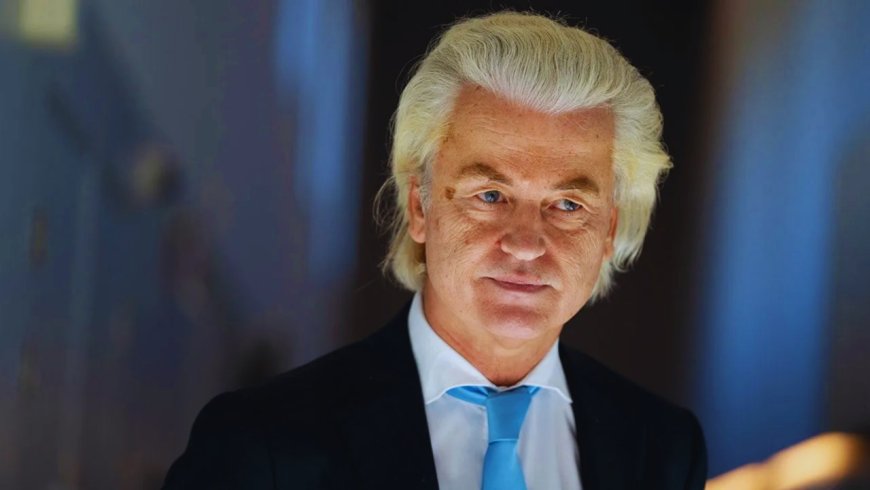
Dutch Government Collapses After Geert Wilders’ Far-Right Party Quits Coalition
The Netherlands plunged into political turmoil on June 3, 2025, as the coalition government collapsed following the withdrawal of Geert Wilders’ far-right Party for Freedom (PVV). The move, sparked by a dispute over stringent migration policies, has toppled the country’s first far-right-led government after just 11 months, paving the way for likely elections after the summer.
A Fragile Coalition Unravels
Wilders’ Ultimatum Triggers Crisis
The PVV, which secured a shock victory in the November 2023 elections, formed a coalition with three other right-wing parties: the People’s Party for Freedom and Democracy (VVD), the Farmer-Citizen Movement (BBB), and the New Social Contract (NSC). Despite holding 88 seats in the 150-seat House of Representatives, the coalition was fraught with tension. Wilders, excluded from a ministerial role due to his controversial anti-immigrant and anti-Islam stance, remained a vocal critic from parliament.
Last week, Wilders issued an ultimatum, demanding immediate adoption of a 10-point plan to slash migration, including closing borders to asylum seekers, deporting Syrian refugees, and deploying the army to patrol borders. Some proposals, deemed illegal under Dutch and EU law, were rejected by coalition partners. On Tuesday, after a 60-second emergency meeting, Wilders announced the PVV’s exit, stating on X, “No signature for our asylum plans. The PVV leaves the coalition.”
Prime Minister Dick Schoof, a neutral civil servant appointed to lead the coalition, called the move “unnecessary and irresponsible.” He tendered the resignation of PVV ministers to King Willem-Alexander and will lead a caretaker government until elections, likely in October. “We are facing major challenges nationally and internationally, and decisiveness is required for our resilience and economy,” Schoof said at a press conference.
Coalition Partners Slam Wilders
Accusations of Ego and Betrayal
Coalition leaders expressed outrage. VVD leader Dilan Yesilgoz accused Wilders of prioritizing “his own ego and interests” over the nation, calling his decision “super irresponsible” amid global challenges like the war in Ukraine. “We had a right-wing majority, and he lets it all go,” she told reporters.
Caroline van der Plas of the BBB echoed the sentiment: “He isn’t putting the Netherlands first, he’s putting Geert Wilders first.” NSC’s Nicolien van Vroonhoven called the move “incomprehensible,” while Deputy Prime Minister Mona Keijzer (BBB) accused Wilders of “betraying the Netherlands.” The remaining parties, now holding only 51 seats, opted against forming a minority government, favoring snap elections.
Wilders’ Political Gamble
Aiming for Prime Minister
Wilders, a polarizing figure with a 2016 conviction for discrimination against Moroccans, sees the collapse as a springboard for his prime ministerial ambitions. “I intend to become prime minister and ensure the PVV becomes bigger than ever,” he told reporters, signaling immigration as the centerpiece of his campaign.
However, polls show PVV support has dropped from 23% in 2023 to about 20%, neck-and-neck with the Green-Left opposition and former coalition partners. Analysts like Armida van Rij of Chatham House suggest Wilders engineered the crisis to capitalize on migration debates, despite his party’s own migration minister failing to advance policies. “Wilders wanted the government to collapse as support for his party continues to drop,” van Rij noted.
A Nation in Limbo
Economic and Global Implications
The collapse, the third-shortest government in recent Dutch history, comes weeks before the Netherlands hosts a NATO summit on June 24-25, 2025, with leaders like Donald Trump and Emmanuel Macron expected. The caretaker government may struggle to finalize NATO defense spending commitments, adding to uncertainty in the eurozone’s fifth-largest economy. Sandra Phlippen, chief economist at ABN AMRO, downplayed immediate economic impacts, noting the government “barely made any concrete plans” in its tenure.
Frans Timmermans, Green-Left leader, seized on the chaos, calling for leadership to address Europe’s war and economic worries. “We have had enough of this standstill… It requires leadership, solidarity, and fair sharing,” he told NOS.
A Risky Path Ahead
Wilders’ exit has drawn mixed reactions. Some X posts reflect public hope for change, while others criticize his populism as destabilizing. With elections looming, Wilders’ gamble could either bolster his mandate or alienate voters and potential coalition partners, who may view him as unreliable after past walkouts, like in 2010 under Mark Rutte.
As the Netherlands braces for a contentious campaign, the collapse underscores the divisive power of migration debates in Europe. Whether Wilders can convert this crisis into victory remains uncertain, but the nation faces months of political uncertainty as it awaits a new government.
For more updates on global politics and cybersecurity, visit Bio Points News.
What's Your Reaction?
 Like
0
 Dislike
0
 Love
0
 Funny
0
 Angry
0
 Sad
0
 Wow
0