























































Trump Says His Deportation Policy Was "Too Tough" in 60 Minutes Interview — and Offers Democrats an Immigration Deal
President Donald Trump told CBS's 60 Minutes that his administration's deportation crackdown "might be too tough" and hurt Republicans in the midterms — then offered to work with Democrats on an immigration deal. Here are the key takeaways, the Stephen Miller twist, and what happens next.
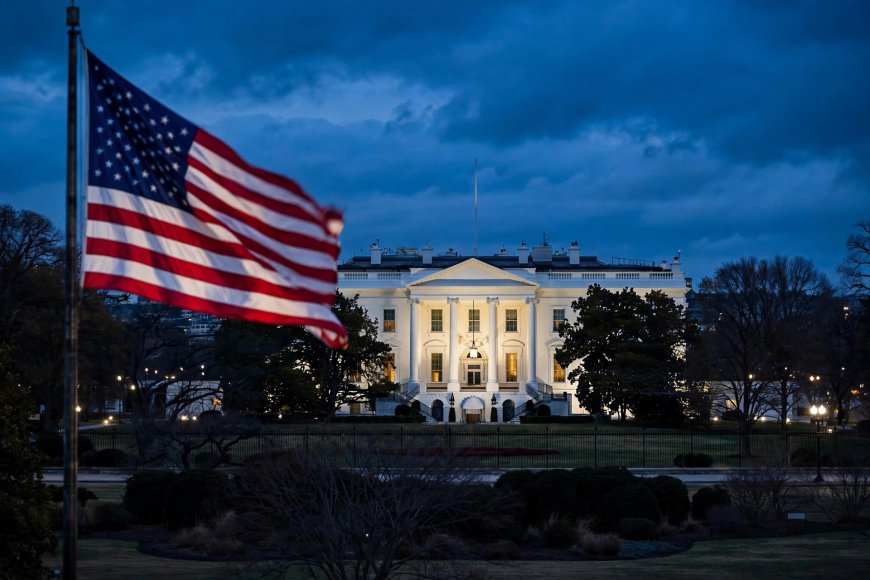
President Donald Trump has admitted his administration's deportation crackdown went too far. In his first major interview since the midterm elections, broadcast on CBS's 60 Minutes on Sunday, November 8, Trump said the policy "might be too tough" — and said he was open to working with Democrats on an immigration deal.
"I think it was too tough," Trump told correspondent Ross Douthat. "I think it might be too tough, yeah. And a lot of people would say that it's great. But a lot of people think it's too tough."
The interview, taped at the White House on Friday, November 6, was Trump's first extended sit-down since Democrats won control of both the House and the Senate in the 2026 midterms on November 3. It is the clearest sign yet that the election result has changed the politics of immigration inside the White House.
"It both helped and hurt"
Trump gave himself an "A+" for closing the southern border and said he got "very high marks for getting the bad ones out." But he said the crackdown also cost his party votes.
"I think it both helped and hurt," he said. "I get hurt because we also took people that had good jobs, that created one violation, or breaking of the law, and that was that they came into the country illegally."
He pointed to hotel workers — "a woman that's worked there as a maid, as a cleaner, as a waitress" — and landscaping workers who had been in the country for 10 or 15 years, in some cases paying taxes. Exit polling underlined the problem: CBS reported that 58 percent of voters said the administration's immigration actions had gone too far, and an Associated Press survey of more than 100,000 voters found about six in 10 saying enforcement had "gone too far." Voters still trusted Republicans slightly more than Democrats on handling immigration, 43 percent to 41 percent.
Trump also blamed the midterm losses on the war with Iran, higher petrol prices and poor messaging, agreeing with Vice President JD Vance that the Iran war was a major factor.
A deal with Democrats?
The most surprising part of the interview was Trump's offer to negotiate. Asked what issue he would like to tackle with the incoming Democratic majority, he immediately pointed to immigration.
"I would love to do something on immigration," he said. "The deal would be we would work something out. And I think it's something — I think that's something that's actually doable."
Trump said a deal could include legal status for some undocumented workers who have lived in the United States for 10 or 15 years, while the government keeps deporting people convicted of serious crimes. "Get the killers out. Get all the rough ones out. Get the drug dealers out," he said. "But let the people that are here, and in some cases here for 10 and 15 years, work a deal for them."
Asked whether he could refrain from insulting Democrats for six months to secure an agreement, he replied: "Very easily." He gave no bill, no eligibility rules and no timetable — and CBS noted it is unclear whether the administration plans to change its enforcement strategy at all. The Department of Homeland Security said on Sunday that Immigration and Customs Enforcement would not slow its operations.
Senate Democratic Leader Chuck Schumer was unimpressed, writing on social media after the interview aired: "Trump says his immigration crackdown went too far."
The Stephen Miller twist
Trump's words sit awkwardly next to his own staffing decision. About an hour after the interview was taped on Friday, Trump announced that Stephen Miller — the architect of the mass deportation policy — would become White House chief of staff, replacing Susie Wiles. Miller starts the job on Monday, November 9.
Miller pushed Immigration and Customs Enforcement to aim for 3,000 arrests a day, and detentions under the agency have charted record highs. That makes the new chief of staff the most powerful defender of the very policy the president has just called too tough — a contradiction Democrats are already using against him.
Ukraine, 2028 and what else Trump said
The interview ranged beyond immigration. Trump said he believed the war in Ukraine would end soon and that Ukraine would emerge with "a little bit different shape," with peace talks involving Ukrainian, Russian and American delegations scheduled for Tuesday and Wednesday in Abu Dhabi.
He also suggested he might not endorse a Republican successor ahead of the 2028 election, and ended the interview saying he would rather go to hell than forgive his political enemies. Douthat also pressed him on a Forbes estimate that his net worth had risen by about $3 billion between autumn 2024 and autumn 2025.
What to watch next
Watch whether the White House follows the interview with any actual policy change — so far there is none — and whether Democrats take up Trump's offer when the new Congress is seated in January. Also watch the House this week, where a vote on impeaching Defense Secretary Pete Hegseth could be forced as Republicans break ranks after the midterms. The post-midterm shake-up in Washington is also behind the lighter side of the week — including the story of Trump offering UFC chief Dana White the press secretary job, then saying he was kidding.
Frequently Asked Questions
What did Trump say about his deportation policy on 60 Minutes?
He said it "might be too tough," adding "I think it was too tough." He said the crackdown "both helped and hurt" Republicans in the midterms.
Did Trump offer Democrats an immigration deal?
Yes. He said he would "love to do something on immigration" and that a deal letting some long-term undocumented residents stay, while serious criminals are still deported, is "actually doable." He gave no details or timetable.
Who is Stephen Miller and why does his new job matter?
Miller, the architect of the mass deportation policy, was named White House chief of staff on November 6 and starts on November 9, 2026 — even as Trump calls the policy he designed too tough.
When was the 60 Minutes interview recorded and aired?
It was taped at the White House on Friday, November 6, 2026, and aired on CBS's 60 Minutes on Sunday, November 8, 2026.
References
- CNN — Trump's regrets on immigration enforcement, and other takeaways from his '60 Minutes' interview (Nov 8, 2026)
- The Wall Street Journal — Five Takeaways From Trump's '60 Minutes' Interview (Nov 9, 2026)
- People — Trump Says His Immigration Policy 'Was Too Tough' as He Discusses Deportations (Nov 9, 2026)
- Associated Press via The Gazette — Trump says his deportation policy 'might have been too tough' for voters (Nov 9, 2026)
- Trump 60 Minutes Extended Interview: Full Video And Transcript (Substack)
What's Your Reaction?
 Like
0
 Dislike
0
 Love
0
 Funny
0
 Angry
0
 Sad
0
 Wow
0