India vs Pakistan Military Power 2025: Troops, Missiles, Air Force & Nuclear Capabilities Compared - Bio News Points
Discover a detailed comparison of India and Pakistan's military power in 2025, including troops strength, defense budgets, air force fleets, ballistic missiles, and nuclear weapons capabilities amid rising tensions.

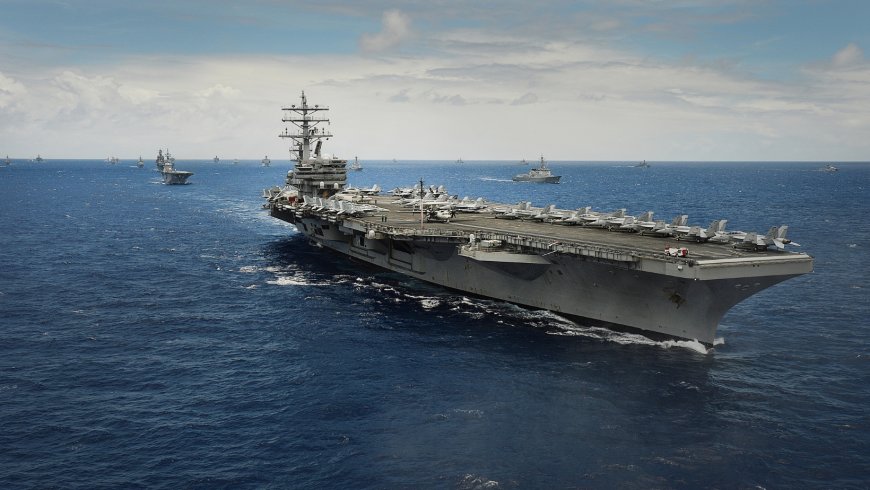
Pakistan and India's Military Power Compared: From Armies of Millions to Ballistic Missiles and Drones
Tensions between India and Pakistan have surged to dangerous levels following a deadly attack on tourists in Pahalgam, Indian-administered Kashmir, on April 22, 2025. The attack has triggered a series of retaliatory measures from both sides, raising fears of a possible military confrontation between the two nuclear-armed neighbors.
In the aftermath, India suspended the Indus Waters Treaty, halted cross-border movements, and cancelled visas for Pakistani nationals. Pakistan responded by closing its airspace to Indian flights and expelling Indian diplomats from the country. Meanwhile, Indian Prime Minister Narendra Modi granted his military "complete operational freedom" to decide on the nature, timing, and targets of any potential military response.
Pakistan’s Defense Minister and Information Minister later claimed they had credible intelligence suggesting that India might launch military action against Pakistan in the coming days, citing the Pahalgam incident as justification.
Against this volatile backdrop, it’s important to examine the actual military capabilities of both nations — from defense budgets and troop strength to advanced weapons systems and nuclear arsenals.
Historical Context: A Tense Military Past
India and Pakistan have fought three full-scale wars since their independence in 1947 — in 1948, 1965, and 1971. The 1971 war led to the creation of Bangladesh, formerly East Pakistan. A limited military conflict also took place in Kargil in 1999, where for the first time the risk of nuclear escalation between the two countries was openly acknowledged by international observers.
Since then, both sides have maintained large, heavily armed militaries with frequent border skirmishes and ongoing tensions, particularly in Kashmir.
Global Military Rankings in 2025
According to Global Firepower, a reputable platform that ranks military strength worldwide by analyzing 55 variables — including weaponry, manpower, logistics, geography, and financial resources — India ranks as the fourth most powerful military in the world in 2025, behind the United States, Russia, and China.
Pakistan, meanwhile, holds the 12th position out of 145 countries, maintaining a strong regional military presence despite its relatively smaller size and budget.
Defense Budgets: A Clear Financial Gap
The clearest disparity between the two militaries lies in their defense expenditures. As per a 2024 report by the Stockholm International Peace Research Institute (SIPRI):
-
India's defense budget for 2025 stands at approximately $86 billion, nearly nine times greater than Pakistan’s allocation.
-
Pakistan's defense spending for the 2024–25 fiscal year is slightly above $10 billion.
This significant gap has allowed India to invest in advanced defense technology, modernization programs, and strategic partnerships with global powers, while Pakistan continues to prioritize its defense posture through regional alliances and indigenous weapons development.
Troop Strength and Manpower
Ground Forces:
-
India commands a ground force of 2.2 million active troops, one of the largest standing armies globally.
-
Pakistan maintains a ground force of approximately 1.31 million personnel.
Air Force:
-
India’s air force includes 310,000 personnel with a fleet of modern and legacy fighter aircraft.
-
Pakistan’s air force comprises around 78,000 personnel, with an emphasis on JF-17 Thunder jets, developed jointly with China.
Navy:
-
India’s navy has 142,000 personnel, equipped with aircraft carriers, destroyers, submarines, and a growing fleet of naval drones.
-
Pakistan’s navy, with about 1.4 million personnel (including reservists and auxiliary forces), focuses on regional maritime security, with submarines and missile boats forming the core of its fleet.
Missile Capabilities and Nuclear Arsenal
Both countries possess ballistic missile systems capable of carrying nuclear warheads.
-
India boasts missiles like Agni-V, with a range exceeding 5,000 km, giving it long-range strike capability.
-
Pakistan’s Shaheen-III missile has a reported range of 2,750 km, covering all major Indian cities.
As per recent estimates, both India and Pakistan hold around 150–160 nuclear warheads each, with operational delivery systems ranging from land-based missiles to aircraft and naval platforms.
Modern Warfare: Drones and Cyber Capabilities
Both militaries have rapidly expanded their drone programs for surveillance, targeting, and precision strikes.
-
India has procured Heron TP drones from Israel and developed indigenous UAV programs.
-
Pakistan, in collaboration with China, has operationalized drones like the Wing Loong II for both surveillance and combat roles.
Additionally, both sides have enhanced their cyber warfare capabilities, viewing cyberspace as a critical future battleground. While India’s military strength outpaces Pakistan’s in terms of budget, manpower, and advanced weaponry, both countries possess enough strategic deterrence capability — particularly through their nuclear arsenals — to discourage direct, prolonged conflict.
Yet, history has shown that regional incidents, like the recent Pahalgam attack, can escalate quickly, making the current standoff a situation of serious international concern.
The world watches closely, hoping that diplomacy prevails over escalation, as another war between these two nuclear-armed neighbors would have dire consequences not only for South Asia, but for global peace and security.
Quick Military Comparison (2025)
| Military Aspect | India | Pakistan |
|---|---|---|
| Global Firepower Rank | 4th | 12th |
| Defense Budget | $86 billion | $10+ billion |
| Army Personnel | 2.2 million | 1.31 million |
| Air Force Personnel | 310,000 | 78,000 |
| Naval Personnel | 142,000 | 1.4 million (incl. reserves) |
| Nuclear Warheads | 160 | 160 |
| Ballistic Missiles | Agni series (5,000+ km) | Shaheen-III (2,750 km) |
| Combat Drones | Heron TP, indigenous UAVs | Wing Loong II, Burraq |
Air Force: Numerical Advantage and Technological Edge
The Indian Air Force (IAF) is widely regarded as the fourth largest air force in the world, with a significant numerical and technological advantage over Pakistan. According to Global Firepower statistics, India operates 2229 aircraft, compared to Pakistan’s 1399. This numerical disparity is reflected in the number of combat aircraft: India boasts 643 combat aircraft, including 513 fighter jets and 130 bombers, while Pakistan has 418 combat aircraft, comprising 328 fighters and 90 bombers.
Key Aircraft:
-
Pakistan’s Strength: The F-16 fighter jet, acquired from the United States, and the JF-17 Thunder, developed with Chinese assistance, form the backbone of Pakistan’s air combat capabilities. The JF-17 Thunder is designed as a lightweight, multi-role fighter aircraft capable of operating in all weather conditions and is produced with the Pakistan Aeronautical Complex (PAC) and Chengdu Aircraft Industry Corporation (CAC).
-
India’s Edge: India’s Rafale aircraft, inducted from France, has provided a major boost to its air force. These nuclear-capable fighters can launch missiles up to 150 km in the air and strike air-to-ground targets as far as 300 km. In addition, the Indian Air Force operates 51 Mirage 2000 aircraft, which have been modernized for superior operational effectiveness.
India’s air force also leads in other areas:
-
Transport Aircraft: India operates 270 transport aircraft, compared to Pakistan’s 64.
-
Trainers and Helicopters: India’s 351 trainers and 979 helicopters (including 80 attack helicopters) far outnumber Pakistan’s 565 trainers and 430 helicopters (with 57 attack helicopters).
-
Airfields: India has 311 operational airfields, while Pakistan operates 116.
Land Force: Tanks, Armoured Vehicles, and Artillery
When it comes to land forces, the two nations are equipped with substantial but distinct capabilities.
Tanks:
India’s tank fleet is more than one and a half times the size of Pakistan’s. India maintains 4201 tanks, while Pakistan has 2672.
-
Pakistan’s Tanks: The Al-Khalid is the most modern tank in the Pakistan Army, developed in collaboration with China and Ukraine. Weighing 46 tons, it is a relatively lightweight tank compared to others. It is equipped with a 1200-horsepower engine and has a maximum speed of 70 km/h.
-
India’s Tanks: India’s Arjun Mk 1A and Mk 2 tanks represent some of the most advanced armored vehicles in its arsenal. The Arjun Mk 2 is powered by a 1400-horsepower engine and also travels at 70 km/h. It comes with a 120 mm caliber rifle gun and state-of-the-art ammunition systems, along with night vision capabilities.
Armoured Vehicles:
India has 3147 armored vehicles, whereas Pakistan has 2604, further solidifying India’s larger land force capacity.
Artillery: Pakistan's Advantage
Automatic Guns:
In terms of automatic guns, Pakistan holds a clear advantage with 662 automatic guns, compared to India’s 100.
Vehicle-Mounted Guns:
India’s artillery includes 3975 vehicle-mounted guns, while Pakistan has 2629 of these weapons.
Multi-Barrel Rocket Launchers:
Pakistan is also ahead in the field of multi-barrel rocket launchers. Pakistan operates 600 such vehicles, while India has 264. These artillery systems give Pakistan an edge in terms of delivering rapid, high-volume firepower.
Comparison Summary
| Military Aspect | India | Pakistan |
|---|---|---|
| Combat Aircraft | 643 (513 fighters, 130 bombers) | 418 (328 fighters, 90 bombers) |
| Tank Fleet | 4201 | 2672 |
| Armored Vehicles | 3147 | 2604 |
| Automatic Guns | 100 | 662 |
| Vehicle-Mounted Guns | 3975 | 2629 |
| Multi-Barrel Rocket Launchers | 264 | 600 |
| Transport Aircraft | 270 | 64 |
| Helicopters | 979 (80 attack) | 430 (57 attack) |
| Airfields | 311 | 116 |
While India holds the upper hand in terms of numbers and technological advancements, particularly in air force capacity and tank strength, Pakistan has focused on maintaining a well-equipped and capable land force with a significant advantage in artillery and multi-barrel rocket systems.
Both countries continue to maintain a formidable military presence in the region, underscoring the volatility of South Asia. With nuclear capabilities in play, this balance of power ensures that any military confrontation, even on a limited scale, could have catastrophic consequences.
As the geopolitical situation continues to evolve, it remains to be seen whether diplomacy or military might will determine the future of these two nuclear-armed neighbors.
Naval Power: India vs Pakistan
Aircraft Carriers:
India holds a significant naval superiority over Pakistan, particularly with its aircraft carriers. India operates two aircraft carriers, INS Vikram Aditya and INS Vikrant. The latter, INS Vikrant, is a homegrown aircraft carrier, which India built domestically and commissioned into the Indian Navy in 2022.
In contrast, Pakistan does not possess any aircraft carriers, a notable gap in naval capabilities.
Naval Assets:
India’s naval strength is vastly superior in terms of both quantity and variety of assets. The Indian Navy has 293 total naval assets, including 135 patrol boats, 13 destroyers, 14 frigates, and 18 corvettes. Furthermore, India boasts a powerful fleet of 18 submarines, including three nuclear-powered submarines: INS Arihant, INS Arighat, and INS Aridhaman.
By contrast, Pakistan has 121 naval assets, including 69 patrol boats, 9 frigates, and 9 corvettes. Pakistan’s submarine fleet consists of 8 submarines, including 3 Agusta 90B class submarines, 2 Agusta 70 class submarines, and 3 Cosmos class submarines. Additionally, Pakistan is working with China to acquire 8 Hangor-class submarines, of which four will be manufactured in Pakistan.
Submarine Power:
-
India leads with nuclear-powered submarines that provide greater operational flexibility and strategic reach, enhancing its ability to project power over vast oceanic expanses.
-
Pakistan's reliance on conventional submarines is supplemented by Chinese assistance in enhancing their submarine capabilities.
Missile Programs: Pakistan vs India
Pakistan’s Missile Program:
Pakistan’s missile program is diverse, spanning cruise missiles, tactical ballistic missiles, and short- to medium-range ballistic missiles.
-
Tactical Missiles:
-
Hatf series, including Hatf-1 and Nasr missiles with ranges of 60 to 100 km.
-
-
Short-Range Missiles:
-
Abdali (200 km), Ghaznavi (300 km), Raad (350 km), Babur (700 km), and Shaheen-1 (750 to 1,000 km).
-
Pakistan recently tested a new Abdali version capable of hitting targets at 450 km.
-
-
Medium-Range Missiles:
-
Ghauri-1 (1,500 km), Ghauri-2 (2,000+ km), Ababeel (2,200 km), and Shaheen-2 and Shaheen-3 (2,500-2,750 km).
-
Ababeel and Shaheen-3 are equipped with Multiple Reentry Vehicles (MRVs), which are designed to penetrate and defeat missile defense systems, adding significant strategic value.
-
India’s Missile Program:
India’s missile development is highly advanced, including both conventional and nuclear capabilities. India operates intercontinental ballistic missiles (ICBMs) and submarine-launched ballistic missiles (SLBMs), along with hypersonic technology.
-
Short to Medium-Range Missiles:
-
India’s Prithvi missiles (250-600 km) and Dhanush, a ship-launched ballistic missile.
-
India’s K-15 or B-05 missile, a submarine-launched ballistic missile, with a range of 700 km.
-
-
Long-Range Missiles:
-
Agni series missiles, such as Agni-V, capable of reaching targets at a distance of 7,000 to 8,000 km.
-
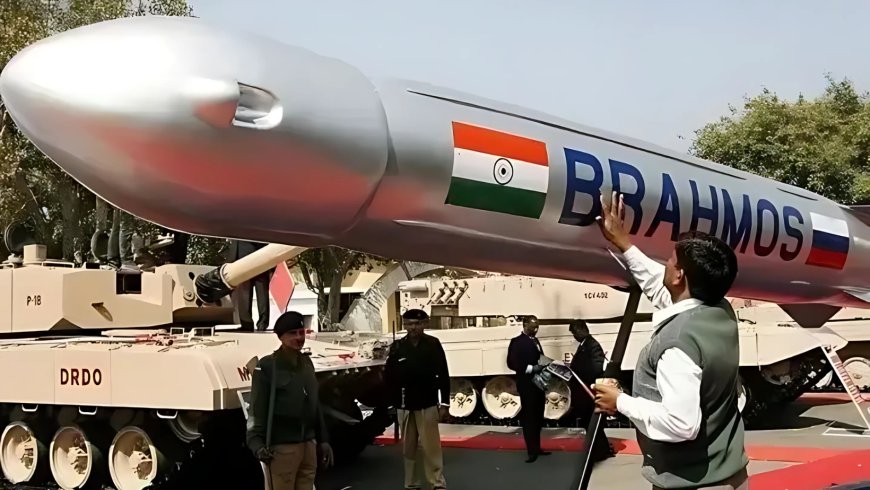
Nirbhaya and Brahmos cruise missiles further enhance India’s offensive capabilities.
-
-
Hypersonic Missiles:
-
India successfully tested a hypersonic missile in November 2024, which can travel at five times the speed of sound, capable of hitting targets at over 1,500 km. This multi-domain missile can be launched from air, land, or water, presenting India with a strategic edge.
-
Comparison Summary:
| Aspect | India | Pakistan |
|---|---|---|
| Aircraft Carriers | 2 (INS Vikram Aditya, INS Vikrant) | 0 |
| Naval Assets | 293 total (incl. 18 submarines) | 121 total (incl. 8 submarines) |
| Submarines | 3 nuclear-powered submarines | 8 conventional, 4 in development |
| Patrol Boats | 135 | 69 |
| Destroyers | 13 | 0 |
| Frigates | 14 | 9 |
| Corvettes | 18 | 9 |
| Missile Range (Pakistan) | Up to 2,750 km (Shaheen-3) | 250-8,000 km (Agni series) |
| Missile Type | Tactical, short-medium, ICBMs, SLBMs, Hypersonic | Tactical, short-medium, MRVs |
India maintains a significant naval superiority over Pakistan, particularly in terms of aircraft carriers, submarines, and overall naval assets. On the missile front, Pakistan has developed impressive missile systems with multiple warhead capabilities, and India counters with a diverse arsenal of long-range, nuclear-capable missiles and cutting-edge hypersonic technology.
While Pakistan continues to develop its missile and submarine fleets, India's ability to project power through its naval capabilities and missile advancements gives it a significant strategic edge in the region.
Drones and Nuclear Capabilities: India vs Pakistan
Drones: Technological Advancements and Military Impact
Both India and Pakistan have made significant strides in expanding their military drone capabilities in recent years. Drones offer multiple advantages for military operations, such as high-altitude flight, extended surveillance durations, and the ability to target specific objectives without a pilot, all while evading radar detection. These drones are increasingly used for monitoring, spying, and targeted strikes on enemy positions and assets.
India’s Drone Advancements:
-
Projection: India plans to expand its drone fleet, aiming for a total of 5,000 drones in the next two to four years, according to defense analyst Rahul Bedi.
-
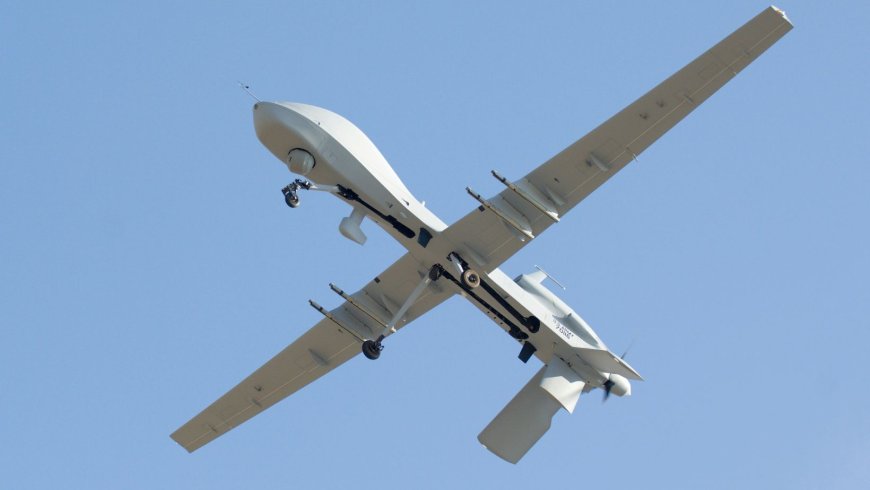
Predator Drones: In October 2024, India entered into a $3.5 billion deal with the United States for 31 Predator drones. These drones are among the most sophisticated and deadly in the world, known for their high precision and versatility in combat situations.
Pakistan’s Drone Capabilities:
-
While Pakistan has fewer drones compared to India, it has developed a wide variety of drones—including both locally produced and imported drones—that offer specific capabilities.
-
Locally Manufactured Drones:
-
Shahpar Series: The Shahpar III is a medium-altitude, long-endurance combat drone, capable of flying for 30 hours and carrying missiles. This drone is designed for tactical combat and surveillance.
-
Buraq: A combat drone that was first used in 2015 in operations against terrorist targets.
-
Uqab: A tactical drone primarily used for surveillance and fire correction.
-
-
Imported Drones:
-
Bayraktar Akkanji TB2 (from Turkey) and CH-4 (from China) are advanced drones used by Pakistan. These are equipped with cutting-edge surveillance and targeting systems and are capable of long-range flights.
-
Both India and Pakistan are enhancing their drone arsenals, but India's drone fleet is expected to be more numerous and advanced, especially with the acquisition of Predator drones.
Nuclear Weapons: A Parity in Power
Both India and Pakistan are nuclear powers, and while Global Firepower does not account for nuclear capabilities in its rankings, the Stockholm International Peace Research Institute (SIPRI), in its 2024 report, provides an estimate of the nuclear warheads held by both nations.
Nuclear Arsenal Comparison:
-
India: Estimated to have 172 nuclear warheads.
-
Pakistan: Estimated to possess 170 nuclear warheads.
Despite this close proximity in the number of nuclear warheads, the readiness and deployment status of these warheads are not publicly known.
Strategic Focus:
-
Pakistan: Focuses on developing nuclear weapons to counterbalance India’s military strength and ensure deterrence.
-
India: Has concentrated on developing long-range nuclear weapons capable of striking not only Pakistan but also China, its neighboring strategic competitor. India’s long-range missiles provide it with greater reach and a significant strategic advantage in the region.
China’s Nuclear Expansion:
-
China, which shares borders with both India and Pakistan, has been significantly increasing its nuclear arsenal. According to SIPRI, China has boosted its nuclear warheads by 22%, growing from 410 warheads to 500.
Comparison Summary:
| Aspect | India | Pakistan |
|---|---|---|
| Military Drones | Plans to have 5,000 drones; recently acquired 31 Predator drones (US) | Fewer drones; locally made drones such as Shahpar III, Buraq, Uqab, and imports from China and Turkey |
| Nuclear Warheads | Estimated 172 nuclear warheads | Estimated 170 nuclear warheads |
| Nuclear Focus | Focus on long-range weapons for strategic deterrence against China | Developing nuclear capabilities to counter India |
| China's Nuclear Expansion | China’s nuclear arsenal increased by 22% (from 410 to 500 warheads) | - |
-
Drones: Both India and Pakistan have enhanced their drone capabilities in recent years. India’s acquisition of Predator drones and plans for a large fleet of 5,000 drones will give it a significant edge in terms of both quantity and quality. Pakistan, while having fewer drones, has developed a varied fleet, including advanced combat drones and surveillance drones from both domestic and foreign sources.
-
Nuclear Weapons: In terms of nuclear warheads, India and Pakistan are nearly on par, with only a slight difference in the total number. However, India’s focus on long-range nuclear weapons and its capability to strike China gives it an additional strategic advantage. Meanwhile, Pakistan’s nuclear developments are primarily geared toward deterrence against India.
This balance of power, marked by both countries' advancements in drones and nuclear weapons, continues to define the security dynamics of the South Asian region.
India vs Pakistan: Military Comparison (2025)
| Category | India | Pakistan |
|---|---|---|
| Historical | 🇮🇳 India gained independence in 1947, involved in major wars with Pakistan. | 🇵🇰 Pakistan was formed in 1947, engaged in multiple conflicts with India. |
| Global Military Rankings | Ranked 4th globally by Global Firepower (2025). | Ranked 14th globally by Global Firepower (2025). |
| Defense Budgets | $71 billion (2025) | $12 billion (2025) |
| Troop Strength and Manpower | 1.4 million active personnel, 2.1 million reserve personnel. | 654,000 active, 550,000 reserve personnel. |
| Missile Capabilities and Nuclear Arsenal | Agni series, BrahMos, Hypersonic missiles, Nuclear Triad with ICBMs, SLBMs, and Air-based missiles. | Shaheen, Ghauri, Ababeel (MRVs), Babur, Nasr missiles, Nuclear-armed. |
| Drones and Cyber Capabilities | Advanced surveillance drones (e.g., Heron), Cybersecurity operations. | Pakistani drones used for surveillance; improving cyber operations. |
| Air Force | 2229 total aircraft (643 combat, 513 fighters, 130 bombers), Rafale jets. | 1399 total aircraft (418 combat, 328 fighters, 90 bombers). |
| Land Force: Tanks, Armoured Vehicles, and Artillery | 4201 tanks (Arjun Mk 1A & Mk 2), 3147 armoured vehicles, 3975 towed artillery. | 2672 tanks (Al-Khalid), 2604 armoured vehicles, 662 self-propelled artillery. |
| Artillery | 3975 vehicle-mounted guns, 100 automatic guns. | 2629 vehicle-mounted guns, 662 automatic guns. |
| Aircraft Carriers | 2 (INS Vikrant, INS Vikramaditya) | 0 (no aircraft carriers) |
| Naval Assets | 293 assets (18 submarines, 2 aircraft carriers, 13 destroyers, 14 frigates) | 121 assets (8 submarines, 9 frigates, 9 corvettes) |
| Submarine Power | 18 submarines, 3 nuclear-powered (Arihant-class) | 8 submarines, with 4 more Hangor class in development. |
| Pakistan’s Missile Program | Shaheen II & III (2750 km), Babur (700 km), Nasr (60-100 km). | Extensive range of missiles for tactical and strategic purposes. |
| India’s Missile Program | Agni series (1200-8000 km), BrahMos (Supersonic, 290 km), Prithvi, Hypersonic missiles. | Prithvi (250-600 km), BrahMos, Agni-V (7000-8000 km), Hypersonic. |
| Drones and Nuclear Capabilities | Advanced drone tech for reconnaissance; Nuclear triad capability. | Limited drone surveillance capabilities; Nuclear-capable missiles. |
| Nuclear Weapons | Estimated 150-160 warheads, capable of delivery via land, sea, and air. | Estimated 170-175 warheads, missile-based and aircraft-delivered. |
What's Your Reaction?
 Like
0
 Dislike
0
 Love
0
 Funny
0
 Angry
0
 Sad
0
 Wow
0