Indian Army Admits Pakistan Attacked and Damaged 26 Defence Installations and Airbases - Bio Points News
The Indian Army has confirmed that Pakistan's airstrikes damaged 26 military installations and airbases in India. Key locations like Udhampur, Pathankot, and Adampur were targeted. Read more about the escalation in military tensions.
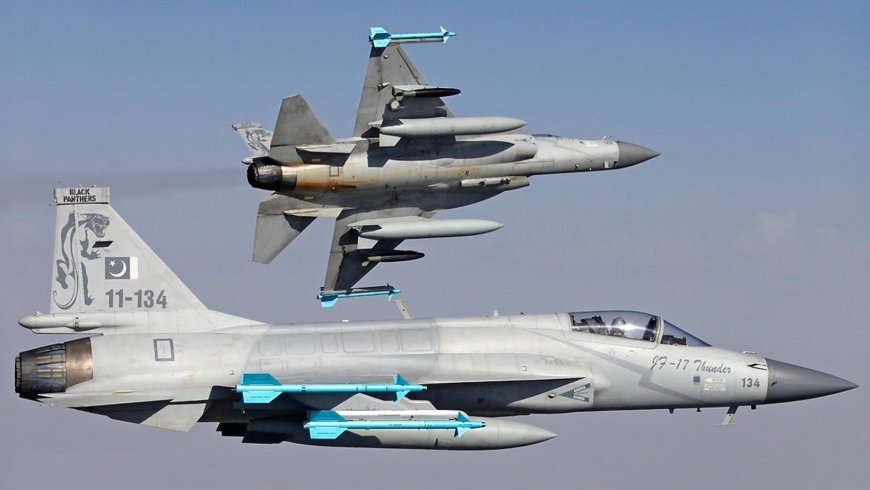
Indian Army Admits Pakistan's Air Strikes Damaged 26 Defence Installations and Airbases
In a rare admission, the Indian Army has confirmed that Pakistan’s retaliatory air strikes have damaged 26 military installations and airbases across India, including key facilities in Punjab, Jammu and Kashmir, and Haryana. The attacks were launched in response to escalating tensions between the two countries, and the damage has been described as severe by Indian military officials.
Details of the Attacks: 26 Locations Targeted
During a press conference in New Delhi, Indian Army officials, including Colonel Sofia Qureshi of the Signal Corps and Wing Commander Vyomika Singh, confirmed that Pakistan launched a multi-faceted strike involving jets, missiles, and drones. According to the Indian military spokesperson, the airstrikes were concentrated on 26 locations, including airbases and defence installations.
The attack on Indian military infrastructure was primarily carried out with high-speed missiles, some of which targeted airbases in Punjab, including Udhampur, Adampur, Pathankot, and Bathinda. The spokesperson confirmed that Pakistan's fighter jets also participated in the offensive.
Indian officials described the attack as a major escalation, with Pakistani forces utilizing a range of weapons systems, including long-range missiles and drones, to carry out the strikes.
Airbases in Udhampur, Pathankot, Adampur Damaged
According to Colonel Sofia Qureshi, the Indian Army's Signal Corps, several Indian airbases were significantly affected. The airfields in Udhampur, Adampur, and Pathankot suffered substantial damage, with reports of Indian military assets being destroyed or rendered non-operational.
Colonel Qureshi stated:
"Pakistan's retaliatory strikes have damaged both our assets and personnel. These attacks have affected our ability to operate from these locations."
In addition to the aforementioned airfields, Bhoj and Bathinda airbases were also impacted. The Indian Army spokesperson confirmed that the damage to personnel and assets was significant but noted that there had been no complete destruction at any of the sites.
Indian Army Claims of "Neutralizing" Threats
Despite acknowledging the damage, Indian officials attempted to downplay the scale of the attacks by claiming that they had "neutralized" multiple threats posed by Pakistan. Wing Commander Vyomika Singh emphasized that Indian forces had effectively defended against further incursions and had mitigated the damage caused by the airstrikes.
Indian Foreign Secretary Denies Pakistani Claims
The Indian Foreign Secretary, Vikram Misri, also participated in the press conference, addressing the damage caused by Pakistan’s airstrikes. He attempted to discredit Pakistani claims, calling them "baseless" and asserting that Pakistan had failed to cause significant damage to Indian installations. Misri further accused Pakistan of targeting civilians, a claim that was vehemently denied by the Pakistani government.
At the same time, the Indian Foreign Secretary rejected allegations that India had carried out any attacks on Afghanistan. He downplayed Pakistan's accusations and reiterated India’s stance that it had been provoked by Pakistan's actions.
A Cover-Up? Reactions to the Press Conference
The press conference, despite the efforts of Indian officials to present a united front, revealed moments of unease. Observers noted the downcast expressions of Colonel Sofia Qureshi and Wing Commander Vyomika Singh, raising questions about the extent of the damage and the army’s efforts to downplay the losses.
Several media outlets, including The Times of India, suggested that the Indian officials were attempting to cover up the scale of the damage, portraying a more controlled narrative than what may have been the reality on the ground.
Tensions Escalate Between India and Pakistan
The attacks by Pakistan follow an increase in tensions between the two countries, which have long been at odds over the disputed region of Kashmir. The recent escalation in military exchanges has raised concerns about the potential for a full-scale conflict between the two nuclear-armed neighbors.
Pakistan’s retaliatory strikes were in response to a series of Indian airstrikes on Pakistani territory earlier in the conflict, with both sides accusing each other of violating ceasefire agreements and targeting military and civilian infrastructure.
A Fragile Peace
The admission by the Indian Army marks a rare acknowledgment of significant damage caused by Pakistan’s airstrikes, underscoring the fragile and volatile nature of relations between the two countries. With both sides continuing to engage in military actions, the potential for further escalation remains high, and international efforts to mediate a ceasefire have yet to yield substantial results.
As both India and Pakistan face the repercussions of this military escalation, the world watches closely, hoping for a de-escalation of hostilities before the situation spirals into a larger, more destructive conflict.
What's Your Reaction?
 Like
0
 Dislike
0
 Love
0
 Funny
0
 Angry
0
 Sad
0
 Wow
0