Hamas Rejects Ceasefire Talks After Israel's Controversial Gaza Plan - Bio Points News
Hamas has rejected ceasefire talks after Israel’s announcement of a new Gaza operation, displacing Palestinians and expanding military actions. Learn about the current situation in Gaza and Hamas's stance.
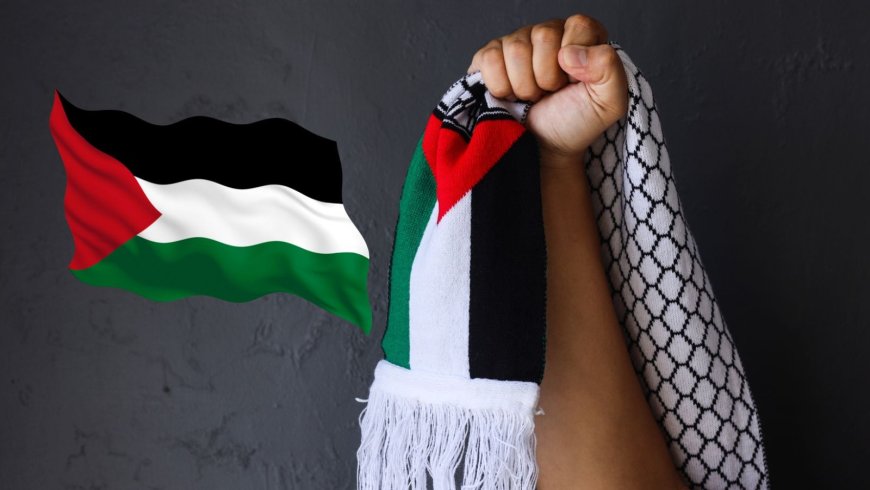
Hamas Rejects Ceasefire Talks After Israel's Controversial Gaza Plan
In a dramatic escalation of tensions, Hamas, the Palestinian resistance organization, has declared that it is no longer interested in engaging in ceasefire talks with Israel following the announcement of Israel's controversial new Gaza plan. The declaration marks a significant shift in the dynamics of the ongoing conflict and signals the deepening resolve of Hamas in resisting Israel's military actions in Gaza.
Hamas's Strong Rejection of Ceasefire Proposals
Bassem Naim, a senior Hamas official, spoke to AFP and made clear that the group would not entertain any proposals for peace talks under the current conditions. Naim's comments were made in direct response to Israeli Prime Minister Benjamin Netanyahu’s announcement of a new military operation in Gaza, which involves a complete occupation of the Gaza Strip and plans to forcibly relocate its population.
"As long as the hunger war and the series of martyrs in Gaza continue, there is no point in joining the talks or considering new ceasefire proposals," said Naim.
The statement was a direct challenge to the Israeli government's approach, underscoring Hamas’s refusal to engage in negotiations while Israel continues its offensive, which has led to widespread devastation across Gaza.
Naim also appealed to the international community, urging it to exert pressure on the Netanyahu government to end the ongoing "crimes" in Gaza, including the widespread suffering caused by food shortages, lack of clean water, and mounting casualties. He emphasized that as long as the current situation persists, peace talks would be futile.
Israel’s New Gaza Operation
The catalyst for this dramatic shift in Hamas's position was Israel's announcement of an expanded military operation in Gaza. This announcement came on Monday, with the Israeli Defense Forces (IDF) confirming that Israeli troops would occupy Gaza as part of a new phase in the ongoing conflict. According to Israeli officials, the new plan will force Gaza's population into the southern regions of the Strip, effectively displacing millions of civilians.
The Israeli government justified its actions by claiming that the move is necessary to root out Hamas and disarm the militant group, which has controlled Gaza for years. Israel's strategy includes comprehensive ground operations, aerial bombardments, and the continued siege of Gaza, which has been under a strict blockade for over two months.
In addition to the military operations within Gaza, Israel has also launched airstrikes on neighboring Yemen and Lebanon, targeting Houthi positions and Hezbollah infrastructure, respectively, further escalating regional tensions.
Hamas's Position: A Refusal to Compromise
Since the collapse of the previous ceasefire in March 2025, Israel has waged a relentless campaign against Gaza, which has left the region in ruins. Over 70% of Gaza's territory is now under Israeli control, and the humanitarian situation continues to worsen by the day. The airstrikes have decimated civilian infrastructure, with hospitals, schools, and residential areas all suffering heavy damage.
The refusal by Hamas to re-enter negotiations comes as no surprise, given the dire conditions on the ground. The Palestinian resistance group has long maintained that it will not accept any ceasefire that fails to address the core issues of the conflict, such as the end of the occupation, the lifting of the Gaza blockade, and the right of return for Palestinian refugees.
Hamas has also repeatedly voiced its condemnation of Israel’s military tactics, accusing Israel of deliberately targeting civilians and infrastructure in an effort to demoralize the Palestinian population and break the will of the resistance. The recent escalation, including Israel’s plans to forcibly displace Gaza’s residents, has only strengthened Hamas’s resolve.
Israel’s Plans and International Reactions
The Israeli government's new military operations are seen by many as part of an ongoing strategy to obliterate Hamas as a military force and to assert Israeli control over Gaza. However, the plan has sparked international outcry, particularly from humanitarian organizations and rights groups.
The United Nations has condemned the continued Israeli airstrikes and the escalating humanitarian crisis in Gaza. Thousands of civilians have been killed, and millions more are living in desperate conditions without adequate food, medicine, or shelter.
Several countries, including Turkey, Iran, and Qatar, have voiced strong support for Hamas and condemned Israel’s actions, while others have called for an immediate ceasefire and international intervention to prevent further bloodshed.
On the other hand, Western nations, including the United States and European Union, have largely stood by Israel, citing its right to self-defense in the wake of Hamas's initial attacks.
However, some Western commentators, including UN officials, have criticized the lack of comprehensive international pressure on Israel to end its bombardment and pursue diplomatic solutions.
A Hunger War and Widespread Suffering
The humanitarian situation in Gaza has reached catastrophic proportions. According to reports from the Gaza Health Ministry, more than 52,000 Palestinians have been martyred since the conflict escalated, with more than 118,000 wounded. Thousands more have been displaced, fleeing from their homes in search of safety.
The humanitarian crisis has also worsened due to the Israeli blockade, which has severely restricted the flow of essential goods, including food, water, and medical supplies, into Gaza. Hospitals are overwhelmed, power grids have been damaged, and many basic services have been disrupted, leaving the civilian population vulnerable and desperate.
The Gaza Media Office has warned that hospitals in Gaza are expected to lose all operational capacity within 48 hours if the situation is not addressed immediately. With the destruction of critical infrastructure, the people of Gaza are facing a humanitarian catastrophe of unprecedented scale.
Global Efforts and the Path Forward
While Hamas has made it clear that it will not engage in ceasefire talks under the current circumstances, some international actors have urged both sides to come to the negotiating table in the interest of peace. Saudi Arabia, Egypt, and Jordan have all offered to mediate between Hamas and Israel, although these efforts have been met with limited success.
Many analysts argue that a lasting solution to the Israel-Palestine conflict can only be achieved through diplomatic engagement, rather than continued military escalation. Calls for a two-state solution and negotiated settlement remain a central focus for many international actors, but the path to peace appears increasingly elusive amid the current violence.
For now, as Hamas continues its resistance and Israel expands its military operations, the prospect of a peaceful resolution seems distant. The situation remains dire, with civilian lives hanging in the balance as the conflict enters another chapter of death, destruction, and displacement.
A Divided Road to Peace
The rejection of ceasefire talks by Hamas represents a significant development in the ongoing conflict between Israel and Palestine. The situation in Gaza remains volatile and deeply complex, with neither side willing to compromise on key issues. As the war continues and the humanitarian crisis worsens, it is clear that a peaceful resolution will require significant international pressure and a rethinking of strategies on all sides.
As the international community watches closely, the hope remains that the cycle of violence can be broken and that the people of Gaza, and the broader Palestinian population, can eventually find a path to peace and justice.
What's Your Reaction?
 Like
0
 Dislike
0
 Love
0
 Funny
0
 Angry
0
 Sad
0
 Wow
0