Earthquake in Japan: Why the 7.1 Kumamoto Quake Wasn't More Devastating
A major 7.1 earthquake hit Kumamoto, Japan, triggering tsunami advisories and transit delays. Discover how early warnings and resilient design prevented catastrophe.
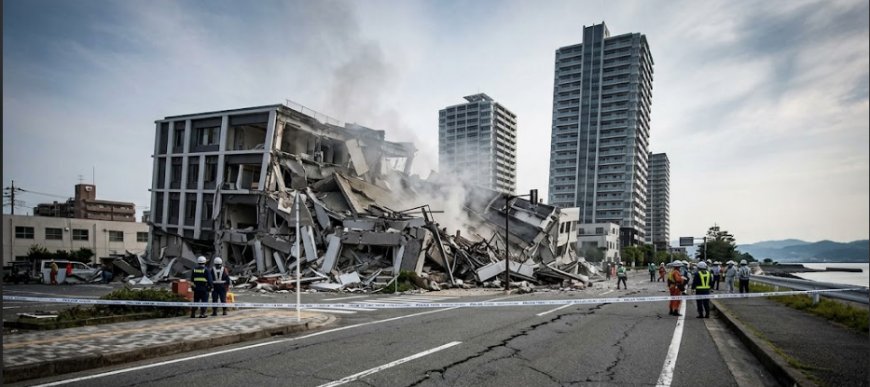
A powerful 7.1-magnitude earthquake struck near Kumamoto Prefecture on Japan's southern island of Kyushu, triggering swift tsunami advisories, widespread transport disruptions, and emergency infrastructure checks across the region. While several injuries and localized structural damages were reported, Japan's state-of-the-art early warning systems and rigorous seismic building codes successfully prevented a far greater catastrophe.
Why the Shallow Offshore Tremor Raised Urgent Tsunami Alarms
The quake hit off the coast of Kumamoto at a shallow depth of approximately 10 kilometers, sending violent tremors across southwestern Japan. Shallow earthquakes release kinetic energy much closer to the earth's surface, causing intense shaking over large distances. Within seconds of the initial movement, the Japan Meteorological Agency (JMA) issued tsunami advisories for coastal zones across seven prefectures, including Kumamoto, Kagoshima, Nagasaki, and Fukuoka, warning of potential waves up to one meter high.
Broadcasts instantly interrupted television programs, and mass automated alerts vibrated millions of mobile phones, directing residents in low-lying areas near Ariake Bay and the Yatsushiro Sea to seek immediate high ground until the tsunami risk subsided.
Engineering Resilience: How Japan Mitigated Widespread Destruction
Despite reports of collapsed walls, road fissures, and localized structural fires, the extent of the damage was remarkably contained given the quake’s magnitude. Japan’s strict seismic construction codes require modern buildings to use base isolation systems, flexible shock absorbers, and reinforced frames engineered to sway with seismic waves rather than fracture.
Additionally, Japan's nationwide Earthquake Early Warning (EEW) network automatically triggers safety mechanisms the moment P-waves are detected. This automated response immediately cuts power to high-risk industrial equipment, halts high-speed transportation, and gives the public crucial seconds to take cover under sturdy structures before the more destructive S-waves arrive.
Travel & Transit Disruptions Across Kyushu
In the immediate aftermath of the shaking, key transportation networks came to a standstill to allow safety teams to conduct structural evaluations:
- Bullet Trains: JR Kyushu temporarily suspended operations along the Kyushu Shinkansen line to inspect tracks for displacement or damage.
- Airports: Flights at Kumamoto Airport were delayed or canceled as technical teams performed mandatory runway and terminal safety inspections.
- Power Grid: Tens of thousands of households faced brief power outages, though utility crews rapidly restored power across affected municipal zones.
Nuclear Inspection Results: Zero Anomalies Detected
Following a major seismic event in Japan, nuclear safety remains a top global concern. Immediately after the quake, Japan’s Nuclear Regulation Authority (NRA) initiated emergency assessments at nearby power plants, including the Genkai facility in Saga Prefecture and the Sendai facility in Kagoshima Prefecture.
Inspectors confirmed that all reactors remained in normal operating parameters, with no radiation monitoring spikes or structural abnormalities recorded—providing swift reassurance to surrounding communities.
Current Status and Recovery Outlook
With initial tsunami advisories lifted, emergency crews are concentrating on clear-up efforts, restoring public utilities, and supporting injured residents. Seismologists warn that minor to moderate aftershocks could continue over the coming weeks, urging local communities to remain vigilant and keep emergency kits accessible.
Related Coverage: Looking for deeper background on the regions, agency protocols, and historical context? Read our comprehensive context profiles at BiographyPoints.com.
Frequently Asked Questions
Was there a major tsunami following the Japan earthquake?
Though initial tsunami advisories warned of potential 1-meter (3-foot) waves along the Kyushu coastline, sea-level monitoring confirmed no destructive tsunami activity materialized, allowing officials to safely lift the advisories.
Is travel to Kumamoto and Kyushu safe right now?
Essential transportation services are progressively resuming as inspections wrap up. However, travelers heading to or through Kyushu should verify flight and train schedules directly with transport providers before departing.
Why is Japan so prone to high-magnitude earthquakes?
Japan is situated along the "Ring of Fire"—a high-seismicity zone surrounding the Pacific Ocean where multiple major tectonic plates (including the Pacific, Philippine Sea, and Eurasian plates) collide and subduct.
What's Your Reaction?
 Like
0
 Dislike
0
 Love
0
 Funny
0
 Angry
0
 Sad
0
 Wow
0