Vizhinjam Deepwater Port: India’s First Rs 180 Billion Transshipment Hub Transforming Maritime Trade - Bio Points News
Discover why the Rs 180 billion Vizhinjam Deepwater Port is a game-changer for India’s maritime trade. Learn about its strategic location, massive cargo capacity, economic benefits, and role in global shipping.
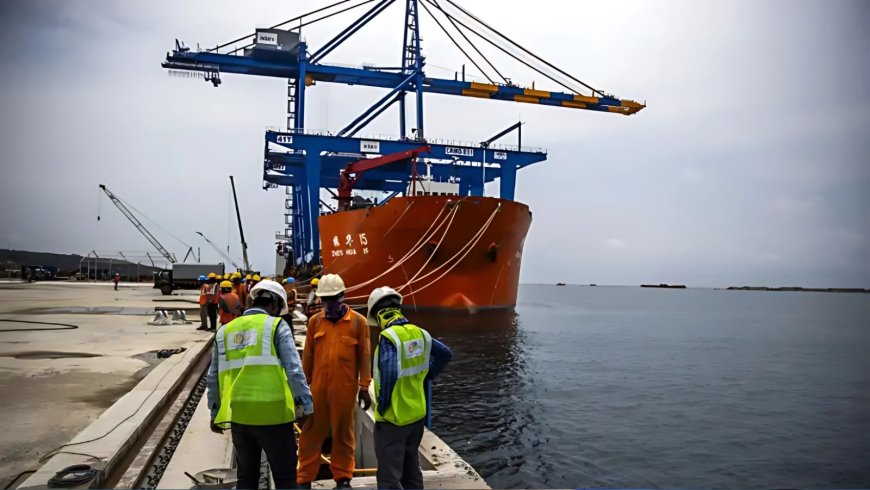
Vizhinjam Deepwater Port: A Rs 180 Billion Maritime Milestone for India
In a landmark move that’s poised to reshape India's maritime landscape, Prime Minister Narendra Modi recently inaugurated the terminal of the Vizhinjam International Deepwater Multipurpose Port in Kerala. Touted as India’s first deep-sea transshipment terminal, this colossal Rs 180 billion project, being developed in collaboration with the Indian government and the Adani Ports and Special Economic Zone (APSEZ), marks a significant breakthrough for the country’s shipping and trade ambitions. But what makes this port so special, and why is it being hailed as a game-changer for India’s economy and maritime presence? Let’s take a deep dive.
What is the Vizhinjam Deepwater Port?
Located near Thiruvananthapuram, the capital city of Kerala, Vizhinjam Port is a natural deepwater port being developed on India’s southwestern coast. Unlike the existing ports in India, which typically have a depth of 10 to 12 meters, Vizhinjam boasts a natural draft of over 20 meters, which allows it to accommodate some of the world’s largest commercial vessels — including Ultra Large Container Ships (ULCS) carrying thousands of 20-foot containers (TEUs).
This strategic port is being built under a Public-Private Partnership (PPP) model between the Kerala state government and the Adani Group, one of India’s largest private sector infrastructure developers. The agreement, signed in 2015, grants Adani the rights to build, operate, and transfer the port over a 40-year concession period, with the option to extend it for another 20 years.
Why is Vizhinjam Port So Special?
1. India’s First Deep-Sea Transshipment Hub
Until now, India lacked a dedicated deep-sea transshipment terminal, which meant large container ships bypassed Indian ports due to inadequate draft and port handling capacities. Instead, India’s containerized cargo was often rerouted via transshipment hubs in Colombo (Sri Lanka), Dubai (Jebel Ali, UAE), and Singapore, leading to significant revenue losses and higher logistics costs for Indian exporters and importers.
With Vizhinjam, India will finally have its own deep-sea terminal capable of handling mother vessels and transshipping containers to smaller feeder vessels, eliminating reliance on foreign ports for cargo transshipment.
2. A Strategic Location Close to the Global Shipping Route
Vizhinjam’s geographical positioning makes it one of the most strategically located ports in the world. It lies just 10 nautical miles from the major East-West International Shipping Route, through which over 30% of global cargo traffic passes. Its proximity to this route will enable it to attract transshipment cargo moving between the Middle East, Europe, Africa, and East Asia.
As per Afaq Hussain, Director at the Bureau of Research on Industry and Economic Fundamentals (BRIEF), this positioning offers India a golden opportunity to emerge as a serious player in global maritime trade.
3. Supporting India’s Maritime Economic Strategy
Prime Minister Modi, during the inauguration ceremony, highlighted the port’s role in reviving India’s rich maritime legacy. He noted that before colonial rule, India was a major contributor to global GDP, largely due to its thriving maritime trade. The Vizhinjam port, therefore, symbolizes not just infrastructure development but the rekindling of India’s historical maritime strength.
By reducing dependence on foreign transshipment hubs, India aims to retain a larger share of shipping revenues and improve its ease of doing business in the logistics and export-import sectors.
4. Massive Cargo-Handling Capacity
Once fully operational by 2028, the Vizhinjam port is projected to handle 5 million TEUs annually — a significant capacity that will position it among South Asia’s top shipping terminals. This will allow India to handle large-scale transshipment operations efficiently, enhancing its competitiveness in international trade.
In the second phase of development, the port’s breakwater will be widened and deepened to 28 meters, equivalent to a nine-story building, making it India’s deepest port facility.
Economic and Geopolitical Benefits
A Boost for Kerala’s Economy
Prime Minister Modi called Vizhinjam a source of economic stability for Kerala, expected to bring thousands of direct and indirect jobs to the state. Local industries, logistics companies, and port-based businesses are likely to benefit from increased trade activity, improved connectivity, and the creation of maritime clusters.
Retaining Shipping Revenues Within India
Currently, about 75% of India’s transshipment cargo is handled by foreign ports. With Vizhinjam operational, a significant portion of this traffic will be rerouted to India, saving billions in foreign exchange and boosting domestic port revenues.
Reducing India’s Dependence on Neighboring Ports
Vizhinjam will help India overcome its over-reliance on the Colombo Port in Sri Lanka, which handles a large chunk of Indian transshipment cargo. Political and economic uncertainties in neighboring countries can disrupt supply chains — Vizhinjam provides India with strategic autonomy over its maritime trade routes.
An Asset for India in Global Trade Disruptions
The inauguration comes at a time when the global shipping industry is dealing with trade disruptions triggered by tariff wars and geopolitical tensions. Bloomberg, for instance, noted that shipping lines like AP Moller-Maersk recently voiced concerns over protectionist trade policies. Vizhinjam positions India as a neutral, strategic shipping hub, capable of offering continuity and efficiency in a volatile global environment.
Challenges Ahead
Despite its promising prospects, the Vizhinjam port project faces several challenges:
1. Lack of Transshipment Experience
India has never operated a major transshipment hub before. While the Adani Group’s global presence — with investments in Israel’s Haifa Port and the Chabahar Port in Iran — offers some comfort, operationalizing a large-scale deep-sea transshipment terminal will require overcoming a steep learning curve in global port management standards.
2. Attracting Global Shipping Lines
For Vizhinjam to become a successful transshipment hub, India will need to convince global shipping giants to include the port in their maritime routes. This will depend on factors like turnaround times, cargo handling efficiency, and competitive pricing.
Interestingly, the Mediterranean Shipping Company (MSC), the world’s largest container shipping line, has already added Vizhinjam to its Jade Service Route connecting Europe to Asia — an encouraging early sign.
3. Regulatory and Infrastructure Integration
India’s import and export regulations, customs clearances, and port logistics systems need seamless integration with digital platforms to ensure fast processing and reduce turnaround times. Any bureaucratic delays could discourage international shipping companies from using Vizhinjam as a preferred hub.
A New Maritime Chapter for India
The Vizhinjam Deepwater Port represents more than just a piece of infrastructure — it symbolizes India’s ambition to reclaim its historical maritime dominance and position itself as a modern-day trade hub in the Indo-Pacific region.
Once operational, Vizhinjam will not only generate significant economic benefits for Kerala and India but will also bolster the country’s strategic leverage in global maritime affairs. If India successfully navigates the challenges of operationalizing and marketing the port, it could well become the Singapore of South Asia, transforming India’s role in global trade routes for decades to come.
What's Your Reaction?
 Like
0
 Dislike
0
 Love
0
 Funny
0
 Angry
0
 Sad
0
 Wow
0