Chinese Weapons Shine in Pakistan-India Skirmish: J-10C and JF-17 Steal the Spotlight - Bio Points News
Pakistan’s use of Chinese J-10C and JF-17 jets in a 2025 skirmish with India has sparked global debate. Did Beijing’s weapons outmatch Western tech? Dive into the details.
Pakistan-India Skirmish: A Rare Combat Test for Chinese Weapons
The recent aerial engagements between Pakistan and India, culminating in a tense ceasefire in May 2025, have thrust Chinese-supplied military hardware into the global spotlight. Pakistan’s claims of downing six Indian aircraft, including three French-made Rafale jets, using Chinese J-10C and JF-17 Thunder fighters armed with PL-15 missiles, have sparked intense scrutiny of Beijing’s arms capabilities. While the clashes offer a rare battlefield test for Chinese weapons, experts urge caution in drawing definitive conclusions, citing limited data and the unique context of the conflict. This article examines the performance of key Chinese systems—J-10C, JF-17, and HQ-9P—and their implications for global arms markets and regional power dynamics.
The Conflict: A Testing Ground for Chinese Hardware
Escalation and Claims
The skirmishes, sparked by India’s “Operation Sindoor” on May 7, 2025, targeted alleged terrorist infrastructure in Pakistan following a deadly April 22 attack in Kashmir that killed 26 civilians. Pakistan retaliated, claiming its Chinese-supplied J-10C and JF-17 jets downed six Indian aircraft, including three Rafales, one Su-30MKI, one MiG-29, and a drone. Foreign Minister Ishaq Dar told Pakistan’s parliament the J-10C, armed with PL-15 missiles, was pivotal, marking the jet’s combat debut. India has not confirmed losses, though a senior security source told AFP three jets crashed on Indian soil, with no cause specified.
A Global Stage for Chinese Arms
The clashes represent the first significant state-on-state use of Chinese weapons since the Iran-Iraq War in the 1980s, per SIPRI’s Siemon Wezeman. Pakistan, which accounts for 63% of China’s arms exports, relied heavily on Chinese systems, including J-10C and JF-17 fighters, HQ-9P air defense missiles, and ZDK-03 early warning aircraft. This “live test” against Western hardware, particularly India’s Rafales, has drawn attention from analysts and potential buyers, with Chengdu Aircraft Corporation’s stock surging 40% post-conflict.
Key Chinese Weapons in Action
J-10C Vigorous Dragon
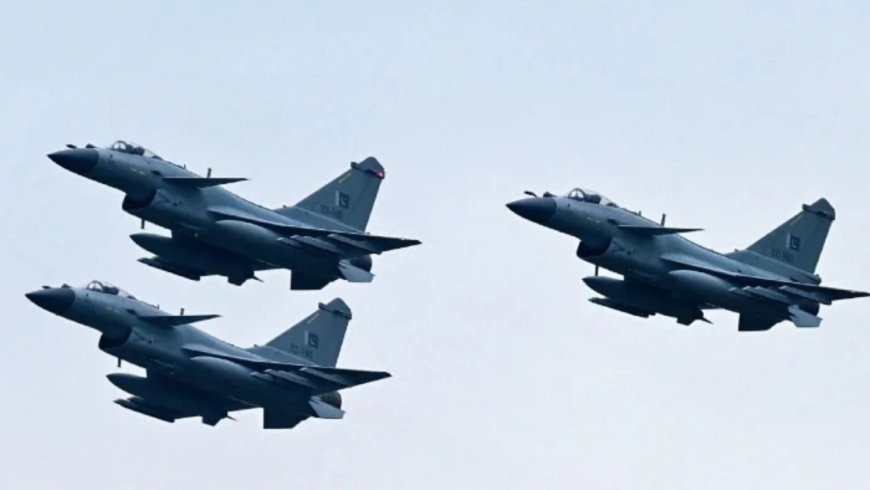
The J-10C, a 4.5-generation fighter built by Chengdu Aircraft Corporation, is designed for air superiority with advanced AESA radar and PL-15 missiles. Pakistan operates 20 J-10CEs, with 36 more on order. Its claimed success against Rafales, attributed to the PL-15’s 145–300 km range and networked guidance from Saab 2000 AEW&C platforms, suggests a tactical edge in beyond-visual-range (BVR) combat. However, experts like James Char note the J-10C’s single WS-10B engine has a shorter 700-hour service life compared to the Rafale’s twin engines, and its radar is optimized for air-to-air roles, unlike the multirole Rafale.
JF-17 Thunder Block III
A joint Pakistan-China venture, the JF-17 Block III is a lightweight, cost-effective multirole fighter (US$32 million vs. Rafale’s US$80 million) equipped with KLJ-7A AESA radar and PL-15E missiles. Pakistan fields 45–50 Block IIIs within a 150-jet JF-17 fleet. While less advanced than the J-10C, its numerical strength and BVR capabilities contributed to Pakistan’s defensive strategy. Posts on X, like @OSPSF, highlighted JF-17s armed with PL-15Es in April 2025, signaling readiness amid rising tensions.
HQ-9P Air Defense System
The HQ-9P, a long-range surface-to-air missile system with a 125–260 km range, forms part of Pakistan’s multilayered air defense alongside the HQ-16 and LY-80. India claimed to have destroyed HQ-9P and HQ-16 systems near Lahore, with no reported missile interceptions, raising questions about their effectiveness. X posts, such as @ShivAroor’s, cited early evidence of Chinese air defenses failing to stop Indian strikes, though Pakistan’s claims of downing 25 Indian drones suggest some defensive success.
Performance Analysis: Successes and Limitations
Tactical Advantages
Pakistan’s integrated approach—combining J-10C and JF-17 jets, PL-15 missiles, ZDK-03 AEW&C, and HQ-9P systems—created a “one-way transparency” advantage, allowing early detection and targeting of Indian jets. The PL-15’s long range and mid-course guidance via datalinks outperformed India’s Meteor missile in some scenarios, per RUSI’s Justin Bronk. X user @nerdtechgasm speculated Pakistan used the full 300 km-range PL-15, not the export PL-15E, catching India off-guard. The J-10C’s “first-look, first-shot” capability, praised by Air Commodore Farooq, was bolstered by superior avionics and missile range.
Failures and Doubts
Despite Pakistan’s claims, India’s strikes hit multiple targets, suggesting Chinese air defenses like the HQ-9P failed to intercept missiles. X posts by @sunandavashisht and @TimesAlgebraIND claimed satellite imagery would show breached Pakistani airbases, with Chinese radars underperforming. Experts like Bilal Khan noted the HQ-9P’s limited success against Indian drones, and India’s S-400 systems likely outperformed Pakistan’s defenses. The lack of confirmed Indian losses, with only three crashes reported, and no comment from Dassault, casts doubt on Pakistan’s narrative.
Expert Caution
Analysts, including Lyle Morris and Jennifer Kavanagh, warn against overhyping Chinese weapons based on limited data. Pilot training, rules of engagement, and India’s potential misjudgments (e.g., not firing first) may have skewed outcomes, per Fabian Hoffman. Brian Hart of CSIS noted that export models like the J-10CE and HQ-9P are less advanced than China’s domestic systems, limiting insights into PLA capabilities. Kavanagh emphasized that operational tactics outweigh hardware, and the small sample size precludes definitive judgments.
Global Implications
Boost for Chinese Arms Exports
The conflict has bolstered China’s arms export prospects, with Chengdu’s stock soaring 40–50% and interest from nations like Egypt, Iran, and Saudi Arabia. The J-10C’s lower cost ($40 million vs. Rafale’s $100 million) and combat validation make it attractive to cost-conscious buyers. Chinese media and X users like @zhao_dashuai celebrated the PL-15 and J-10C as proof of China’s edge over Western systems. However, Kavanagh noted China’s reliance on imported engines and production constraints could hinder mass exports.
Strategic Shifts
The skirmish underscores Pakistan’s 80–82% reliance on Chinese arms, per SIPRI, shifting from U.S. F-16s to J-10C and JF-17 as its backbone. This deepens Beijing’s influence, with joint exercises and BeiDou navigation access enhancing Pakistan’s precision. For India, the clashes highlight gaps in AEW&C capabilities (only three A-50EI and Netra Mk 1 units) and the need for domestic production under Make in India. X user @visegrad24 noted China’s defense industry benefits from real-world testing, potentially reshaping regional deterrence.
Taiwan and Beyond
The J-10C’s performance has raised alarms in Taiwan, with analysts like Shu Hsiao-Huang suggesting the PLA’s air combat capabilities may rival U.S. deployments in East Asia. Yun Sun of the Stimson Center argued it forces a reassessment of the Taiwan Strait balance. However, Hart cautioned that Pakistan’s export-grade systems don’t reflect China’s advanced domestic arsenal, and U.S. forces remain a tougher benchmark.
Critical Perspective
While Pakistan’s claims amplify China’s military reputation, the narrative may be inflated. India’s silence on losses, combined with evidence of successful strikes, suggests Chinese defenses underperformed. X posts like @TheImmortal007’s claim of Chinese missile and radar failures align with India’s reported penetration of Pakistani airspaces. The stock market’s 40% surge appears speculative, as Wezeman noted, given unverified outcomes. China’s reluctance to confirm J-10C kills, per its foreign ministry, may reflect caution amid corruption scandals in its defense sector. The human element—pilot skill and tactics—likely played a larger role than hardware, as Kavanagh emphasized.
A Mixed Verdict
The Pakistan-India skirmish provided a rare combat test for Chinese weapons, with the J-10C, JF-17, and PL-15 showcasing BVR strengths, but HQ-9P air defenses revealing vulnerabilities. While China’s arms industry gains a marketing boost, the limited scope of the clashes and unverified claims temper conclusions. For Pakistan, the conflict validates its pivot to Chinese systems, but for India, it underscores the need for enhanced defenses. Globally, the skirmish signals China’s rising defense prowess, yet operational gaps and Western competition suggest Beijing’s path to arms export dominance remains uncertain.
For more updates on global security and defense trends, visit Bio Points News.
What's Your Reaction?
 Like
0
 Dislike
0
 Love
0
 Funny
0
 Angry
0
 Sad
0
 Wow
0