Operation Bunyan Marsus: Pakistan Destroys India's S-400 Defense System, Airbases, and Cyber Network in Major Retaliation - Bio Points News
Pakistan launched Operation Bunyan Marsus against India, destroying the S-400 missile defense system, key airbases, and jamming military satellites in a powerful response to Indian aggression. Full details inside.




Operation Bunyan Marsus: Pakistan's Response to Indian Aggression
In a major military escalation, Pakistan launched Operation Bunyan Marsus (Iron Wall) in response to Indian aggression, targeting multiple strategic military installations across India. The operation, which unfolded in the early hours of the morning, has led to significant destruction, including the targeting of airbases, missile defense systems, military intelligence centers, and cyber infrastructure. Pakistan's military claimed that its strike was a direct counteraction to Indian aggression, particularly after Pakistan's territorial integrity was threatened by Indian airstrikes.
Details of Pakistan’s Attack on Indian Targets
Pakistan's Armed Forces carried out a series of strikes across India, with significant damage reported to key military and defense infrastructure:
-
Destruction of Key Airbases: Pakistan's strikes primarily focused on Indian airbases that were allegedly used to launch attacks on Pakistan, including:
-
Udhampur
-
Pathankot
-
Adampur
-
Suratgarh
-
Sirsa
-
Bathinda
-
Halwara
-
Akhnoor
The Udhampur airbase, in particular, showed visible signs of destruction, with images reportedly circulating on Indian media outlets confirming the damages. These airbases were targeted after Pakistan accused them of being operational launch points for Indian airstrikes that had hit civilian areas in Pakistan, including mosques.
-
-
Brahmos Storage and S-400 Defense System: Among the most critical targets destroyed was India's Brahmos missile storage facility in Beas, as well as its S-400 defense system located in Adampur. The Pakistan Air Force (PAF) deployed its advanced JF-17 Thunder hypersonic missiles, which were reported to have successfully taken down the S-400 system, valued at over $1.5 billion. The destruction of India's missile defense system severely compromised India's defense capabilities.
-
Military Intelligence and Terrorism Training Centers: The Indian Military Intelligence (IMINT) training center, which has reportedly been involved in supporting insurgencies and terrorism in Pakistan—specifically in Rajouri and Nowshera—was completely destroyed in the operation. According to security sources, the Indian military training center played a pivotal role in carrying out covert operations on Pakistani soil.
-
Cyber Warfare and Satellite Disruption: In addition to physical attacks, Pakistan's cyber forces also played a crucial role in disrupting India’s cyber infrastructure. According to security reports, Pakistan managed to disable 70% of India's power grid in a sophisticated cyberattack, severely affecting the country's electricity supply. Moreover, Pakistani forces jammed Indian military satellites, effectively neutralizing India's satellite communications during the operation. This action was a significant blow to India's surveillance capabilities, especially considering the strategic importance of military satellites.
-
Artillery Positions and Military Depots: Pakistan also targeted several other critical military positions in occupied Kashmir and along the Line of Control (LoC):
-
KG Top Brigade Headquarters was destroyed.
-
Uri Field Supply Depot was completely neutralized.
-
Several Indian posts, including Rabatanwali Post, Dinah Post, Patheli Top, and Khawaja Bhik Complex, were also targeted.
-
-
Hypersonic Missiles and Long-Range Strikes: The Pakistani Fateh-1 missile, with a range of 120 kilometers, was launched at Indian targets, successfully hitting multiple locations. The missile’s advanced navigation systems and high precision ensured the accuracy of strikes. Additionally, Pakistan’s hypersonic missile technology, such as the JF-17 Thunder, proved highly effective in overcoming India's advanced defense systems.
Pakistan's Strategic Message
The operation was framed as a direct response to India's aggressive military actions towards Pakistan, with the Pakistan Army asserting that the strikes were meant to demonstrate the country's resolve and commitment to protecting its sovereignty and national security.
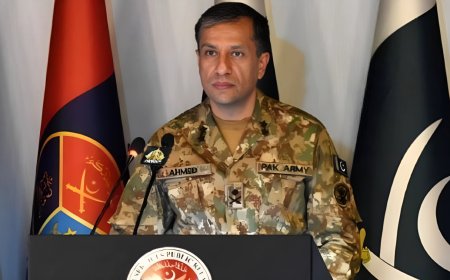
Pakistan's Director General of Inter-Services Public Relations (ISPR), Lt. Gen. Ahmed Sharif Chaudhry, confirmed that the strikes were a direct response to India’s missile attacks on Pakistani airbases. He also emphasized that Pakistan’s air defense systems had neutralized the Indian missiles, and all assets of the Pakistan Air Force (PAF) remained intact.
"This operation is a clear message to India that Pakistan will not compromise on its sovereignty and will give a befitting response to any aggression," said Lt. Gen. Chaudhry.
Reactions and International Impact
The international community has closely monitored the situation as tensions between India and Pakistan, both nuclear-armed nations, continue to escalate. India, while confirming the destruction of its airbases and military infrastructure, has not yet publicly responded to the loss of its S-400 system and the jamming of its satellites. However, India’s Ministry of Defense has assured that the country remains vigilant and is prepared for any further escalation.
On the other hand, Pakistan’s military has reiterated that the operation was launched solely as a response to India's military aggression and that it seeks to deter further escalation in the region.
The Bigger Picture: Regional Stability
The broader geopolitical implications of this operation are still unfolding. The relationship between India and Pakistan, long marked by tension and periodic military confrontations, has been particularly volatile in recent years. With both nations possessing nuclear weapons, the potential for a full-scale war and its catastrophic consequences is a serious concern for the international community.
Military analysts have noted that Operation Bunyan Marsus represents a significant shift in Pakistan's defense strategy, combining conventional military action with cyber warfare and satellite disruption. The use of advanced missile systems and cyber capabilities underscores the growing sophistication of military technology in the region.
A Precarious Situation
The ongoing conflict between India and Pakistan continues to be a volatile and high-stakes situation, with both nations having demonstrated their advanced military capabilities. While Pakistan’s Operation Bunyan Marsus was framed as a defensive measure, the destruction of critical Indian infrastructure, especially the S-400 defense system and military intelligence facilities, signals a deeper and more complicated military engagement.
As the situation develops, it remains to be seen how India will respond and whether there will be any diplomatic efforts to de-escalate the conflict. The role of the international community, especially global powers and regional stakeholders, will be critical in ensuring that the situation does not spiral out of control.
In the meantime, the world watches as India and Pakistan engage in what could become a defining moment in the region’s military history.
Reference
𝐎𝐩𝐞𝐫𝐚𝐭𝐢𝐨𝐧 𝐁𝐮𝐧𝐲𝐚𝐧 𝐮𝐥 𝐌𝐚𝐫𝐬𝐨𝐨𝐬 🔥 pic.twitter.com/J36hYcnGZG — Defense Intelligence (@DI313_) May 10, 2025
آپریشن بُنْيَانٌ مَّرْصُوْص (آہنی دیوار)اپڈیٹ
پاکستانی فتح 1 میزائل سسٹم دشمن پر قہر ڈھاتے ہوئے
پاکستانی فتح 1میزائل سسٹم کے ذریعے متعددبھارتی اہداف کو نشانہ بنایاگیا
پاکستانی فتح 1 میزائل سسٹم سے بھارتی اہداف کو نشانہ بنانے کی ایک اور ویڈیو منظر عام پر
حملے سے دشمن کے… pic.twitter.com/IRt9wBcEfw — PTV News (@PTVNewsOfficial) May 10, 2025
آپریشن بُنْيَانٌ مَّرْصُوْص (آہنی دیوار)اپڈیٹ
پاکستان کا بھارت کومنہ توڑ جواب/ بھارت کی متعدد پوسٹیں مکمل تباہ
پاک فوج لائن آف کنٹرول پر ربتانوالی پوسٹ، ڈنہ پوسٹ، خواجہ بھیک کمپلیکس اور رنگ کنٹوئر بالمقابل سنکھ بھی مکمل تباہ
افواج پاکستان کی توپوں نے بھارتی توپوں کو خاموش… pic.twitter.com/oUcsurnFCa — PTV News (@PTVNewsOfficial) May 10, 2025
‼️Indian brigade headquarters at G Top destroyed, supply depot in Uri also destroyed. pic.twitter.com/NwG2sqbvM0 — Defense Intelligence (@DI313_) May 10, 2025
What's Your Reaction?
 Like
0
 Dislike
0
 Love
0
 Funny
0
 Angry
0
 Sad
0
 Wow
0