Louisiana Vibrio Vulnificus Outbreak: 5 Deaths, 9 Cases
Louisiana Vibrio vulnificus outbreak: 9 cases and 5 deaths in 2026. Learn how infection spreads, who faces the highest risk and warning signs to watch.
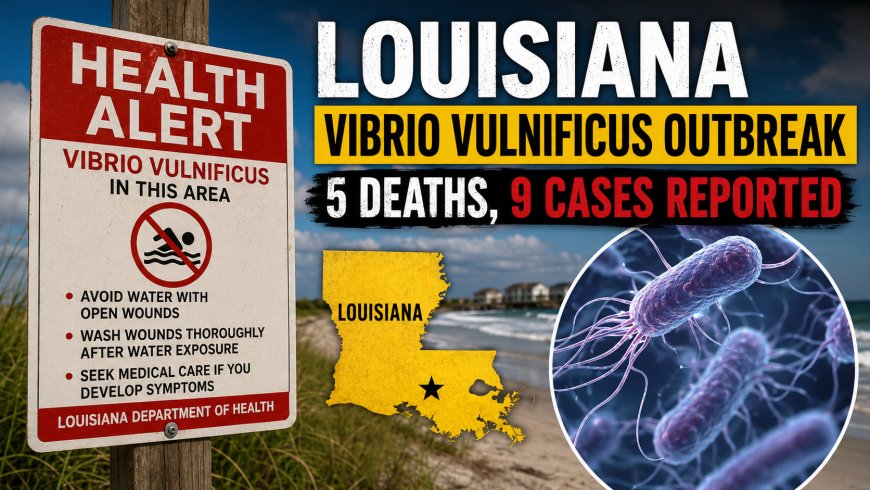
Louisiana Vibrio vulnificus outbreak leaves 5 dead and 9 infected
A Louisiana Vibrio vulnificus outbreak has prompted a public health warning after nine people were reported infected in 2026 and five died. Louisiana health officials said all nine patients required hospitalization, had underlying health conditions and had open wounds exposed to seawater. The numbers are unusually high for the state: during the same period over the previous 10 years, Louisiana averaged about seven cases and one death. The warning is aimed particularly at people who enter warm coastal or brackish water with cuts, sores or other open wounds.
The bacterium, commonly described in news reports as “flesh-eating,” can cause rapidly progressing wound infections and, in severe cases, bloodstream infections and tissue destruction. The term can sound alarming, but the immediate public-health issue is more specific: Vibrio vulnificus is naturally found in coastal waters, and the current Louisiana cases show a strong connection between seawater exposure through wounds and serious illness.
Why Louisiana health officials are warning people now
Vibrio vulnificus is more abundant in warm coastal waters, making the warmer months a particularly important period for prevention. Louisiana health guidance has identified May through October as the period when Vibrio bacteria are more likely to thrive as water temperatures rise. The current five deaths therefore come during a season when residents, tourists, fishermen, boaters and swimmers may have more frequent contact with coastal or brackish water.
The scale of the current numbers is also part of the concern. Nine reported cases and five deaths represent a much higher fatality burden than the historical comparison provided by state health officials. All nine reported patients were hospitalized, and all had underlying health conditions, showing why officials are emphasizing extra precautions for people whose health could make an infection more severe.
How people in Louisiana are becoming infected
The current cases share an important exposure pattern. According to Louisiana health officials, every one of the nine reported patients had an open wound that came into contact with seawater. That does not mean every person entering coastal water will become infected, but it shows why even a small cut, scrape or sore can matter when someone enters salt or brackish water.
Vibrio vulnificus can also cause illness after someone consumes raw or undercooked seafood, especially shellfish such as oysters. Louisiana guidance has identified both wound exposure and seafood consumption as routes of infection. People handling raw shellfish should also take precautions to avoid contact between the bacteria and cuts on their hands.
One important distinction is that this is not a disease typically spread through casual contact between people. Louisiana health guidance states that person-to-person transmission of V. vulnificus has not been reported. The main concern for the public is exposure to the bacteria in coastal environments or contaminated seafood.
Who faces the highest risk from Vibrio vulnificus?
Anyone can become infected, but severe illness is more likely among people with certain underlying medical conditions. Louisiana and federal health guidance identifies chronic liver disease, diabetes and conditions that weaken the immune system as important risk factors. Other recognized risk groups include people with cancer, HIV or thalassemia and people receiving treatments that suppress the immune system.
The current Louisiana numbers make that warning particularly relevant because every reported patient had an underlying health condition. That does not mean healthy people have no risk; instead, it shows that people with existing medical vulnerabilities should be especially cautious about exposing wounds to warm coastal or brackish water.
What are the first symptoms to watch for?
Symptoms can begin around a wound after exposure to coastal water and may initially resemble an ordinary skin infection. Warning signs include increasing redness, swelling, warmth, pain, discoloration and drainage or discharge from the affected area. Fever can also develop. Because severe Vibrio vulnificus infections can progress quickly, worsening symptoms following seawater exposure should not be ignored.
More serious illness can involve bloodstream infection, dangerously low blood pressure, blistering skin lesions and severe systemic illness. Severe wound infections may involve tissue destruction and can require intensive medical treatment or surgery. The CDC has warned that serious V. vulnificus infections can become life-threatening rapidly, making early medical assessment important when symptoms follow a relevant exposure.
How to reduce the risk at the beach or on the water
The simplest prevention step is to keep open wounds away from salt or brackish water. People with cuts, sores or other open wounds should avoid entering coastal water until the wound has healed. If water exposure cannot be avoided, Louisiana health guidance recommends protecting wounds with a waterproof covering. Any wound that becomes exposed should be washed thoroughly with soap and clean water.
Seafood is another important consideration. People should avoid raw or undercooked shellfish, particularly oysters, and should wash their hands after handling raw seafood. These precautions are especially important for people with conditions that increase the risk of severe infection.
For beachgoers, fishermen and coastal workers, the current message is not to panic but to recognize the risk. The bacteria naturally occurs in coastal environments, so completely eliminating environmental exposure is not realistic. The practical goal is to prevent bacteria from entering wounds and to recognize symptoms quickly if an exposure occurs.
What makes the 2026 Louisiana cases unusual?
The most striking part of the current health alert is not simply that Vibrio vulnificus has been detected. The bacterium is a known coastal-water hazard and Louisiana has reported Vibrio infections in previous years. What stands out is the combination of nine reported cases, five deaths and a patient profile in which every reported case involved an underlying health condition and seawater-exposed wounds.
Louisiana's comparison with the previous decade adds further context. Officials reported an average of roughly seven cases and one death during the same period in earlier years. That makes five deaths particularly significant and explains why health authorities are emphasizing prevention while warm-water conditions continue.
The current warning should also be understood correctly. It does not mean that every coastal location is contaminated or that ordinary contact with another person spreads the infection. Instead, the available case information points to a specific exposure risk involving coastal water and wounds, with severe outcomes concentrated among people who already have health conditions that increase vulnerability.
When should someone seek medical care?
Anyone who develops a rapidly worsening wound after exposure to seawater or brackish water should seek medical attention rather than waiting for symptoms to resolve on their own. Increasing redness, swelling, pain, warmth, discoloration, drainage or fever are warning signs that deserve prompt evaluation. A history of coastal-water exposure can help healthcare professionals consider Vibrio vulnificus when assessing a serious wound infection.
People who are at higher risk because of liver disease, diabetes, immune suppression or other underlying conditions should be particularly cautious. Louisiana health guidance for clinicians emphasizes prompt treatment when a serious V. vulnificus wound infection is suspected because severe infections can progress rapidly.
For now, the key public-health message is straightforward: avoid salt or brackish water when you have an open wound, protect wounds from coastal water, handle raw seafood carefully and get medical attention quickly if an exposed wound begins to worsen. The five deaths reported in Louisiana show why those precautions matter during the warm-water season.
What's Your Reaction?
 Like
0
 Dislike
0
 Love
0
 Funny
0
 Angry
0
 Sad
0
 Wow
0