Top IRGC Commander Among High-Profile Casualties in Israeli Airstrikes on Iran - Bio Points News
Israeli airstrikes in Iran have reportedly killed top military leaders, including IRGC Chief Maj. Gen. Hossein Salami, amid Operation Rising Lion. Tensions between Tehran and Tel Aviv escalate further.
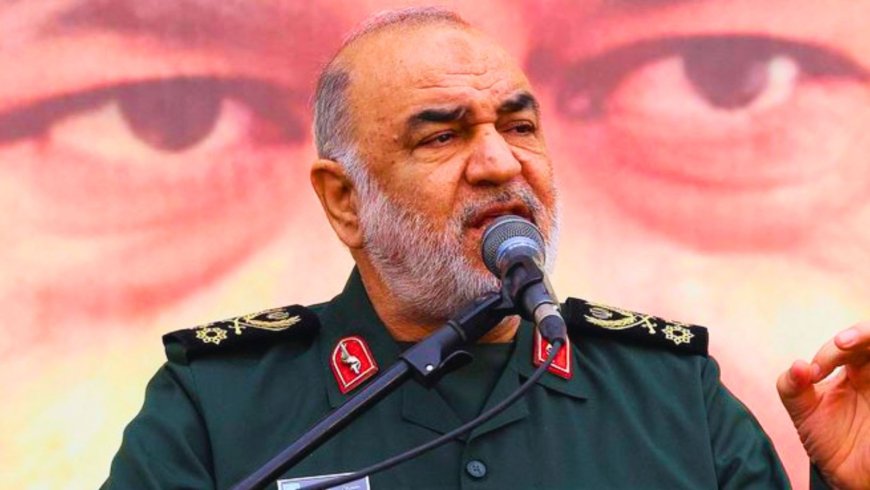
TEHRAN — In a dramatic escalation of the conflict between Iran and Israel, Major General Hossein Salami, the powerful commander-in-chief of Iran’s Islamic Revolutionary Guard Corps (IRGC), has reportedly been killed in Israeli airstrikes targeting multiple cities across Iran, including the capital.
According to state-affiliated Iranian media, Salami was present at a military facility in Tehran when it came under aerial bombardment in the early hours of Friday. The strike, which forms part of Israel’s newly launched Operation Rising Lion, appears to have been a calculated attempt to decapitate Iran’s military leadership.
Also reported among the dead are:
-
Maj. Gen. Gholamali Rashid, commander of Iran’s Khatam al-Anbia Headquarters
-
Dr. Fereydoun Abbasi, former head of Iran's Atomic Energy Organization
-
Dr. Mohammad-Mehdi Tehranchi, president of Islamic Azad University and nuclear scientist
The airstrikes struck sites in Tehran, Natanz, and Isfahan, cities that house key nuclear and defense facilities. Analysts suggest the attacks are not just symbolic but are meant to cripple Iran’s military command and delay nuclear advancements.
A Targeted Operation with Strategic Intent
While Israel has not formally claimed responsibility for the high-profile assassinations, Israeli media and military sources have dubbed the campaign “Operation Rising Lion,” hinting at long-planned precision strikes designed to thwart what it calls an imminent nuclear threat from Iran.
Tel Aviv maintains the operation is purely defensive, aimed at preventing Iran from obtaining nuclear weapons. However, the killing of such high-ranking officials indicates a more aggressive shift in Israeli tactics.
Regional Fallout and Global Reactions
The attack arrives just days before the scheduled nuclear negotiations between the U.S. and Iran in Oman, casting serious doubt on whether talks will go ahead.
Following the strikes:
-
Iranian airspace saw partial shutdowns
-
Israeli air defense systems were placed on full alert
-
Oil prices surged, while regional stock markets dipped, reflecting growing investor concern
Iranian leadership has labeled the strikes an “act of war” and has vowed “a powerful and coordinated response.” The possibility of direct retaliation against Israel or its allies has raised fears of wider regional escalation.
The Future: A Fragile Balance
With Iran’s top military and nuclear minds reportedly eliminated in one night, the Middle East faces a new phase of instability. Israel appears determined to eliminate what it views as existential threats, while Iran, now wounded and enraged, is expected to respond with force.
The global community watches anxiously as the risk of an open war between two regional powers grows ever closer.
What's Your Reaction?
 Like
0
 Dislike
0
 Love
0
 Funny
0
 Angry
0
 Sad
0
 Wow
0