GOP Pushes New Plan to Cut Regulatory Burdens on Small Businesses - Bio Points News
Bipartisan lawmakers advance AI support for small businesses as House Republicans push the Small Business Regulatory Reduction Act to cut federal burdens.
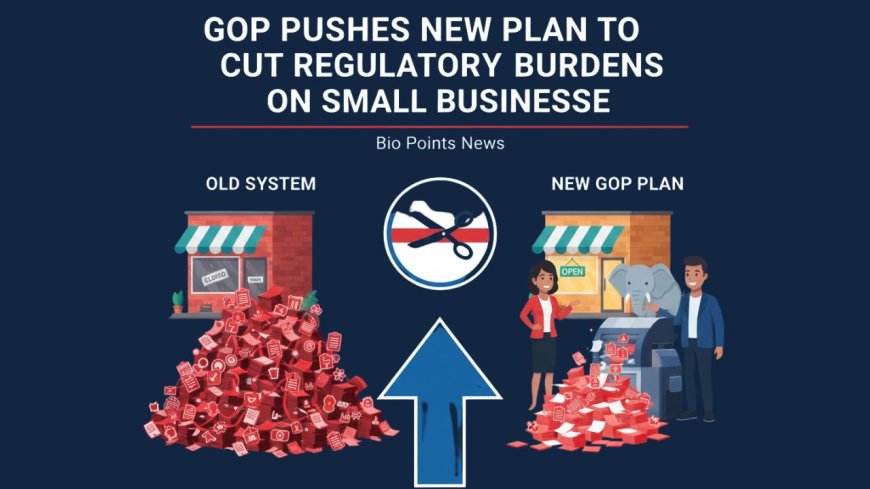
Lawmakers in Washington are turning their attention to the challenges facing America’s small businesses. While bipartisan leaders are working on new tools to help entrepreneurs adopt artificial intelligence, House Republicans have launched a separate effort aimed at reducing federal regulations that they argue create billions in economic burdens.
GOP’s Plan to Reduce Regulatory Pressure
House Republicans, led by Representative Beth Van Duyne and Majority Leader Steve Scalise, have announced a renewed push to pass legislation such as the Small Business Regulatory Reduction Act. According to its sponsors, the bill is designed to measure and limit the cumulative impact of federal regulations on small firms, which they say are struggling under high compliance costs and extensive paperwork requirements.
Republican leaders argue that existing regulations impose trillions of dollars in financial burdens nationwide, slowing growth and raising prices for consumers. Their proposed framework would require federal agencies to review, report, and—where possible—reduce regulatory impacts on small enterprises.
Bipartisan Action on Artificial Intelligence
Alongside the GOP’s deregulation push, bipartisan lawmakers have introduced legislation aimed at helping small businesses navigate emerging artificial intelligence technologies. This initiative focuses on providing training, guidance, and accessible AI tools to ensure small companies can compete effectively in a rapidly evolving digital economy.
Supporters of the AI-focused bill say it complements regulatory reform efforts by equipping entrepreneurs with modern resources while reducing unnecessary red tape.
Background: Longstanding Concerns About Red Tape
Concerns about regulatory overload are not new. Small business associations and industry groups have long argued that federal rules—though designed for consumer protection and safety—often create disproportionate challenges for smaller companies that lack the staff and budget to manage compliance.
The Small Business Regulatory Reduction Act aims to create a clearer picture of these cumulative burdens, giving Congress and federal agencies a better foundation for reform.
Recent Developments
House Republicans have highlighted deregulation as a core part of their post-holiday legislative agenda. They have also emphasized that lowering regulatory costs is key to reducing operational expenses for small firms at a time when inflation and higher interest rates continue to affect business growth.
Bipartisan AI-support legislation is moving through committee discussions, indicating cross-party interest in ensuring that small businesses remain competitive in a technology-driven marketplace.
As Washington debates the best ways to support small businesses, two parallel tracks have emerged: one focused on easing regulatory pressures and another aimed at preparing entrepreneurs for an AI-powered future. Together, these efforts reflect a growing recognition that small businesses need both flexibility and modern tools to thrive in today’s economy.
What's Your Reaction?
 Like
0
 Dislike
0
 Love
0
 Funny
0
 Angry
0
 Sad
0
 Wow
0