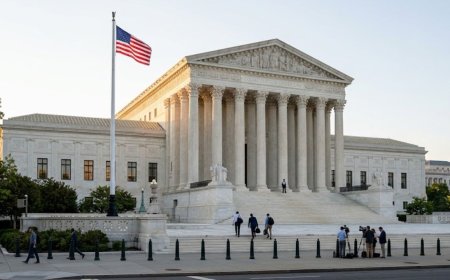
Hegseth's Army Void: 186 Days Without a Chief as Iran War Drags On
Pete Hegseth fired the Army chief of staff during the Iran war. Six months later, the US Army still has no Senate-confirmed leader — a modern record
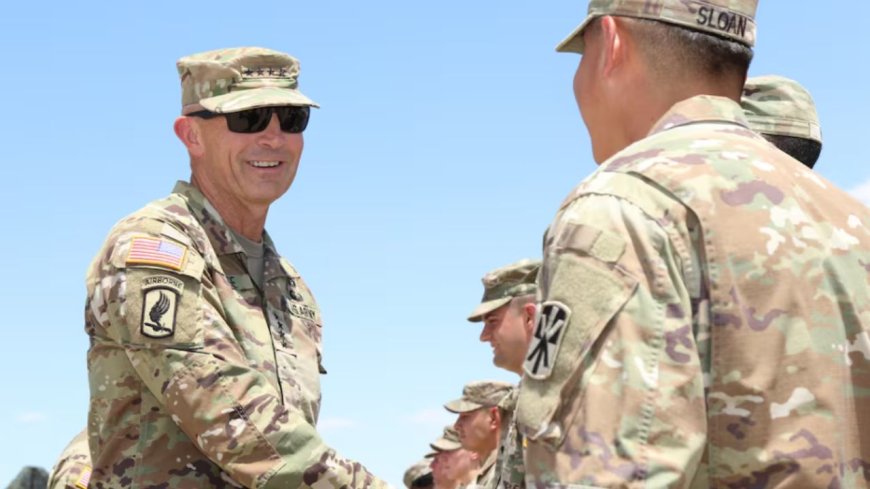
The United States Army has now gone more than six months without a Senate-confirmed chief of staff — the longest such vacancy in over five decades — and Defense Secretary Pete Hegseth is still unable to install his preferred replacement as Republican senators continue to block the nomination. The vacancy began on April 2, 2026, when Hegseth abruptly fired Gen. Randy George, the 41st Chief of Staff of the Army, in the middle of an active U.S.-Israeli war against Iran. Gen. Christopher LaNeve has served as acting chief since that day, but President Trump has not formally nominated him because the Senate Armed Services Committee lacks the votes to confirm him. With the Iran war ongoing and the Army's 82nd Airborne Division deploying to the Middle East, the leadership gap at the top of the nation's largest ground force has drawn sharp criticism from both parties.
Gen. Randy George had served as Army Chief of Staff since August 2023, confirmed by the Senate under President Biden with a standard four-year term. Hegseth asked George to retire immediately on April 2 — a day after President Trump addressed the nation on the Iran war and signaled that the U.S. would intensify its strikes. Pentagon spokesman Sean Parnell announced the departure in a brief statement that offered no reason, saying only that George "will be retiring from his position as the 41st Chief of Staff of the Army effective immediately." On the same day, Hegseth also fired Gen. David Hodne, who had led the Army's Transformation and Training Command, and Maj. Gen. William Green, the Army's chief of chaplains. No formal explanations were given for any of the three firings.
Officials familiar with the situation told multiple outlets that Hegseth had lost confidence in George and wanted a leader more aligned with the Trump administration's military vision. George had spent nearly four decades in uniform, deploying to Iraq and Afghanistan multiple times, and was credited with integrating AI-powered targeting systems and cheap missile interceptor drones into Army operations. The timing of his removal — five weeks into an active war — was described by former military officials as extraordinary and without modern precedent. Since taking office, Hegseth has fired more than a dozen generals and admirals across the services, including the Chairman of the Joint Chiefs of Staff and the Chief of Naval Operations.
Why Pete Hegseth's Army Chief Pick Is Stalled in the Senate
Hegseth's preferred replacement, Gen. Christopher LaNeve, has been serving as acting Army chief of staff since April 2, but the nomination has never been formally submitted because the votes simply are not there. Senate Armed Services Committee Chairman Roger Wicker, a Republican from Mississippi, told the Pentagon in May that LaNeve did not have sufficient support within the committee to advance. Sen. Joni Ernst of Iowa, a former National Guard commander and one of the committee's most influential Republican members, is among those who have expressed reservations. Without unanimous Republican support on the committee, the nomination cannot move forward, leaving the Army in a leadership limbo it has not experienced since 1972, when Gen. Creighton Abrams took over from an acting chief who had held the position for three months.
The central criticism of LaNeve is that he has been a four-star general for only six months — far shorter than the three to four years most officers spend at that rank before being considered for service chief. Critics in Congress argue the selection process was rushed and politically motivated rather than grounded in military merit. The story of how LaNeve came to Hegseth's attention underscores that concern. In January 2025, while commanding the Eighth Army in South Korea, LaNeve appeared in a video call at Trump's Inaugural Ball and saluted the new president. Trump reportedly loved the moment, and LaNeve was subsequently pulled from South Korea to serve as Hegseth's personal senior military aide at the Pentagon. From there he was elevated to Army vice chief of staff in February 2026, and then to acting chief when George was fired two months later.
The Iran War Context: What an Army Leadership Void Means on the Ground
The Army's leadership vacancy is not an abstract bureaucratic problem — it is unfolding as the United States is actively engaged in military operations against Iran. Paratroopers from the 82nd Airborne Division, one of the Army's premier rapid-deployment units, are heading to the Middle East alongside thousands of Marines and other military assets. The 82nd Airborne was previously commanded by LaNeve himself, which Hegseth's team cites as evidence of his operational credibility. However, military analysts note that running a division and leading the entire Army through a wartime environment are fundamentally different responsibilities. An acting chief without Senate confirmation carries less institutional weight in interagency meetings, joint commands, and congressional hearings than a confirmed one would.
The situation is further complicated by reports that Army Secretary Dan Driscoll, the top civilian leader of the Army, may also be departing. According to Breaking Defense, Driscoll's exit could leave both the Army's top military and top civilian positions without Senate-confirmed individuals simultaneously — an unprecedented scenario during an active war. Hegseth has reportedly had a contentious relationship with Driscoll, who is seen as close to the White House but independent of Hegseth's direct control. Pentagon officials have said Hegseth and a potential Driscoll replacement "have a great working relationship," but no formal announcement has been made. The Army, the largest branch of the U.S. military with over 450,000 active duty soldiers, would be navigating a two-front leadership vacuum at a critical moment.
Where Things Stand Now: Hegseth, LaNeve and the Path Forward
As of October 2026, the Pentagon's position remains that it stands fully behind LaNeve and will continue working with the White House and Senate to secure his confirmation. Chief Pentagon Spokesman Sean Parnell described LaNeve as "a battle-tested leader with decades of operational experience" who has "the complete and total trust" of Secretary Hegseth. However, Hegseth has not formally submitted the nomination, and there is no current indication that the Senate Armed Services Committee's opposition has softened. One option available to the administration is to keep LaNeve in an acting capacity indefinitely — there is no statutory time limit on how long an acting chief can serve — effectively bypassing the Senate confirmation process entirely.
The political fallout from the Army leadership vacuum continues to grow. A Senate Democratic aide told Newsweek it is "really concerning" that so much time has passed without a confirmed Army chief during wartime. Republican critics within the committee have been more measured in public but are privately pushing back on what several describe as a nomination driven by loyalty to Hegseth rather than traditional military credentials. For Pete Hegseth, the Army chief vacancy has become one of the most visible symbols of the turbulence his Pentagon tenure has produced — a confrontation between the administration's demand for ideological alignment in the military and Congress's traditional insistence on experienced, confirmed leadership at the top.
Frequently Asked Questions
Who is the current US Army Chief of Staff?
As of October 2026, Gen. Christopher LaNeve is serving as the acting Army Chief of Staff. He took over on April 2, 2026, after Defense Secretary Pete Hegseth fired Gen. Randy George. LaNeve has not been formally nominated by President Trump for the permanent position because he does not have enough votes to be confirmed by the Senate Armed Services Committee.
Why did Pete Hegseth fire the Army chief of staff?
Pentagon officials stated only that Hegseth had lost trust and confidence in Gen. Randy George and believed it was time for a leadership change. No formal reason was publicly given. The firing came five weeks into the U.S.-Israeli war against Iran, one day after President Trump's national address announcing plans to intensify strikes on Iran.
How long has the US Army been without a confirmed chief of staff?
As of October 5, 2026, the Army has gone more than 186 days without a Senate-confirmed chief of staff — the longest such vacancy since 1972. The record was previously reported at 150 days in late August 2026, with no resolution in sight as Republican senators on the Senate Armed Services Committee continue to oppose the acting chief's potential permanent nomination.
What's Your Reaction?
 Like
0
 Dislike
0
 Love
0
 Funny
0
 Angry
0
 Sad
0
 Wow
0