Supreme Court Opens 2026 Term With Arizona Voter Citizenship Case
The Supreme Court opens its 2026 term today with a landmark Arizona voter citizenship case that could reshape election laws across the US.
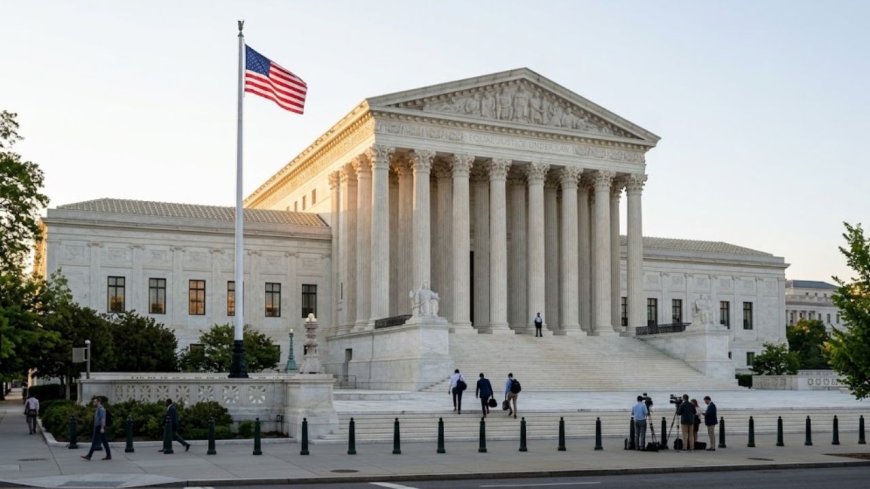
The United States Supreme Court opened its October 2026 term on Monday with one of the most consequential voting rights cases in years already on its docket — a direct challenge to Arizona laws that require voters to provide documentary proof of citizenship when registering to vote. The case, Republican National Committee v. Mi Familia Vota (No. 25-1017), will ask the court's six conservative justices to decide whether state-specific voter registration forms can demand physical proof of U.S. citizenship beyond the attestation already required on the federal form. Oral arguments are scheduled for December 2026, meaning a decision will not arrive before the November midterm elections. What the court ultimately rules could set a national precedent that reaches far beyond Arizona's borders.
Arizona passed two laws in 2022 under then-Governor Doug Ducey, a Republican, that sit at the heart of this dispute. The first law requires new voter registrants to submit physical documentary proof of citizenship — such as a passport or birth certificate — when filling out a state registration form. The second law requires county recorders to periodically audit voter rolls against state and federal databases and cancel the registrations of anyone whose citizenship cannot be confirmed, even if that cancellation occurs within 90 days of a federal election. A coalition of voting rights groups, including Mi Familia Vota, Living United for Change in Arizona, and the Democratic National Committee, challenged both laws in federal court. The Ninth Circuit Court of Appeals agreed with the challengers, ruling that both provisions violate the National Voter Registration Act of 1993 and the Civil Rights Act.
The Republican National Committee and the Trump administration's Department of Justice appealed to the Supreme Court, which agreed in July 2026 to take up the case for its new term. The Trump DOJ had previously filed a petition urging the justices to accept the appeal, making this a rare instance of the federal executive branch actively supporting a state's voting restrictions in front of the nation's highest court. The case consolidates three related petitions — RNC v. Mi Familia Vota, Petersen v. Mi Familia Vota, and Arizona v. Promise Arizona — all challenging the Ninth Circuit's ruling from different angles. The fact that SCOTUS agreed to hear the case at all is itself significant, since the court typically does not take cases it plans to leave undisturbed.
What the Supreme Court Voter Citizenship Case Actually Decides
The legal dispute turns on a narrow but critical distinction that most coverage has glossed over. In 2013, the Supreme Court ruled in Arizona v. Inter Tribal Council of Arizona that the state could not require proof of citizenship when voters registered using the federal "motor voter" form mandated by the National Voter Registration Act. That ruling, however, specifically applied to the federal form — it left open what Arizona could require on its own state-specific registration form. The 2022 laws exploit that gap, requiring documentary proof only when voters choose to use the state form rather than the federal one. The Ninth Circuit said even that distinction violated the NVRA. The Republican National Committee argues the Ninth Circuit misread what Congress intended when the NVRA said states could require "necessary" documentation and use an "equivalent" form.
George Washington University Law professor Alan Morrison, speaking at a recent legal forum, said the case will likely turn on what justices believe Congress meant by "equivalent" — whether a state form must be virtually identical to the federal one, or whether it can demand additional documentation the federal form does not require. The second question before the court is equally significant: whether the NVRA's 90-day quiet period before elections prohibits Arizona from canceling voter registrations of suspected non-citizens in that window. Since 2004, Arizona has required proof of citizenship for state and local elections. The new 2022 laws extended that requirement to federal elections as well, which is where the NVRA conflict arises.
Why a Ruling for Arizona Could Reshape Elections Across the Country
Legal analysts say a Supreme Court ruling in Arizona's favor would have immediate ripple effects across the United States. Multiple Republican-led states have already passed or are actively considering documentary proof-of-citizenship requirements for voter registration, waiting to see how the Supreme Court rules before fully implementing them. President Trump has separately pushed for federal legislation requiring citizenship proof for all voter registrations, though that effort has not yet gathered enough Republican support in Congress. A favorable SCOTUS ruling for Arizona would effectively hand states a green light to impose these requirements without waiting for Congress to act — and it would arrive with enough time before the 2028 presidential election for states to build the infrastructure to enforce it.
Opponents of the laws argue they will disproportionately burden naturalized citizens, Latino voters, and low-income Americans who may not have easy access to passports or birth certificates. The voting rights coalition representing Mi Familia Vota has argued that citizenship attestation — signing under penalty of perjury that you are a U.S. citizen — is already a meaningful safeguard against non-citizen registration, and that no evidence of widespread non-citizen voting exists to justify the additional document requirement. Supporters counter that the integrity of voter rolls requires more than a self-attestation and that states have a constitutional interest in verifying eligibility before granting someone the right to vote in federal elections.
What Else Is on the Supreme Court's 2026 Docket
The Arizona voting case is the most politically charged matter the court will hear this fall, but it is not the only significant one. The 2026 term includes two major immigration cases tied to the Trump administration's enforcement policies — one on the deportation of migrants who cannot be quickly returned to their home countries, and another on mandatory detention of long-term undocumented residents. The court will also hear Second Amendment challenges involving AR-15-style rifles, two Eighth Amendment death penalty cases, and disputes over whether local governments can hold energy companies liable for climate change damages. The court recently concluded a term in which it delivered President Trump several legal setbacks on tariffs and birthright citizenship, and legal observers say the 2026 term may be somewhat less Trump-centric — though the voting rights and immigration cases ensure it will remain highly consequential.
The citizenship proof case, RNC v. Mi Familia Vota, will be argued in December 2026. A final decision is expected before the court's term concludes in June or July 2027. That timeline places the ruling squarely in the middle of the 2028 presidential election cycle — early enough for states to act on the decision before primary season begins. Whatever the court decides, the ruling will land in a political environment where election integrity, voter registration, and immigration are among the most polarizing issues in American public life. The court's composition, with six conservative justices appointed by Republican presidents, means the legal and political stakes for both parties could not be higher.
Frequently Asked Questions
What is the Supreme Court Arizona citizenship case about?
The case, RNC v. Mi Familia Vota (No. 25-1017), asks whether Arizona can require voters to provide physical documentary proof of U.S. citizenship — such as a passport or birth certificate — when registering to vote using a state registration form. It also asks whether Arizona can purge suspected non-citizens from voter rolls within 90 days of a federal election. Oral arguments are scheduled for December 2026.
When will the Supreme Court decide the Arizona voter citizenship case?
Oral arguments are set for December 2026, and a final decision is expected before the end of the court's term, which typically concludes in June or July. A ruling will not arrive before the November 2026 midterm elections. Legal analysts expect a decision by summer 2027.
Did the Supreme Court already rule on Arizona citizenship voting laws before?
Yes — in 2013, the Supreme Court ruled in Arizona v. Inter Tribal Council of Arizona that Arizona could not require proof of citizenship on the federal "motor voter" registration form mandated by the National Voter Registration Act. However, that ruling did not address state-specific forms, which is the gap the 2022 Arizona laws target and what the new case directly challenges.
What's Your Reaction?
 Like
0
 Dislike
0
 Love
0
 Funny
0
 Angry
0
 Sad
0
 Wow
0