Detroit Lions vs. Colts: Roster Battles Take Center Stage
Detroit Lions close preseason against the Colts as Luke Altmyer, Josh Dobbs and roster hopefuls battle for jobs before final NFL cuts arrive on Sunday.
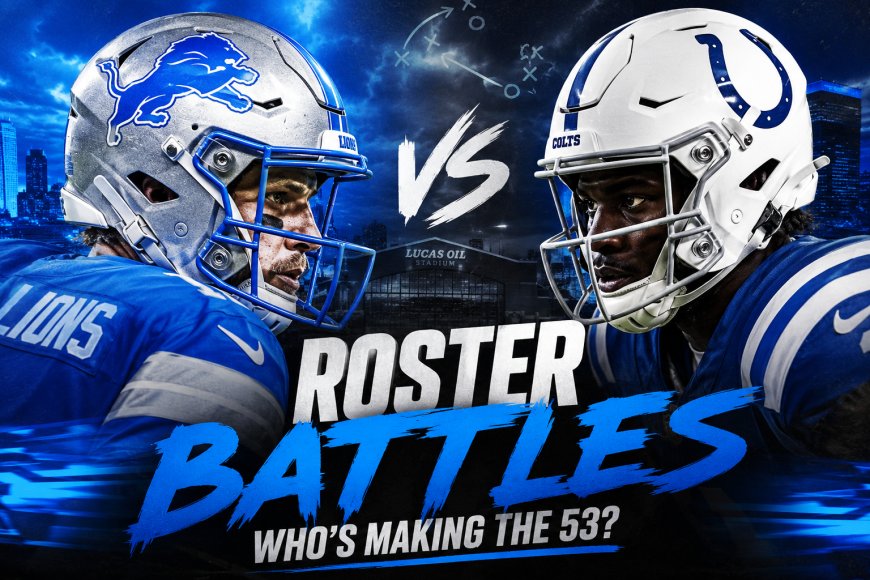
Detroit Lions vs. Colts: Roster Battles Take Center Stage
The Detroit Lions entered their preseason finale against the Indianapolis Colts with something more important than an exhibition result on the line: roster jobs. Detroit arrived in Indianapolis at 1-1 in the preseason, while the Colts were 0-1-1, but the biggest questions centered on which fringe players could make a convincing final case before the NFL's initial 53-man roster deadline.
Detroit's preseason finale was scheduled for Saturday, August 29, at Lucas Oil Stadium. The game represented the final evaluation opportunity before teams had to reduce their rosters to 53 players by Sunday evening.
Why the Lions-Colts game mattered beyond the score
Preseason games rarely carry the same meaning as regular-season contests, and this matchup was no exception. Detroit held out several established starters, including Jared Goff, Jahmyr Gibbs, Amon-Ra St. Brown and Jameson Williams. That shifted attention toward players who needed strong performances to influence the coaching staff's final decisions.
For Detroit head coach Dan Campbell and general manager Brad Holmes, the challenge was less about proving that the team's established stars could play and more about deciding which depth players deserved limited spaces on the final roster. The Lions had several competitive position groups, particularly along the defensive line and among the backup offensive players.
That makes the final preseason game a useful snapshot of Detroit's depth. A player who performs well on offense but also contributes on special teams can have an advantage over someone whose value is limited to one phase of the game.
The backup quarterback battle was one of Detroit's biggest questions
One of the most closely watched competitions involved Josh Dobbs and Luke Altmyer. Both quarterbacks were given an opportunity to strengthen their cases behind Jared Goff, with Detroit's coaching staff looking for efficiency, ball security and command of the offense rather than simply one spectacular play.
Altmyer entered the finale having completed 22 of 35 passes for 216 yards, one touchdown and two interceptions across Detroit's first two preseason games. Dobbs had completed 11 of 20 attempts for 106 yards, with no passing touchdowns and one interception, while also providing a significant rushing element.
The numbers help explain why the competition remained relevant. Altmyer offered the upside of a young quarterback developing within the system, while Dobbs brought extensive NFL experience and mobility. The decision therefore was not simply about who produced the better individual highlight; it was about which profile gave Detroit the most dependable insurance behind Goff.
Detroit's running back depth also needed a final answer
With Jahmyr Gibbs not playing, several running backs received another opportunity to separate themselves. Jacob Saylors had already established a strong preseason case, leading Detroit with 87 rushing yards on 14 attempts entering the finale. Trayveon Williams, Jabari Small and Roydell Williams were among the other backs competing for consideration.
Saylors' production was particularly notable because roster decisions are not based solely on raw rushing totals. Kick-return ability, special-teams work, pass protection and consistency can all determine whether a depth running back survives final cuts. Detroit's staff therefore had to evaluate the entire role rather than simply count carries.
Trayveon Williams also had momentum entering the game. He scored a rushing touchdown against Washington in Detroit's previous preseason contest and had been part of a group of backs pushing for roster consideration.
The receiver competition was another key roster test
Detroit's receiver room presented another difficult personnel decision. Amon-Ra St. Brown, Jameson Williams and Isaac TeSlaa were not dressed for the preseason finale, leaving players such as Greg Dortch, Tay Martin, Tom Kennedy, Dominic Lovett, Lucky Jackson, Tarik Black and Malik Cunningham to compete for opportunities.
The important issue was not simply who could catch the most passes. Detroit has emphasized special-teams value for players competing for the final receiver positions. A receiver who can contribute as a returner or coverage player can potentially offer more roster flexibility than a similar player who contributes only on offense.
Lucky Jackson was also among the players generating attention during the game itself. NFL.com's highlight package featured his 19-yard reception, while other highlights from the matchup included a Sauce Gardner interception and a pass from Anthony Richardson to Keenan Allen. Those plays added individual intrigue to a game largely shaped by roster evaluation.
Jackson Meeks had another opportunity to strengthen his case
Jackson Meeks entered the finale as one of the more interesting developmental players on Detroit's roster. The former receiver had transitioned to tight end, and his ability to contribute both offensively and on special teams had increased his value during the preseason.
Meeks had already produced four catches for 33 yards against Washington and played an important special-teams role in that victory. His development illustrates why preseason statistics can sometimes tell only part of the story. A player competing for a depth position must demonstrate that coaches can trust him in multiple situations.
The tight-end decision also involved roster mathematics. Sam LaPorta, Brock Wright and Tyler Conklin occupied established positions, leaving Meeks competing for additional room. Keeping a fourth tight end could mean sacrificing depth elsewhere, which made the decision a broader roster-building question rather than simply an evaluation of Meeks alone.
Detroit's defensive line created a difficult numbers problem
The defensive line was arguably the deepest and most complicated position group entering the finale. Aidan Hutchinson, DJ Wonnum and Derrick Moore were among the leading edge players, but several younger defenders were pushing for the remaining spots.
Ahmed Hassanein, Eric O'Neill and Anthony Lucas had all shown promise, while the interior competition included players such as Levi Onwuzurike, Chris Smith, Mekhi Wingo, Skyler Gill-Howard and Ben Stille. Detroit's coaching staff had to determine not only who could make plays but also which combinations provided the best overall roster flexibility.
This was one of the least obvious storylines for casual viewers. A preseason sack or tackle might attract attention, but the larger question was whether a player could consistently perform within Detroit's defensive structure and contribute on special teams when needed.
What Sauce Gardner added to the Colts side
Sauce Gardner was one of the names drawing additional search interest around the matchup. The Colts' secondary had an opportunity to test Detroit's depth receivers, while Gardner's presence gave Indianapolis a high-level defensive back to watch even in a preseason setting.
Gardner's interception of Luke Altmyer was among the highlighted plays associated with the game coverage. The matchup therefore provided a useful contrast: Detroit was evaluating young offensive players, while Indianapolis could use experienced talent in short bursts before the regular season.
The Colts also planned to give selected starters limited playing time. Keenan Allen and DeForest Buckner were among the players expected to see brief action, while several major Indianapolis starters were held out.
What happens next for the Lions
The immediate consequence of the preseason finale is the final roster decision. NFL teams must reduce their rosters to 53 players by the Sunday deadline, meaning players who performed well against Indianapolis had only a short window to find out whether their work was enough.
For Detroit, the most important decisions were concentrated around backup quarterback, running back depth, receiver spots, tight end depth and the defensive front. The organization also had to consider injuries and special-teams roles while balancing the overall roster.
That is why the Lions-Colts matchup should not be judged only by the final score. The more meaningful result may come in the days after the game, when Detroit's depth chart becomes clearer and players who were on the bubble either secure a roster place, move to the practice squad or become available to other NFL teams.
What fans should watch after the preseason finale
The next major storyline is the Lions' final roster. Luke Altmyer and Josh Dobbs remain central to the quarterback decision, while players such as Jacob Saylors, Trayveon Williams and Jackson Meeks represent the type of depth competition that can determine the bottom of the roster.
Detroit's defensive-line decisions may be equally significant because the team has several players with legitimate claims to limited roster spots. The final composition of that group could reveal how aggressively Campbell and Holmes value depth, versatility and special-teams contributions heading into the regular season.
Detroit's regular-season opener is scheduled against the New Orleans Saints on September 13 at Ford Field. The preseason is therefore ending at exactly the point when Detroit's attention shifts from experimentation to building the roster that will begin the real campaign.
Bottom line: The biggest takeaway from Detroit's preseason finale is the roster pressure surrounding the game. The Lions already know what their established stars can provide. The decisions that matter now involve the players trying to prove they belong on the final 53-man roster.
What's Your Reaction?
 Like
0
 Dislike
0
 Love
0
 Funny
0
 Angry
0
 Sad
0
 Wow
0