Skip Bertman, LSU Baseball Legend, Dies at 88
Skip Bertman, the LSU baseball coach who won five national titles, died at 88 on August 14, 2026. Here’s his career, legacy and LSU impact.
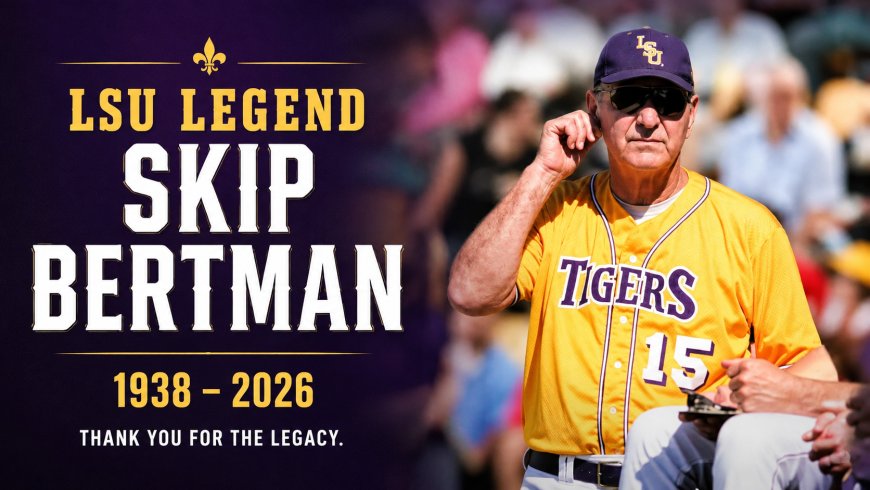
Skip Bertman, the legendary LSU baseball coach and former athletics director, died early Friday, August 14, 2026, in Baton Rouge at age 88, LSU announced. Bertman built LSU baseball into one of the most dominant programs in college sports, winning five national championships and becoming a central figure in the growth of college baseball. LSU and ESPN confirmed his death, while no cause of death was disclosed in the initial announcements.
What happened to Skip Bertman?
Skip Bertman died Friday morning in Baton Rouge, according to LSU Athletics. He was 88. The university described him as a transformative coach and leader whose influence reached beyond the baseball field and helped shape LSU athletics and the wider sports culture in Louisiana.
Bertman’s death immediately drew attention across the college baseball community because his career was closely tied to LSU’s rise from a respected program into a national powerhouse. His teams won five College World Series championships in 1991, 1993, 1996, 1997 and 2000, establishing a level of sustained success that became a defining part of LSU baseball history.
His influence also continued after he left the dugout. Bertman served as LSU’s director of athletics from 2001 to 2008, giving him another opportunity to influence the university’s championship culture. LSU’s official tributes emphasized that his impact extended well beyond the victories recorded during his coaching career.
How many championships did Bertman win at LSU?
Bertman led LSU to five NCAA baseball national championships during his 18-season tenure as head coach from 1984 through 2001. The championship seasons came in 1991, 1993, 1996, 1997 and 2000. He also guided LSU to 11 College World Series appearances and seven Southeastern Conference championships.
His final LSU coaching record was 870-330-3, a .724 winning percentage. LSU records also credit him with 16 NCAA Tournament appearances and multiple national and conference Coach of the Year honors. Those numbers help explain why he became one of the most influential figures in the history of college baseball.
Bertman’s teams also produced players who reached Major League Baseball. LSU records have credited him with coaching dozens of future major leaguers, demonstrating that his program was not simply successful in tournament results but also became an important development path for professional players.
Why was Bertman important to LSU baseball beyond winning?
One of Bertman’s less-discussed achievements was his role in changing how college baseball was presented to fans. He helped create an atmosphere around LSU baseball that turned games into major sporting events rather than simply campus competitions. LSU later credited his leadership with helping grow average attendance from fewer than 500 fans per game in 1983 into a program that became a national attendance leader.
That transformation became part of his lasting influence. Bertman understood that a successful baseball program needed strong teams, but it also needed an audience, a recognizable identity and an environment that made supporters want to return. The approach helped LSU establish one of the most passionate fan cultures in college baseball.
His impact was eventually honored in a particularly visible way. LSU named the playing surface at Alex Box Stadium “Skip Bertman Field,” while a statue honoring Bertman was unveiled on campus in 2019. His No. 15 jersey was also retired after his coaching career.
What did Bertman do after coaching LSU baseball?
After retiring from coaching in 2001, Bertman became LSU’s director of athletics, a position he held through 2008. His second act at the university was significant because it placed the architect of LSU baseball’s rise in charge of a much broader athletics operation.
During his tenure as athletics director, LSU experienced major athletic achievements and facility development. LSU records specifically point to the football national championship seasons of 2003 and 2007 during the period in which Bertman led the athletic department.
This part of his career helps explain why tributes following his death have described him as more than a baseball coach. Bertman became a university athletics leader whose influence crossed sports, facilities, administration and the relationship between LSU teams and their supporters.
What was Skip Bertman’s connection to Olympic baseball?
Bertman also represented the United States in international baseball. He served as an assistant coach with U.S. national teams and was part of the coaching staff for the 1988 U.S. Olympic team that won the gold medal. In 1996, he served as head coach of the U.S. Olympic baseball team in Atlanta, which won the bronze medal.
Those international experiences added another dimension to his coaching career. By the time he reached the height of his LSU success, Bertman had already built a reputation that extended beyond one university and into the national baseball community.
How is LSU honoring Bertman’s legacy?
LSU has continued to preserve Bertman’s legacy through the baseball field named after him, his campus statue and the honors he received during and after his career. He was inducted into the LSU Athletic Hall of Fame, Louisiana Sports Hall of Fame, University of Miami Sports Hall of Fame, American Baseball Coaches Association Hall of Fame and College Baseball Hall of Fame.
His legacy is also visible every season at LSU’s baseball stadium, where “Skip Bertman Field” remains part of the program he helped build. That connection gives current LSU players and fans a direct reminder of the coach whose teams changed the status of baseball at the university.
LSU’s announcement of his death marks the end of the life of a figure whose influence stretched across decades of college baseball. Bertman’s five national championships remain the clearest measure of his success, but his broader contribution was building a baseball culture that outlasted his time in the dugout.
Frequently Asked Questions About Skip Bertman
How old was Skip Bertman when he died?
Skip Bertman was 88 years old when he died on August 14, 2026, in Baton Rouge, Louisiana, according to LSU Athletics.
How many national championships did Skip Bertman win?
He won five NCAA baseball national championships with LSU, in 1991, 1993, 1996, 1997 and 2000.
What was Skip Bertman’s LSU coaching record?
Bertman finished his LSU coaching career with an 870-330-3 record over 18 seasons, according to LSU records.
Was Skip Bertman an LSU athletic director?
Yes. After retiring as LSU’s baseball coach, Bertman served as the university’s director of athletics from 2001 through 2008.
What was Skip Bertman Field named for?
Skip Bertman Field is the playing surface at LSU’s Alex Box Stadium. LSU named the field in honor of Bertman and his extraordinary contribution to the baseball program.
What's Your Reaction?
 Like
0
 Dislike
0
 Love
0
 Funny
0
 Angry
0
 Sad
0
 Wow
0