Samuel Monroe Jr. Dies at 52 After Meningitis Battle
Samuel Monroe Jr. died at 52 after a severe meningitis battle. Here’s what is known about his death, health crisis, career and Menace II Society legacy.
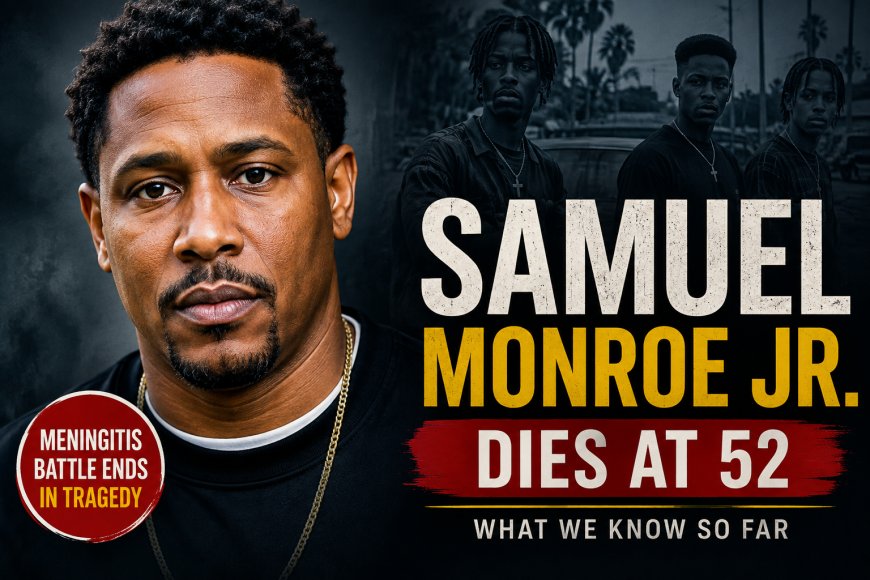
Samuel Monroe Jr. has died at 52 after a prolonged health battle involving severe meningitis and other serious complications, his family confirmed. The actor, best known for his appearance in the 1993 crime drama Menace II Society, died on August 26, 2026, after months of declining health. His mother, Joyce Patton, announced his death on social media and asked supporters to keep the family, especially his three children, in their prayers.
What happened to Samuel Monroe Jr.?
Monroe had been dealing with a serious medical crisis for months before his death. Reports from his family and multiple news organizations say he was hospitalized in April after suffering from meningitis and MRSA pneumonia. His condition became increasingly severe, with complications affecting his brain, spine and kidneys. He was also reported to have required dialysis and later experienced repeated seizures and underwent multiple brain surgeries.
Earlier in the illness, Monroe's wife, Shawna Stewart, said he had contracted meningitis while working in Las Vegas and that the infection was not properly identified for months. Stewart described the illness as having eventually spread to his brain and spine. Those statements describe the family's account of his medical history and should not be treated as an independently established finding of medical negligence. The Los Angeles Times previously reported Stewart's allegations about repeated misdiagnoses.
What is confirmed about Samuel Monroe Jr.'s cause of death?
The most consistently reported explanation is that Monroe died following complications from a severe meningitis illness. His family confirmed his death, while entertainment and news outlets have described meningitis as the central medical condition behind his prolonged hospitalization. MRSA pneumonia, kidney problems, seizures and other complications were also reported during his final months.
It is important to distinguish between a reported cause and a formal medical determination. Public reports currently identify complications from meningitis as the cause associated with his death, but a detailed official medical certificate has not been publicly presented in the reporting reviewed for this article.
How did Samuel Monroe Jr. become famous?
Monroe built his acting career during a period when several influential Black films were reshaping American cinema. His best-known early credit came in Menace II Society, the 1993 Hughes brothers film that became one of the defining crime dramas of the 1990s. The role helped establish Monroe as a recognizable character actor, even though he was not generally positioned as the central star of those productions.
His film work continued with appearances in Tales from the Hood, Set It Off, Don't Be a Menace to South Central While Drinking Your Juice in the Hood and The Players Club. He also worked in television, with credits reported on shows including NYPD Blue, Southland and Black Jesus.
Why are fans searching for Menace II Society?
The renewed interest in Menace II Society is directly connected to Monroe's death. The 1993 movie remains one of the most recognizable films associated with the actor's career, and his passing has prompted audiences to revisit the cast and his other 1990s performances. Current Google Trends data shows that searches for Monroe are still active and rising sharply, with related searches centered on his name and the circumstances surrounding his death.
His career also extended beyond a single movie. Monroe continued appearing in film and television for decades, including credits in productions released well after the 1990s. That broader body of work is an important part of his legacy as audiences remember him following his death.
What happened during his final months?
Monroe's health crisis had already attracted attention before his death. In April, reports said he was seriously ill and on life support after the meningitis infection progressed. His family later described periods of improvement followed by another deterioration. By July, reports said he had suffered numerous seizures, experienced severe brain swelling and required additional medical procedures.
The severity of his condition led his family to seek financial assistance for medical and care expenses. Earlier reporting documented a fundraiser connected to the family's efforts to manage the prolonged hospitalization and potential long-term care requirements.
Why did a family legal dispute become part of the story?
Shortly before Monroe's death was confirmed, reports also emerged about a legal dispute involving his mother and Stewart. Patton filed a petition seeking a conservatorship and questioned the legal status of Monroe's relationship with Stewart. Stewart disputed the allegations and said Monroe had chosen her to handle his medical and financial affairs.
Because those matters involve allegations and court proceedings, they should be kept separate from the confirmed facts of Monroe's death. The legal dispute does, however, provide additional context for why the actor's final months received significant public attention beyond his medical condition.
Samuel Monroe Jr.'s legacy
For many viewers, Monroe's name will remain linked to the wave of 1990s Black cinema that produced films such as Menace II Society, Tales from the Hood, Set It Off and The Players Club. His work across those productions gave him a lasting connection to an era whose movies continue to attract new audiences decades later.
Monroe was also more than his most recognizable movie credit. His television work and later film appearances show a career that continued beyond the period that first made him familiar to audiences. His death at 52 has therefore prompted both renewed interest in his classic roles and a broader look at the actor's decades-long contribution to entertainment.
His family has asked supporters to remember Monroe and keep his loved ones, including his three children, in their prayers.
What's Your Reaction?
 Like
0
 Dislike
0
 Love
0
 Funny
0
 Angry
0
 Sad
0
 Wow
0