Lucy Davis Reveals Incurable Stage 4 Breast Cancer
Lucy Davis has revealed an incurable stage 4 breast cancer diagnosis. The Office star says it spread to her bones and urges people to get changes checked.
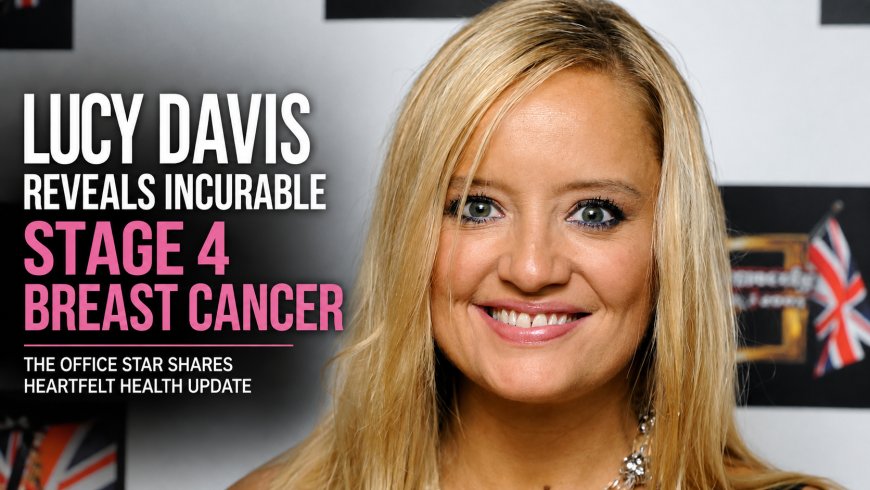
Lucy Davis, best known for playing Dawn Tinsley in the original British version of The Office, has revealed that she has been living with stage 4 breast cancer for about 18 months. The 53-year-old actor said the cancer has spread to her bones, including her spine, right hip and ribs, and described her illness as incurable. She made the disclosure publicly on August 11, 2026, after keeping the diagnosis private for a year and a half.
Davis said the disease has caused significant pain and that standing or walking for extended periods can be difficult, sometimes requiring her to use a wheelchair. Rather than presenting her announcement only as an update about her health, she also used it to encourage people to pay attention to changes in their bodies. Her account of the small, hard spot she initially noticed has become one of the most important parts of the story because she said she nearly did not have it checked.
What did Lucy Davis reveal about her cancer diagnosis?
Davis said she was diagnosed with stage 4 breast cancer approximately a year and a half before making the announcement. By the time she shared the news, the cancer had metastasized to her bones. She specifically identified her spine, right hip and ribs as areas affected by the disease. Davis also said that, in her situation, it was too late for chemotherapy. That statement describes her own treatment circumstances and should not be interpreted as meaning that every person with stage 4 breast cancer is unable to receive chemotherapy or other treatment.
The disclosure came through a personal social media message in which Davis explained that she had deliberately kept the diagnosis private. Her decision to speak publicly appears to have been driven partly by a desire to share what she had learned and partly by a wish to encourage others to take physical changes seriously. She also made clear that people facing cancer should be able to approach their own experiences in the way that feels right for them.
Why Davis says a small physical change should not be ignored
One of the most significant details in Davis's account was the symptom that initially drew her attention. She said it was not what she would describe as a conventional, obvious lump but a very small hard spot. She almost decided it was not important enough to investigate. In sharing that experience, Davis urged people not to dismiss changes simply because they seem minor.
Her message is particularly relevant because breast changes can vary considerably from person to person. A new lump is one possible warning sign, but people can also notice changes in breast shape, skin, nipple appearance or other unusual symptoms. A personal story cannot determine whether a particular change is cancer, however, and people with a new or persistent concern should seek appropriate medical advice rather than trying to diagnose themselves from symptoms described online.
Davis's warning is therefore best understood as a call for awareness rather than a medical diagnosis guide. The detail that she nearly ignored a subtle change gives her disclosure a wider public-health dimension that goes beyond the celebrity news surrounding her diagnosis.
How is Lucy Davis coping with the diagnosis?
Davis has spoken openly about the physical difficulty of her illness while also describing a strong desire to continue living as normally and joyfully as possible. She said pain can make walking and standing difficult and that she sometimes needs a wheelchair. At the same time, she asked friends and family not to treat her as though she were defined entirely by being ill.
Humor has been especially important to Davis. She has encouraged the people around her to continue joking with her rather than becoming overly cautious or treating her as a fragile person. Her comments reflect an important distinction in her approach: she acknowledges the seriousness of the diagnosis while still wanting everyday relationships, laughter and ordinary moments to remain part of her life.
Davis has also said she is at peace with what comes next. She spoke about death in spiritual and personal terms and said she was not afraid. She expressed particular comfort in the thought of seeing her late dog again, while recognizing that the emotional burden of the situation can be especially difficult for her family.
What does Lucy Davis want to do next?
Despite her diagnosis, Davis has indicated that she wants to continue doing the things that give her life meaning. Acting remains one of the biggest joys of her life, and she has expressed a desire to keep working for as long as she is able. She also plans to continue her involvement in animal-rights advocacy.
That focus is significant because Davis's announcement was not framed simply as a farewell from public life. Instead, she described an intention to make the most of the time ahead while continuing with activities that matter to her. Her comments show that the diagnosis has changed her circumstances but has not erased her sense of identity as an actor, advocate, friend and family member.
Who is Lucy Davis from The Office?
For many viewers, Davis remains closely associated with Dawn Tinsley, the receptionist she played in the original BBC comedy The Office. The series, created by Ricky Gervais and Stephen Merchant, followed employees at the fictional Wernham Hogg paper company in Slough. Davis's performance as Dawn became one of the show's most recognizable supporting roles.
Her career extends well beyond The Office. Davis appeared as Dianne in Shaun of the Dead, played Etta Candy in the 2017 superhero film Wonder Woman, and later became widely known to Netflix viewers as Hilda Spellman in The Chilling Adventures of Sabrina. She also spent years playing Hayley Jordan in BBC Radio 4's long-running drama The Archers.
That broad career helps explain why the announcement has attracted attention from audiences across different generations. For British television viewers, Davis is closely linked to one of the country's most influential sitcoms, while international audiences may recognize her from Wonder Woman or Chilling Adventures of Sabrina.
Why Lucy Davis's announcement is receiving widespread attention
Davis's disclosure combines a major entertainment connection with a deeply personal health story. Former colleagues, fellow performers and fans have responded with messages of support following her announcement. The reaction has also renewed interest in her earlier work, particularly Dawn Tinsley and her relationship with the wider legacy of The Office.
But the wider significance of her statement is the way she chose to tell the story. Davis had kept the diagnosis private for around 18 months and decided to share it only when she felt ready. Her comments emphasize that people dealing with serious illness have different ways of handling disclosure, treatment and conversations with family and friends.
What should readers take from Davis's warning?
The most actionable part of Davis's story is simple: unusual physical changes should not automatically be dismissed because they are small or do not look like a classic symptom. Her experience does not mean that every hard spot or breast change is cancer, but it does reinforce the importance of discussing persistent or concerning changes with a qualified healthcare professional.
Her announcement also demonstrates why personal health stories need to be handled carefully. Davis has shared the diagnosis on her own terms, including her feelings about treatment, pain, humor and the future. The available reporting does not provide a complete medical account of her cancer subtype, treatment history or prognosis beyond what she has publicly disclosed, so those details should not be assumed.
For now, Davis says she wants to focus on living, working, helping animals and finding joy wherever possible. Her public message has turned a private 18-month health battle into a reminder about listening to the body while respecting every individual's right to decide when and how to share a diagnosis.
Frequently Asked Questions
Yes. Davis publicly revealed on August 11, 2026, that she had been diagnosed with stage 4 breast cancer about 18 months earlier. She said the cancer had spread to her bones, including her spine, right hip and ribs, and described it as incurable.
Davis played Dawn Tinsley, a receptionist at Wernham Hogg, in the original British version of The Office. The role became one of the defining parts of her early television career.
Davis said she initially noticed a very small hard spot rather than what she considered a typical obvious lump. She has used that experience to encourage people not to ignore unusual physical changes and to seek appropriate medical advice when something concerns them.
Davis has said acting remains one of the biggest joys of her life and that she would like to continue working for as long as she can. She also intends to remain involved in animal-rights advocacy.
What's Your Reaction?
 Like
0
 Dislike
0
 Love
0
 Funny
0
 Angry
0
 Sad
0
 Wow
0