TSA Warns Travelers to Avoid Airport Freebies (airport USB security) - Bio Points News
The TSA and FCC warn travelers against using airport USB charging ports and public Wi-Fi, citing risks of malware, hacking, and data theft.
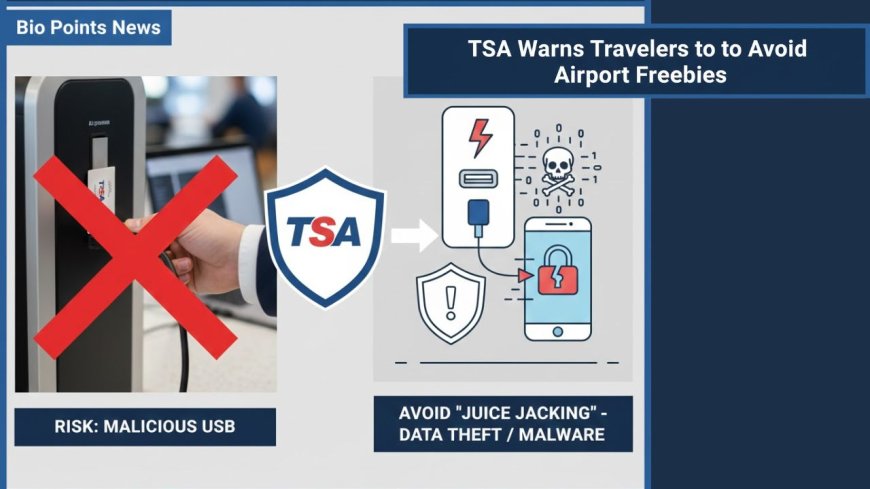
Travelers rushing through airports often rely on free USB charging ports and public Wi-Fi to stay connected. However, US authorities are warning that these convenient services may come with serious cybersecurity risks that could compromise personal data.
TSA and FCC Issue Security Warning
The Transportation Security Administration (TSA) and the Federal Communications Commission (FCC) have advised travelers to avoid using public USB charging stations and unsecured airport Wi-Fi networks. According to the agencies, these systems can be exploited by cybercriminals to install malware or steal sensitive information from personal devices.
Officials stress that the risk applies to smartphones, tablets, and laptops, especially when users connect without basic security protections.
The Risk Behind Public USB Charging
Cyber experts explain that public USB ports can be modified to transfer data instead of just power. This method, commonly referred to as “juice jacking,” may allow attackers to install malicious software or access private files without the user’s knowledge.
Once compromised, a device could expose passwords, financial details, emails, or even provide long-term access to hackers.
Why Public Airport Wi-Fi Is Also Dangerous
Public Wi-Fi networks are often unsecured or poorly protected. Hackers can intercept traffic on these networks, monitor activity, or create fake hotspots that look legitimate. Travelers who log into accounts, shop online, or access banking apps on open Wi-Fi may unknowingly put their data at risk.
Authorities note that airports are common targets due to high passenger traffic and frequent device usage.
A Long-Standing Cybersecurity Issue
Warnings about public charging stations and unsecured Wi-Fi are not new. US agencies, including the FBI, have previously highlighted similar risks over the past decade as cybercrime has become more sophisticated. However, the growing dependence on mobile devices during travel has made the issue more relevant than ever.
Recent Safety Recommendations
The TSA and FCC recommend travelers bring their own chargers and power banks and use standard electrical outlets instead of USB charging ports. For internet access, officials suggest using mobile data or a trusted VPN to encrypt online activity when public Wi-Fi cannot be avoided.
These precautions, they say, significantly reduce the risk of cyberattacks while traveling.
While airport freebies may seem helpful, security experts warn they can expose travelers to serious digital threats. By taking simple precautions—such as using personal chargers and secure internet connections—travelers can better protect their data and enjoy safer journeys in an increasingly connected world.
What's Your Reaction?
 Like
0
 Dislike
0
 Love
0
 Funny
0
 Angry
0
 Sad
0
 Wow
0