























































CENTCOM Denies Iran's Claim It Destroyed US Radar in Bahrain, Says Two Iranian Drones Were Shot Down
US Central Command says Iran's claim that it destroyed an American early-warning radar in Bahrain is false — US forces shot down two Iranian one-way attack drones headed for Bahrain, with no injuries or damage. The exchange is the latest flashpoint in the Gulf confrontation over the Strait of Hormuz.
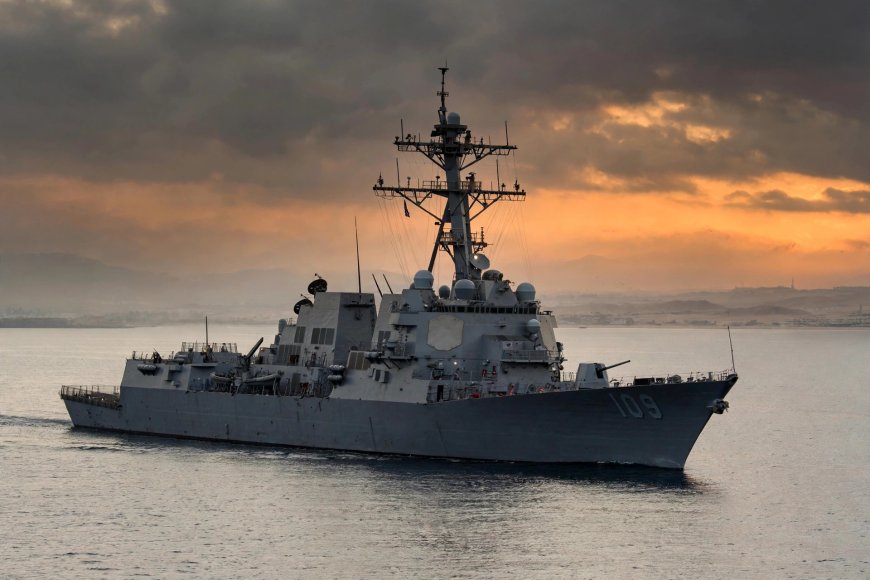
United States Central Command on Friday denied Iran's claim that its forces destroyed an American early-warning radar in Bahrain, saying instead that U.S. forces shot down two Iranian attack drones headed toward the island kingdom — with no injuries and no damage.
The exchange, playing out in public statements hours apart, is the latest flashpoint in the Gulf confrontation between Washington and Tehran, centered on Bahrain — home to the headquarters of the U.S. Navy's Fifth Fleet — and on the Strait of Hormuz, the narrow waterway through which a large share of the world's seaborne oil passes.
What Iran claimed
Iran's Islamic Revolutionary Guard Corps said on Friday that its forces had destroyed a U.S. early-warning radar in Bahrain, according to Iranian state media. The Guard said the strike was retaliation for an alleged U.S. strike on a communications tower at the port of Sirik in southern Iran on Thursday.
The Associated Press reported the claim on Friday morning and said it could not independently verify it. Neither U.S. Central Command nor Bahrain's Information Ministry had immediately responded to the AP's requests for comment at the time of that report — a silence that lasted only a few hours.
What CENTCOM says actually happened
CENTCOM answered the claim directly in a statement posted on X on Friday morning, presented as a "fact check." The command said the Guard's account was false, and gave its own version of events: the IRGC launched two one-way attack drones toward Bahrain, and both were intercepted and shot down by U.S. forces. There were no injuries and no damage, CENTCOM said.
Reuters reported the denial on Friday, and Al Arabiya English also reported CENTCOM's statement. The Guard's claim about the radar was not confirmed by any independent source, and no evidence of damage to a U.S. installation in Bahrain has been made public.
CENTCOM also pushed back on a separate report on Friday. A U.S. official told the Israeli Broadcasting Authority that the command had warned Israeli military officials to prepare for the possibility of renewed full-scale war against Iran "in the near-future." CENTCOM rejected that account, calling it "pure speculation" and saying there had been no change in its force posture.
The tanker claim in the Strait of Hormuz
The Guard made a second claim on Friday, saying a tanker carrying liquefied natural gas struck a naval mine and exploded while passing through the Strait of Hormuz. That account also could not be independently verified. The AP said it could not confirm the tanker incident, and the United Kingdom Maritime Trade Operations center had no immediate report of it.
Maritime monitors had already reported a tense week in the strait: four tankers were attacked in the area on November 10–11, according to the Joint Maritime Information Center and shipping monitors. President Donald Trump said on Thursday that the United States would strike Iran again if it threatens shipping, and in a social media post the same day he said the U.S. does not need a deal with Iran — pulling Vice President JD Vance off the Iran file to focus on domestic issues instead.
Why Bahrain matters
Bahrain's importance in this confrontation is hard to overstate. The island kingdom hosts the headquarters of the U.S. Navy's Fifth Fleet, which oversees American naval operations across the Persian Gulf and surrounding waters. Any attack on a U.S. installation there would be a direct strike on the hub of American military power in the region — which is why the Guard's claim drew an unusually fast public response from CENTCOM.
CENTCOM said on Wednesday that American forces were continuing to "work around the clock keeping the Strait of Hormuz open for commercial shipping" while "strictly enforcing the ironclad naval blockade against Iran." The command said around 1.7 billion barrels of crude oil had passed through the strait under U.S. protection since the summer.
This is not the first time the two sides have clashed publicly over what happened in the Gulf. In June, U.S. forces intercepted Iranian missiles and drones across the region, and CENTCOM rejected Guard claims that the Fifth Fleet headquarters in Bahrain and a U.S. air base in the region had been hit — a pattern of competing claims that makes independent verification essential, as our earlier report on Iran's strikes on U.S. bases in Kuwait and the UAE showed. The Pentagon's posture toward Iran has also been under scrutiny at home, including questions about Defense Secretary Pete Hegseth and the Iran war lane.
What happens next
Several questions remain open. Bahrain's government has not yet commented publicly on the extent of any incident, and neither side has produced evidence — wreckage, radar data or imagery — to settle the competing accounts. Shipping monitors and the UK Maritime Trade Operations center will be watched for any confirmation of the tanker claim, and oil markets have already reacted to the week's tensions, with crude rising about 3 percent on Thursday.
The Guard also announced it was lifting a previous self-imposed cap on the range of Iran's ballistic missiles, which had stood at 2,000 kilometers. And Iran told the U.N. nuclear watchdog this month that discussions on nuclear monitoring cannot proceed while the country is under threat from military attacks, according to a confidential report obtained by the AP.
For now, the facts both sides agree on are narrow: drones were launched toward Bahrain on Friday, and U.S. forces say they shot them down. Everything else — the radar, the tanker, and what comes next — remains contested, and the next official word from Washington or Manama will decide which version of Friday's events stands.
Frequently Asked Questions
Did Iran destroy a U.S. radar in Bahrain?
Iran's Revolutionary Guard says it did. U.S. Central Command says the claim is false, and no independent source has confirmed it. CENTCOM says what actually happened is that two Iranian drones were launched toward Bahrain and shot down.
What did U.S. forces shoot down?
According to CENTCOM, two one-way attack drones launched by the IRGC toward Bahrain. Both were intercepted by U.S. forces, with no injuries or damage reported.
Was anyone hurt?
No. CENTCOM said there were no injuries and no damage from the drone launches.
What about the tanker reported hit in the Strait of Hormuz?
The Guard says a liquefied natural gas tanker struck a naval mine and exploded. That claim has not been independently verified, and maritime authorities had no immediate report of the incident. Treat it as a claim, not a confirmed event.
Why is the Strait of Hormuz so important?
It is the narrow passage between the Persian Gulf and the open ocean, and a large share of the world's seaborne oil moves through it. CENTCOM says about 1.7 billion barrels of crude have passed through under U.S. protection since the summer, and the U.S. is enforcing a naval blockade on Iranian ports.
References
- Reuters (via Devdiscourse) — US says it shot down two drones launched by Iran toward Bahrain (Nov 13, 2026)
- Al Arabiya English — CENTCOM denies Iran's claim of attack on US radar in Bahrain (Nov 13, 2026)
- U.S. Central Command — Official fact-check post on the IRGC radar claim (Nov 13, 2026)
- Demócrata — Iran says it has destroyed a US radar in Bahrain (Nov 13, 2026)
- Just Security — Early Edition, November 13, 2026 (summary of AP reporting on the IRGC claim)
- Israel Real Time — CENTCOM disputes report of warning about renewed Iran war (Nov 13, 2026)
What's Your Reaction?
 Like
0
 Dislike
0
 Love
0
 Funny
0
 Angry
0
 Sad
0
 Wow
0