




















































Judge Lets Trump's $10 Billion BBC Defamation Lawsuit Move Forward, Tossing One Claim
A federal judge in Florida has ruled President Donald Trump's $10 billion defamation lawsuit against the BBC can move forward, rejecting the broadcaster's bid to dismiss the central claim while throwing out a separate Florida consumer-law allegation.

A federal judge in Florida has ruled that President Donald Trump’s $10 billion defamation lawsuit against the BBC can move forward, rejecting the British broadcaster’s bid to dismiss the central claim — while throwing out a separate allegation under Florida consumer-protection law.
U.S. District Judge Jeffrey T. Kuntz issued a 40-page ruling on Tuesday, November 10, 2026, finding that Trump had plausibly alleged the BBC damaged his reputation and knew — or should have known — that the edited clip at the heart of the case was misleading. The ruling does not decide whether Trump can ultimately prove defamation or win damages. It only keeps the case alive.
What the BBC is accused of editing
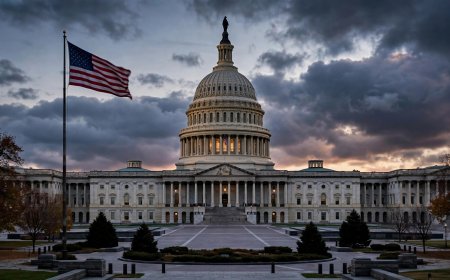
Trump is suing over “Trump: A Second Chance?”, a BBC Panorama documentary that aired in October 2024, shortly before the presidential election. The lawsuit says the program spliced together two portions of Trump’s speech to supporters on January 6, 2021 — remarks delivered about 55 minutes apart — to make it appear that he was directly urging the crowd to storm the U.S. Capitol as Congress certified Joe Biden’s election win.
The BBC has acknowledged that the edit was misleading and apologized to Trump. The apology, and the resignations of several senior BBC executives that followed, were noted by the judge in his ruling. The broadcaster denies it is liable for defamation. A BBC spokesperson said the broadcaster was surprised by the decision but respects the court’s authority and remains confident in its position.
What the judge decided — and what he threw out
Judge Kuntz, a Trump-appointed judge on the Southern District of Florida, declined to throw out the defamation claim. He found Trump’s allegation — that the BBC spliced the speech knowing the result was misleading — credible enough to proceed to the next stage, where both sides gather evidence and challenge each other’s facts.
The judge did dismiss Trump’s claim under Florida’s Deceptive and Unfair Trade Practices Act, the state consumer-protection law. That part of the case is gone. The defamation claim, seeking at least $5 billion, now moves forward on its own.
What happens next: a deposition deadline
The case now heads into discovery, and a court-ordered deadline is already hanging over it. A different federal judge has ordered Trump to sit for a deposition by December 11, after BBC lawyers complained that he had delayed giving sworn testimony. Trump skipped a scheduled October deposition to campaign in the midterm elections, and the court has warned he risks losing the lawsuit if he does not testify by the deadline.
The timing matters politically, too. The ruling comes a week after Democrats won control of both the House and the Senate in the 2026 midterms, and days after Democrat Scott Colom’s historic win in the Mississippi Senate race extended their gains. House Republicans, meanwhile, have elected Jim Jordan to lead the party into the minority when the new Congress is seated in January.
Part of a wider legal fight with the press
The BBC case is one of several lawsuits Trump has brought against major news organizations during his second term. He filed this suit in federal court in Miami in December 2025, accusing the BBC of broadcasting a “false, defamatory, deceptive, disparaging, inflammatory, and malicious depiction” of him and of trying to interfere in the 2024 election. He is also pursuing a separate $10 billion defamation case against The Wall Street Journal over its reporting on the Epstein files, refiled in May after an earlier version was dismissed, and a $15 billion case against The New York Times and publisher Penguin Random House.
For the BBC, the stakes go beyond money. The broadcaster is publicly funded, and the editing scandal has already cost it senior leaders and damaged its reputation in the United States. For Trump, the ruling is a rare courtroom win in a legal campaign that has mostly produced headlines rather than verdicts — and it keeps a $10 billion claim against one of the world’s biggest broadcasters alive into 2027.
Frequently Asked Questions
What did the judge decide in the Trump-BBC case?
Judge Jeffrey Kuntz ruled on November 10, 2026 that Trump’s $10 billion defamation claim against the BBC can proceed. He dismissed a separate claim under Florida’s consumer-protection law. The ruling does not decide whether Trump was defamed.
What did the BBC documentary edit?
The October 2024 Panorama film “Trump: A Second Chance?” spliced together two parts of Trump’s January 6, 2021 speech, delivered about 55 minutes apart, making it appear he directly urged supporters to storm the Capitol. The BBC has admitted the edit was misleading and apologized.
How much money is Trump seeking?
The lawsuit sought at least $5 billion for defamation and $5 billion under Florida’s Deceptive and Unfair Trade Practices Act — $10 billion in total. Only the defamation claim survives.
What happens next?
The case moves into discovery. Trump has been ordered to sit for a deposition by December 11, 2026, and risks losing the case if he does not testify by then.
Has Trump proven the BBC defamed him?
No. The judge found only that Trump plausibly alleged defamation — enough for the case to continue. Whether he can prove it, and what damages he might win, will be decided later.
References
- Reuters — US judge says Trump’s $10 billion BBC defamation case can proceed (Nov 10, 2026)
- Associated Press — Judge allows Trump defamation case against BBC to proceed but tosses 1 claim (Nov 11, 2026)
- Seeking Alpha — Judge allows Trump’s $10B defamation lawsuit against BBC to move forward (Nov 11, 2026)
- Meeko News — Judge Allows Trump’s $10 Billion BBC Defamation Lawsuit to Proceed (Nov 12, 2026)
What's Your Reaction?
 Like
0
 Dislike
0
 Love
0
 Funny
0
 Angry
0
 Sad
0
 Wow
0